You are currently browsing the monthly archive for February 2011.
Nearly every parent I know has wrestled with deciding how important it is to have their children take Advanced Placement (AP) courses. Parents want their children to have all the opportunities they can get so that they can succeed and be happy in life. (If only happiness could be achieved that easily!) Meanwhile, kids feel the pressure and report feeling exhausted, unhappy and anxious.
People often ask me, as a person who has spent nearly twenty years in the classroom, what I think about AP classes. Should their child take this AP or that AP. And they are often surprised when I respond with a question: “Does your child love French? Because if he doesn’t love it, why would you want him to take the AP which is going to require so much of his time and energy?”
What people (and by people, I mean parents) do not seem to understand is that the demand of an AP class is designed to be similar to a 100-level college class. The difference is that, in high school, that class will likely meet every day – while in college, there is usually an “off-day” where students have time to read and generally better manage coursework.
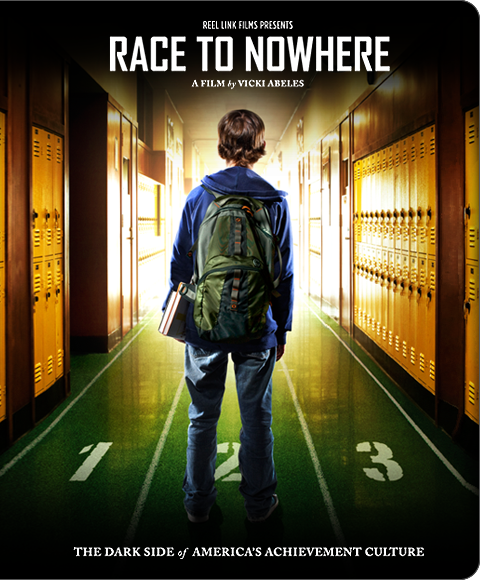
In RACE TO NOWHERE, filmmakers Vicki Abeles and Jessica Congdon speak to educators, parents, tweens, and teens about the pressures they face academically and emotionally, and the physical toll these expectations exact. What results is a picture of a fractured educational system that pushes kids to become successful — but at a cost.
During the Post World War II Advanced Placement pilot program, AP courses were designed to draw the top students into a small class of other students who LOVED the material. In 1952, AP classes were designed to be small so teachers could move at an accelerated pace because of the students’ voracious love of the subject matter. The idea was excellent.
Of course, what has happened over time, is that parents have demanded that their children be allowed entry into AP classes because, these days, there is a warped race to create the best college application. (Believe me, parents want those AP’s on their college applications.) So AP class sizes have ballooned, and there is less one-on-one with teachers. And kids who had no business being in an AP in the first place struggle. Because AP classes are hard. Really hard. When the idea was created, I don’t think anyone from the Ford Foundation would have recommended that any one student take five AP courses.
I always tell parents that AP courses are not the be all/end all. When I say this, they look at me like I have five heads. Then they ignore me completely. (I’m telling you, parents don’t like to hear this.)
I truly believe that the point of education is for children to love to learn. When students are getting sick, when they arrive at college unprepared and unmotivated, there is a problem. Students who feel too much pressure to perform, burn out. Feeling the pressure to achieve, students self-medicate, turn to drugs and alcohol as an escape, and sometimes cheat to complete the ever mounting pile of assignments which need to finished – now! From my vantage point, I see kids who are over-scheduled and overtired.
School should be the place where our teens learn about balance. Schools that allow students to skip lunch periods so they can take five Advanced Placement courses have bought into the hype (or caved into parental pressure). And that is sad. Lunch should not be optional. Humans need to stop and eat healthy food (not a bag of chips) to provide their bodies with energy. I don’t care how many times a parent calls and says, “I want my son to take 5 APs.” Administrators need to grow a set and say, “I’m sorry, but we just don’t think that is beneficial to your child.” Students need help learning how to make healthy choices. Sometimes that means they need the school to shield them from demanding parents. And anyway, kids don’t have to be enrolled in a course to take AP tests: a really self-motivated kid who loves to learn should be able to access all the material he needs to prepare him/herself for any AP test.
For the love of Pete, I’m a Tiger Momma. I believe our children need to pick the things they do and do them well. But we need to help guide them to understand they cannot do everything. Our kids need to study hard – absolutely – but they also need to eat. They need to be able to go to the bathroom without worrying they are missing crucial information. And they need to be allowed to tune school out for a while so they can exercise and nurture friendships. They should not be running from this practice to that recital just be sitting on their asses in front of their computers every night.
When I was in high school, I had the opportunity to take regular English, AP English, or Syracuse University Project Advance (SUPA English). At the time, SUPA was a college curriculum class taught by our own high school instructors who had been trained to teach the course. I worked my butt off in that class, and I did not always excel. I remember getting one paper back with a big fat “D” on it. (Maybe it was a “C,” but in my mind, I remember it as a “D.”) I also remember taking that paper to the library and weeping next to a huge potted plant. I had worked so hard on that paper. And English was the subject in which I was supposed to excel. I did not understand how I could have failed. My ego was battered, but my love for the subject matter made me want to figure things out. I busted my hump in that class. It was truly an amazing experience, and I believe it was the course that best prepared me for college.
When I think back on it, I cannot imagine how grueling it must put in that kind of work into every subject, every day. To me, taking all those APs seems utterly unnecessary. No one has ever asked me: “How many AP courses did you take in high school?” (Well, one pretentious fuck did, but it was after he had polished off an entire bottle of red wine himself.) In fact, many colleges don’t even accept AP credit anymore. It’s true.
So, my recommendation is this: If you’ve got a kid who is interested in some accelerated academic experience, have him/her enroll in a summer course at a real college. That looks good on college applications, too. And the credit might actually transfer somewhere, and it might help transition him or her to the realities of actual college life. Help your child live a balanced life. Have your kid go to summer camp, get a job, plant a garden, try something he/she has never done before. Not for the college application, just because.
In the United States, success has long meant making a lot of money. And the way to do this has traditionally meant attending a great college. But we need to redefine success for children. We have gotten caught up in this “race to nowhere,” as described by Abeles and Congdon. We need to teach our kids to do what they love – not pressure them into taking five AP classes because it will make them look good on paper.
In 2010, over 1.8 million students took over 3.2 million AP tests at about $87 bucks a pop. I’m no mathematician, but even I can tell that some people are taking more than one test. And I’d like to know five years down the line, where those kids are, and if they feel all that pain was worth it.
Check out this clip from the film below. Tell me you don’t want to see it!
In case you have not already seen/heard this by now, I am reposting Sharon Otterman’s article: Most New York Graduates Are Not College Ready – NYTimes.com in its entirety. If you like, you can click on the link above and read it in its original format. Frankly, this is the kind of news story that makes me weep inside.
If you prefer, you can read my repost below and catch all my snarky comments in blue. Red indicates sheer horror. (This is why I cannot loan out my books, people.)
• • • • • • • • • • • • • • • • • • • • • • • • • • • • • • • • • • • • • • • • • • • •
Most New York Students Are Not College-Ready
By SHARON OTTERMAN
New York State education officials released a new set of graduation statistics on Monday that show less than half of students in the state are leaving high school prepared for college and well-paying careers. The new statistics, part of a push to realign state standards with college performance, show that only 23 percent of students in New York City graduated ready for college or careers in 2009, not counting special-education students. That is well under half the current graduation rate of 64 percent, a number often promoted by Mayor Michael R. Bloomberg as evidence that his education policies are working.
But New York City is still doing better than the state’s other large urban districts. In Buffalo, Rochester, Syracuse and Yonkers, less than 17 percent of students met the proposed standards, including just 5 percent in Rochester.
The Board of Regents, which sets the state’s education policies, met on Monday to begin discussing what to do with this data, and will most likely issue a decision in March. One option is to make schools and districts place an asterisk next to the current graduation rate, or have them report both the current graduation rate and the college ready rate, said Merryl H. Tisch, the chancellor of the Board of Regents.
The move parallels a decision by the Regents last year to make standardized tests for third through eighth graders more difficult to pass, saying that the old passing rates did not correlate to high school success. (Oh good, let’s make new, harder tests. That should fix everything.What else is going to have to fall out of the curriculum so that our kids can pass these silly tests?)
State and city education officials have known for years that graduating from a public high school does not indicate that a student is ready for college, and have been slowly moving to raise standards. But the political will to acknowledge openly the chasm between graduation requirements and college or job needs is new, Dr. Tisch; David M. Steiner, the state education commissioner; and John King, the deputy state education commissioner, said in interviews last week.
With President Obama making college readiness and international competitiveness a top national goal, and federal and philanthropic money pouring into finding ways to raise national education standards, that equation is changing, they said. “It is a national crisis,” Dr. Steiner said.
Statewide, 77 percent of students graduate from high school. Currently, a student needs to score a 65 on four of the state’s five required Regents exams to graduate, and beginning next year, they will need a 65 on all five.
Using data collected by state and community colleges, testing experts on a state committee determined last year that a 75 on the English Regents and a 80 on the math Regents roughly predicted that students would get at least a C in a college-level course in the same subject. Scores below that meant students had to often take remediation classes before they could do college-level work. Only 41 percent of New York State graduates in 2009 achieved those scores. (No duh! This is what I have been seeing for years: Baffled community college students claiming to be “A students” in high school who have absolutely no idea how to read for meaning or write in complete sentences. No wonder they start freaking out when they suddenly get C’s on their essays!)
In the wealthier districts across the state, the news is better: 72 percent of students in “low need” districts are graduating ready for college or careers. (You get that, right? Over 25% of students in more affluent suburbs aren’t pulling their weight when they get to college.) But even that is well under the 95 percent of students in those districts who are now graduating. (We live in one of these “low need districts.” I have tutored students in grades 6-12 who still have not mastered basic comma rules. I have had to teach them commas, semi-colons and colons. I’ve thrown in a few mini-lesson on thesis statements for good measure. But that’s about all I can do. But seriously, the schools can’t do it all. I know they can’t. Why? Because public schools are so busy being mandated to prepare students for standardized tests that they simply do not have enough time to make sure that students have mastered certain things, so they have had to let some things go. I think folks at The Board of Regents must believe that kids pick up things like grammar by osmosis.)
The data also cast new doubt on the ability of charter schools to outperform their traditional school peers. Statewide, only 10 percent of students at charters graduated in 2009 at college-ready standards, though 49 percent received diplomas. The state has not yet calculated results for every district and school. (So charter school are broken, too? What a surprise!)
State officials have also begun a series of meetings in local districts to introduce this data and ask local officials what they want to do about it. A common reaction, Dr. Tisch said, is shock and hesitancy. There are fears of plummeting real estate values, as well as disagreement, particularly in rural areas, with the idea that all students need to be prepared for college.
Jean-Claude Brizard, the schools superintendent in Rochester for the past three years, said that while he was surprised by the data, he welcomed the effort to move the conversation away from simply graduating. In an effort to improve, Rochester has closed half its high schools and opened new schools, including its first high school that allows students to earn credits at several local colleges.
In New York City, roughly 75 percent of public high school students who enroll in community colleges need to take remedial math or English courses before they can begin college-level work. (I would argue the same is true here in Rochester. Many of my incoming first year community college students are not anywhere ready for regular Comp-101. They need a more basic English class to prepare them for Comp-101. That is what my community college is grappling with now. This semester faculty in the English Department started developing a new diagnostic tool as the old AccuPlacer was proving ineffectual. Not everyone had to take it and part-time students slipped through the cracks.) City education officials said the 23 percent college-ready rate was not a fair measure of how the city would do if graduation requirements were raised to a higher standard, because students would work harder to meet that new bar.
While it has not gone so far as to calculate an alternative to graduation rates, the city has already begun tracking how each high school’s students fare in college, and in 2012 it will begin holding principals accountable for it. “Last year, well before the state announced this plan, we told schools we would begin including robust college readiness metrics in school progress reports,” said Shael Polakow-Suransky, the chief academic officer.
One thing that is helping districts get over their shock, Dr. Tisch said, is the opening of a discussion about how to improve things. On their tour, which has visited Albany, Buffalo and Rochester and will visit New York City, Westchester County and Long Island in the coming weeks, officials are presenting a menu of options. (Oooh, a menu! Well, I’ll take one helping of smaller class sizes: Eighteen students would be lovely. I’d like two helpings of students with parents who value and support education. I’d like a pile of teachers who are enthusiastic about their subject matter. I’d like intelligent principals who support their teachers and support staff. I’d like a double-helping of students who accept responsibility for their actions. I’d like to see Honor Courts comprised of the most ethical students, as nominated by teachers and peers. I’d like all students to sign an contract stating that they understand no one has the right to interfere with anyone else’s right to learn – because if they do, they will be expelled. And, um, I don’t see this on the menu but if it’s not too much trouble, I’d like to request students who remember to bring the necessary materials to class. Every day. Or at least just a pen.)
One idea is to simply report a college-ready graduation rate as an aspirational standard and leave it at that. (I have no idea what this means. So a principal could report: “We aspire to have 35% of our students graduate by 2015. That is insane! That is called The Anti-Aspirational Initiative.) Another is to impose tougher graduation standards — like requiring that all students in the state take four years of math and science, or permanently raising the passing score on high school Regents exams to 75 in English and 80 in math. (Be still my heart! Could it be that The Board of Regents is starting to realize a 65% is not really a passing grade. It’s a friggin’ low D! Way to go, Board of Regents. For the love of Pete, it’s only taken thirteen years for you to realize that teaching to a low standard is only bound to enforce that standard. Oy!)
But they are also discussing increased flexibility for districts and students, so that they can spend more time on the subjects they are interested in. For example, students might be permitted to choose at least one of the Regents exams they must pass to graduate — currently all students have to pass math, English, science, global history and American history. Students might be able to substitute foreign language, economics or art for one of the five. Or students could replace one Regents with a vocational skills test in an area like carpentry or plumbing. (Non-snarky response: I actually love this idea. Traditional education is not for everyone, and we need to value our vocational students more. Honestly, those middle and high school years are the only times in life where we expect people to be universally excellent at everything from foreign language to math to science to social studies to English to gym to sewing and cooking! People aren’t made that way. It would be great if we could allow students to specialize in their areas of interest. I mean, you could have asked me if 5th grade if I was going to be a nuclear scientist and I would have told you, “Hells bells, no!” and then I would not have had to suffer through calculus. I can honestly tell you that in my career, I have never used calculus. Ever.
Alternatively, the state could grant flexibility to districts to give credits based not on how many hours students sit in a classroom — currently 54 hours per semester per credit — but on whether students show competency, based on examination or online course work. (Really, so a student who can demonstrate that he already knows his shit might not have to sit through a required class. Just because the State says he has to take it? Now that’s somethin’!)
To press their case, state officials said they hoped to get political support from Gov. Andrew M. Cuomo. The political environment was particularly challenging now, because the state will roll out a new system in July to evaluate teachers that has the potential of strong opposition from teachers’ unions. (Oh great. Let’s blame the teachers who can’t “fix” their students in one calendar year, and if their numbers aren’t high enough, let’s put them on probation (or possibly fire them), ‘cuz teaching is not stressful enough without wondering if you are going to have a job the following September. And everyone knows that when students fail, it’s definitely the teachers’ fault.)
“The obligation at the end of the day,” Dr. Tisch added, ” is to make sure that when youngsters graduate, that graduation means something from New York State.” (I think Dr. Tisch meant to say: The obligation is to make sure that graduation from New York State means they have a set of skills which will enable them to succeed in college and in life. Because right now, that is just not the case.)
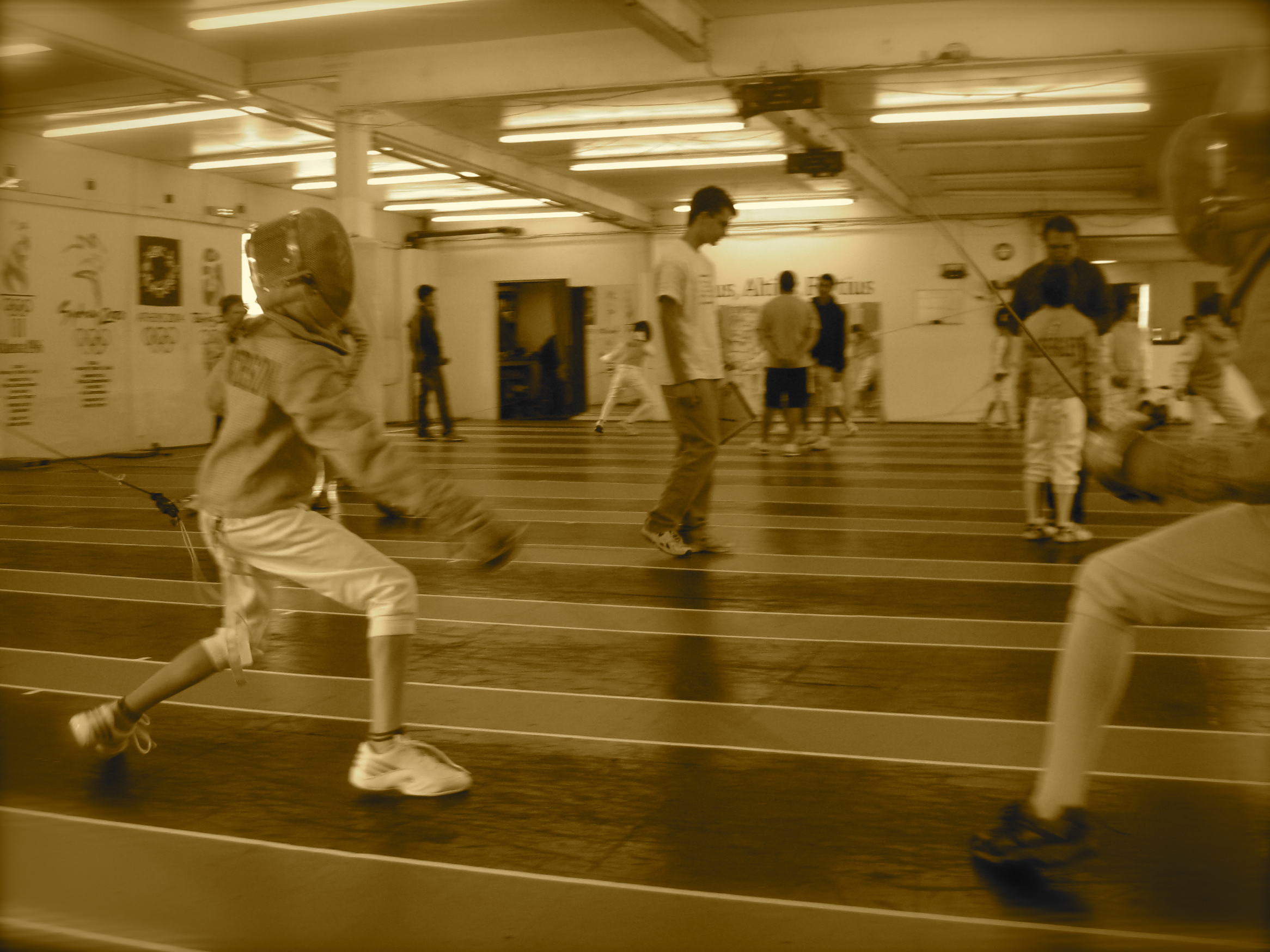
As a self-admitted, ridiculously competitive parent who wants her child to know how good it can feel to work hard and win, it is my duty to report that my son competed in a fencing competition last weekend. On the strip, he fenced his butt off and did not lose a single match. As parents, my husband and I were internally beyond psyched, but externally we tried to contain ourselves.
After two hours, Monkey came over to the area where we were standing and said, “Explain how I have won every bout but I am now ranked #7?” Husband and I looked at each other and said (practically in unison), “Don’t ask us! Ask the guy with the clipboard.” So Monkey did. He marched right up to his coach who is like nine feet tall and tattooed and has a goatee and sometimes yells at kids or bonks them on their helmets for not paying attention. (It should be said, this treatment is always deserved. Elliott is an amazing coach, but he can be intimidating.)
Several adults were standing in a small cluster when Monkey barged in. From my vantage point (wedged against husband and the cola machine), I could see Monkey say something and point at the clipboard. Then I saw everyone look at the clipboard. And then I saw four horrified adult faces. I watched people erasing and nodding. Eventually, words were exchanged and Monkey came back over to us.
Apparently, an error had been made. One of the refs accidentally wrote down the wrong last name in the brackets and so Monkey’s competitor, the kid he had beaten, moved ahead of him.
When the error was brought to his attention, my son was composed. He stayed for the remainder of the competition and watched other fencers compete. He even congratulated the winners afterward.
Later in the car, Monkey was mad. It’s the first time I’d ever seen anything close to a kind of fire in my son. He said he was frustrated – really frustrated. That he had wanted to go as far as he could, and he was mad to have been prematurely stopped in his tracks. He did not have a hissy fit or cry. He understood an error had been made. He knew it was not intentional. He knew that by the time the error had been caught, it was too late, as fencers were already fencing in the semi-finals. He just kind of wished he had known about the mistake earlier.
So there were lots of lessons that day. Lessons we take through life. Monkey kept his head about him and kept his cool, despite the fact that he got a bum rap. He understood his disappointment wasn’t so much about the losing so much as it was losing the opportunity to do his best. That was the frustrating thing for him. (And I’m guessing next time, he’ll be the kid hovering around whomever is holding the clipboard.)
There were lessons for this trophy-seeking momma, too. I have to admit, my first instinct was to feel anger. I felt Monkey had been gypped. Privately, I wanted the coaches to go all the way back in the seeding to where the error was made and start over. I didn’t care if it meant another grueling two hours for the fencers; I wanted justice! I was surprised by how quickly my inner Tiger Momma wanted to pounce: claws bared, teeth clenched. I wanted apologies and a free year of private lessons. I wanted someone to publicly acknowledge my child’s amazing composure. For the love of Pete, I wanted to scream, Someone mention that you guys screwed up and my kid did not really come in 7th place!
Of course, I didn’t.
I squished these urges down, but it wasn’t easy. But I took my cue from Monkey, and I rode the tide. And just so we’re all clear, I’m not a great tide-rider. But on that day, I had to be. We all did. Because sometimes life really does just happen and — even if you have a sword — sometimes you just have to put it away and prepare to battle another day.
Picture me in third grade, roller skating with a certain someone special. Yummy Boy Billy is shorter than I am, but he is an awesome skater, and we are zooming around the rectangular gymnasium to The Bay City Rollers’ (what else?) “Saturday Night.” Suddenly, Yummy Boy decides to cross his right skate over his left on the turn. He falls, dragging me down with him. I was wearing my favorite pair of Levis, and they tore at the knee. I was so pissed. It was over before it started.
Fast forward to high school, a much beloved boyfriend got me one of those Cabbage Patch dolls for Valentine’s Day. Had I asked for a Cabbage Patch doll? No. Those suckers were creepy. (Still are.) But he gave me one, and in exchange for his gift, I gave him tongue. ‘Nuff said.
In college, I dated a guy who insisted that Valentine’s Day was an excuse for capitalist pigs to convince the masses they needed to buy ridiculous items to convince their companions of their undying love. Yeah, he was a cheap bastard. Our first Valentine’s Day together, he bought me a slice of pizza. For our second Valentine’s Day, he bought me a pencil with a heart eraser on the end of it. (Was he frickin’ kidding me?) For our third Valentine’s day, he bought me a fish tank. Why? Because he wanted fish. Still, it was better than nothing, and the bubbler turned out to be a lovely, relaxing way to fall asleep. We stayed together for one more year (what was I thinking?) but I believe things actually ended on or near Valentine’s Day, so he found a way to get out of that rather nicely. Oh, and when things went south, the fish tank stayed with him. Nice.
Husband is much better at Valentine’s Day. When we were in the “I-so-want-to-impress-this-woman” phase of our relationship, he made an amazing dinner at his friend Brian’s house. (Okay, maybe Brian made the dinner, but I’m sure Husband helped). We ate escargot and filet mignon and a green salad. And we drank wine. It should be noted that this was around the time that I punted a wineglass across Hubby’s living room floor causing it to smash against a wall into a zillion little pieces and, as an added bonus, coat the wall in a fabulous shade of blood-red. You would think someone would have thought to hand me a plastic glass, but no. That was the Valentine’s Day that I smashed an irreplaceable wine glass (hand blown in Germany and borrowed from Brian’s mother) against Brian’s stereo. (For all you young’uns out there, a stereo is a device we old folks used to use to play our music.) Anyway, Hubby wasn’t mad at me. Brian’s mother probably was, but Hubby made me feel okay about being human.
Over the years, Hubby has brought me flowers and made me breakfast. We’ve gone skiing, seen concerts, done great dinners. Lots of stuff. I don’t know what we’re doing this year, but Hubby did teach me that I am worth slightly more than the cost of a slice of pizza or a pencil. And for that, I am grateful.
I am also grateful to know that I do not have to work that hard as Hubby is genuinely happy with a bag of York Peppermint Patties – and a little tongue. ‘Nuff said.
I said I was taking a break from blogging to work on my book.
I must not have been very convincing because the next thing I know, I received this message from Clay Morgan over at Educlaytion: “I have something for you over at my blog.” Well, for the love of Pete, that’s like crack. I mean, how can anyone resist that? You would have to have to be one cold-blooded bitch not to heed the call of a fellow blogger.
So I popped over to Clay’s blog and found an honor bestowed.
Clay has passed along the esteemed Stylish Blogger Award.
I’m told that in order to accept The Stylish Blogger Award, nominees must do the following:
- Write seven things about yourself.
- Present the award to six bloggers.
- Contact those people.
- Create a link back to the person who did this
tofor you.
I started looking around the blogosphere, and I have to say I’ve seen many variations of this theme. I’ve seen folks asked to name ten things about themselves (Can you say overkill?) and name fifteen other bloggers (Glurg!). So I decided that with this shiny, happy, and slightly imaginary award comes a little lee-way, so I’m going with the six-pack.
I’m giving you all six things about me that are mildly titillating and then I’m passing the torch to six people whose stuff I love to read. In fact, some of them may have already have received this award, but I’m throwing some traffic back at them. Because they are THAT good.
Okay, so six things about myself:
1. SK sat behind me in fourth grade. On the first day of school, I said I had a pair of blue flip-flops at home, and he said they were actually called “thongs.” From then on, we disagreed about everything. These days, I have a lot of thongs at home, but I don’t wear them on my feet.
2. In 3rd grade, I had a mad crush on a kid named Savallas. He could turn his eyelids inside out. He called me on Saturday mornings and we sang K.C. and The Sunshine Band songs together.
3. My first kiss was with a girl. And she liked it so much she became a lesbian. True story.
4. Somebody wrote in my high school yearbook: “May your tail fall off and your hair shrivel into snakes. I’ll never forget you.” His handwriting is completely illegible so I can’t read the name. I’m pretty sure he (or she) has forgotten me.
5. I am extremely competitive, and I have never “let my child win” at anything. Not chess or tennis or Crazy-Eights. This might be why he has taken up fencing; I do not own a sword.
6. I am not afraid of anything, except contracting lice and not getting my manuscript published. Either of those things would totally suck.
• • • • • •
Now for my six nominees to be forever immortalized should they accept this honor (and by honor, I mean, homework assignment disguised as an honor).
Chase McFadden of Some Species Eat Their Young – I will have to fight Clay over who discovered Chase first. (I swear it was me.) Chase is pee-in-your-pants funny. Seriously, I think I’ve actually had to change my pants after reading some of his posts. A must-read for dads who blog.
Valerie Stone Hawthorne of Mompetition – This chick is a hoot. She makes parenting a competition. And when it comes down to it? Isn’t it? Really? Check out her photographs. She manages to capture a whole blog’s worth in a picture and one snarky caption. (Damn her!) Plus her electronic videos are a hoot.
Worst Professor Ever – She won’t reveal her name. And after a while, you don’t want her to. I love WorPro. She is my hero. She came, she taught, and she got out alive. She is hot as a blister in the sun, sharp as a whip, tough as nails, and smart as a Bermuda bag in The Preppy Handbook circa 1982.
Zach Sparer of Faux Outrage – One of my former students, Zach is a hot, young, Jewish lawyer. He is funny and smart. He is also single and living in the D.C. area. What? This isn’t J-Date? Fine. Strangely, Zach and I have a lot in common. We both attended the same summer camp – though we missed each other by about 20 years. We also share a disdain for the man who subbed for me while I was out on bed-rest during pregnancy. (That man destroyed The Great Gatsby for over 125 students. Unforgivable.) Zach sees the world through sassy glasses – literally. Except he doesn’t wear glasses.
Kasey Matthews is an old comrade of mine from high school. I think we double dated for Senior prom. (Didn’t we Kasey? Shall I look for pictures?) Anyway, she has just started blogging, and her stuff is the stuff that moms wrestle with all the time. She has a new book coming out called Premature Journey: Lessons in Love, Life and Motherhood, and I can’t wait to read it.
Kathy English of Mom Crusades – What else can you say? Kathy is consistently funny, on topic, and spot on. She is incredibly prolific. I don’t know how (or when) she does it. All I can say is that her house had better be really, really messy!
So there you have it. It was lovely to come up for a little air. Clay, you know me so well. I needed a little watering and light. Thank you for thinking of me and putting me up there with so many great writers. Because there are so many great writers!
Now back to the trenches.