Monthly Archives: June 2012

6 Lessons From A Lemonade Stand: A Guest Post by Diana Sabloff

Click here to see the main schedule!

This piece is special because it is written by my cousin, Diana Sabloff. If you ask me, nothing screams summer like an end-of-the-driveway lemonade stand. In fact, we have an unspoken rule in our family that we must never drive past a homemade lemonade stand that is 100% maintained by kids. If parents are there, we can ease on down the road, but if I see kids out there in the world, with banners and pitchers, wearing grins on their faces and hearts on their sleeves… well, if you ask me, it’s positively un-American to zoom by. Even if the lemonade is crappy, the idea is awesome: gotta love those little entrepreneurs.

And Diana’s hot day at the garage sale/lemonade stand gleaned many lessons. Thanks, Diana, for being a great guest blogger!

• • •

Lessons From a Lemonade Stand

I was selfish. I wanted my garage back. Or at least a path through it. It had been packed from the cement floor to the ceiling rafters with boxes-o-stuff for a long time, but when I couldn’t get to the tools and my kids couldn’t get to their toy box, I knew the time had come.

Moving the boxes from out of the garage and onto the driveway was like transferring Mount Everest one pebble at a time.

By 8 am, I was filthy and sweaty.

Like really sweaty.

And hot.

And not just a little hot.

We live in the northeast, so I had worried about rain. It had never occurred to me that the day of our yard sale would turn out to be a triple-digit record breaker. Truly, it was a most awful trifecta: hazy, hot and humid.

My stepson suggested the kids set up a lemonade stand, and we all thought that was a brilliant idea.

• Lemonade mixed? Check.
• Plastic cups? Check.
• Sign made? Check.
• Table set up? Check.

image from Yellow Sky Photography from flickr.com

And then the people started coming.

Who knew our collective junk was treasure in disguise?

And then, right as I was trying to sell a green leathery-vinyl recliner, my 6-year old daughter came marching up the driveway.

I quit! she yelled.

I smiled at the potential buyer who was ready to shell out $5 bucks for the recliner and asked my daughter what was wrong. She said that her father and brother weren’t being fair; they wanted to raise the price of the lemonade from 25-cents to 50-cents, and she didn’t want to.

I quickly sealed the deal for the chair and, feeling pretty proud of myself, I figured I could negotiate a truce between the munchkins.

I went down to talk to Boy Munchkin, who informed me that 25-cents was too cheap and he could make twice as much money selling it for 50-cents. (When did he become Alex P Keaton?). My husband had agreed and already put up the new sign. My daughter insisted that was too much, and held up the bag of money they had already made.

I suddenly felt very inadequate with my $5 sale.

I said 25-cents seemed fair. My daughter beamed while my son spun on his heel and said he was quitting.

Realizing a truce was futile, I went in the house, got a second pitcher of lemonade, a second poster board, and a second table.

I announced that the partnership was being dissolved, and they each were responsible for selling their own lemonade, and the profits up until that point would be split 50-50, unless someone walked away, in which case the person who kept working would keep all the money.

Lesson #1: Go into business with family members at your own risk.

Boy Munchkin displayed remarkable business sense for an 8-year old: “What price is she selling at?”

Girl Munchkin was pleased with the new arrangement. She put on her biggest smile and shouted: “GETCHER LEMONADE HERE: 25-CENTS!”

Boy Munchkin shouted, “That’s not fair! No one will buy from me if they can get it from her for 25-cents!”

He stormed off after I helpfully tried to explain the workings of a free market.

Lesson #2: Be aware of your price point — and your competitor’s.

The woman who bought the chair offered to buy a cup of lemonade from Munchkinette – for 50-cents. How nice, I thought. Because the lemonade pitcher was heavy, I helped my daughter to pour.

“Mom!” my daughter shrieked, “That’s too much! Stop! You should only fill it half-way!”

Baffled, I asked, “Why should the cup only be filled half-way? Especially when this nice lady is hot and paying double for your lemonade?”

Munchkinette replied, “Because half is all she needs!”

The nice lady gave me the “Oh-I’m-really-sorry-and-I–really-need-to-leave” look. She drank her ½ cup and threw her empty into the garbage can. Munchkinette looked up at me defiantly and said, “See, I told you. Half is all they need.”

Lesson #3: Find your differentiation strategy, and make it work.

As high noon approached, deals were being made in every corner of our yard. The kids went inside for a break, leaving their older brother and his girlfriend in charge of the lemonade stands.

During this time, not one glass of lemonade was sold.

Not. One. Drop.

Lesson #4: Be careful whom you trust to run your business so they don’t run it into the ground.

After lunch, Munchkin decided to employ a new tactic for selling lemonade. He offered delivery for an extra 50-cents. His older brother asked for a cup to be delivered to the front lawn. After 10 minutes, the lemonade never arrived, so my older son bought from Munchkinette.

Lesson #5: Check your distribution channel to make sure deliveries come on time. Or else you’ll lose business to your competitors.

Undeterred, Munchkin modified his tactics and employed his older brother to deliver the lemonade to shoppers up and down the driveway and to the front lawn. This lasted under 10 minutes, as my stepson got a bite on some of his items and that were for sale and disappeared. Munchkin pulled a Trump and fired his brother for failure to perform the requisite duties as an employee.

Lesson #6: It’s hard to find good help.

At 4 pm, we packed it in. Leftover items were bagged and ready for donation.

We tallied the profits and admired the beautiful, empty space in the garage!

Amazingly, the kids’ lemonade stand netted $40, one quarter at a time!

Munchkinette looked over at her brother who was still upset about forfeiting all the partnership proceeds when he had stopped working earlier in the day and immediately decided to give him all their partnership money, saying she just wanted to keep what she made on her own.

Munchkin hugged his sister, and they both walked away — together, happily — with about $20 in coins.

Priceless.

What’s the best item you ever found (or unloaded) at a garage sale? What have you learned from garage sales? And what are your policies about lemonade stands?

Gentle Awakening

Photo by RASJacobson, 2012

• • •

The first time I died

was in the hands

of a good friend.


I’d been bragging

about my new car, slick

and black as blood


while she stood tall

as redwood, a queen

in an apron, preparing


tea. Setting down the silver

kettle, she took my hand

to her cheek, soft as peaches


and like a school-girl cried,

My dear child,

Don’t you know

every toy

breaks

in the end.

• • •

Ever have someone tell you something simple that positively rocked your world? What was it?

Tweet This Twit @rasjacobson

Facebook Advice Before The Bar Mitzvah

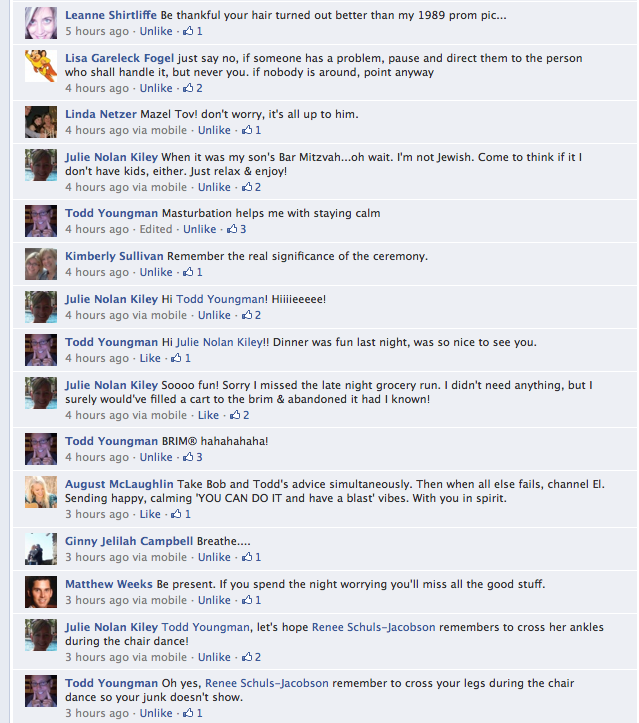
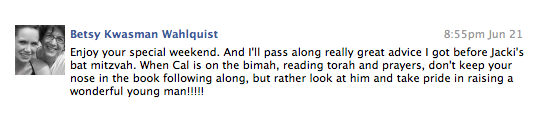
A few months ago, after her daughter had just made her bat mitzvah, my friend Jill held my hands in hers and gave me some advice. She said:

“On your son’s day, don’t look in the book. I mean it. Just look at him. You can read the words and old day and you know the prayers and songs by heart. But just watch him. Watch him watching everyone. Don’t miss anything. Trust me on this.”

Jill is one of my wise friends.

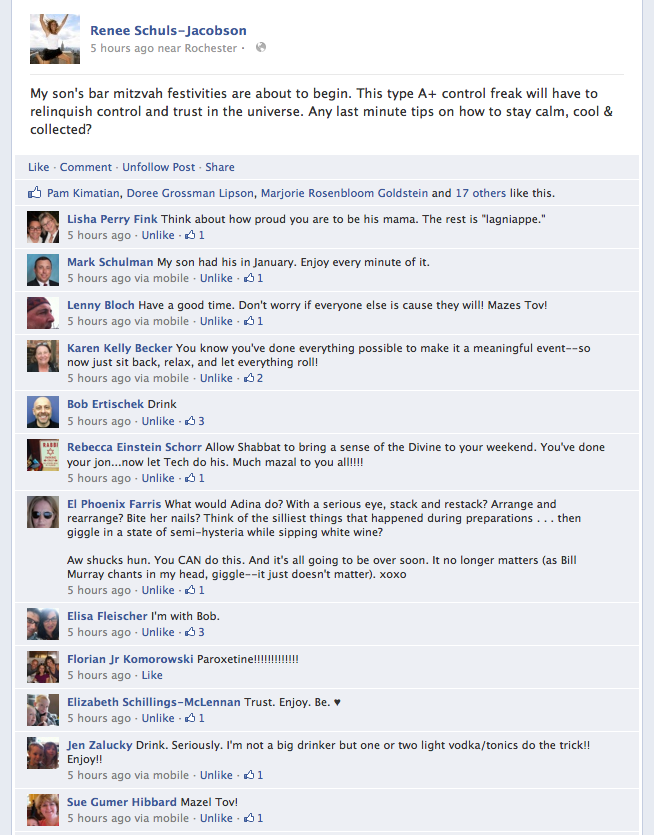
Friday afternoon, I asked a last-minute question of my Facebook friends.

My former camp counselor wrote:

I love this piece of advice, how Betsy’s words echo Jill’s, and I plan to put aside my prayer-book, and just watch my son.

Admire the person he is and the man he is becoming.

(I will look and look and look at my boy even if it freaks him out.)

I will also breathe, enjoy the moment, keep my legs crossed during the hora, enjoy the moment and remember the significance of the moment.

Maybe I’ll even have a little something besides my standard Canada Dry Ginger Ale with a lime.

And what was that other thing?

Oh yeah, enjoy it.

Thanks to everyone for your comments emails and sweet tweets  — from the ridiculous to the sublime — wishing our family well.

I promise I will write you something fun after I get Tech packed and shipped off to summer camp have had a little time to clean up my kitchen process. It’s amazing how many of my brain cells have been reallocated from writing to other creative endeavors like cutting hundreds of triangles and making elaborate stickers and stuffing test tubes with M&Ms.

It will not involve masturbation.

Probably.

What do you think? Is this advice good for any event where friends and family will collide? Anything you would add?

Tweet this twit @rasjacobson

For The Slow Readers Out There: A #LessonLearned by Christine Wolf

Christine Wolf is a big time blogger. I cannot believe she is even here today. Her blog, Riding The Waves, follows the life of a woman embracing life’s transitions: changing careers, helping children to grow up, keeping a 20-year marriage alive — all while enduring Chicago’s ever-changing weather patterns.

Christine has written a middle-aged novel for readers 8-12 years old called My Life Afloat, about a 12-year-old girl from the affluent suburb of Illinois whose parents both lose their jobs in the economic crisis. After their home is sold to avoid foreclosure, they must live on a sailboat in Chicago’s Monroe Harbor. She hopes to see her book published in 2013.

It probably will happen.

And here’s why.

Not too long ago, Christine was 1 of 5 Americans to interview President Obama live during the first streaming Google+ Hangout from The White House on January 30, 2012. She asked the President how we, as a country, should speak to children about the current economic situation. The President provided some interesting answers and, at the end of the interview, he asked for a copy of her book. You know, when it comes out. How cool is that? Here’s the interview.

(Christine appears at minutes 2:15, 17:15 and 48:40):

Christine writes a weekly opinion column about happenings in Evanston, Illinois for AOL Huffpost Media’s Patch.com and you can check out her awesome website! You can LIKE her on Facebook, and follow her on Twitter @tinywolf1

Click on the teacher lady’s stick to see other folks who posted in this series!

• • •

For The Slow Readers Out There

My 7th grade Language Arts teacher, Carolyn Leece will forever be my all-time favorite teacher. It helped that she looked just like Carol Brady without the flippity-do-dah shoulder curls from those later Brady Bunch episodes, but Mrs. Leece’s most notable contribution to my overall development was teaching me how it is acceptable to be a slow reader.

I must have always read slowly, but in the 1970s, it never really mattered how fast the kids read in elementary school. For God’s sake, no one timed us or tracked Reading Recovery logs on us. The educational highlights of my elementary school years were mastering the Dewey Decimal system, making a mobile of the planets (including Pluto), and winning first place in the Multiplication Competition for the number eight.  Before junior high, I read all my Nancy Drew books at my own pace, lingered on every article in Seventeen Magazine (wasn’t my mom so cool to let me read that?), and lovingly absorbed my Judy Blume books without a glance at a clock.

Once I hit junior high, though, it came to light that a) I used way more Love’s Baby Soft Musky Jasmine Scent than human lungs could filter and b) my silent reading was soooooo much slower than that of my peers.

Instead of reading in small groups as we’d always done in elementary school, our 7th grade Language Arts classroom was set up in a much more “mature” fashion with orderly rows of desks facing the front of the room. A grown-up classroom for grown-up kids! In my head, I pretended I was a college girl, and I loved it.

Look how cute she is when she isn’t freaking out about talking to the President of the USA!

That is, until the day I realized how different I was from everyone else.

Mrs. Leece had pulled down the white, overhead projection screen, covering her perfectly looped, chalky script on the blackboard. “Today,” she said, smoothing her platinum bangs to the side, “we’ll be discussing the elements of the front page of a newspaper.” She laid a clear transparency over the projector’s light, displaying a smudgy image of The Chicago Tribune. Every feature was slowly circled and labeled with overhead markers in a splash of colors: The Masthead – blue. The Ears – red. Headlines – green. Bylines – black.

Then, Mrs. Leece asked us all to silently read the first five paragraphs of the first article, then raise our hands once we’d finished

When I raised my hand, I realized I was the last one to do so…by far. Kids around me rolled their eyes and snickered. Who knows how long I’d been staring, slack-jawed, at the black letters on the white screen.

As my face burned and panic rose, Mrs. Leece put her pen on the transparency.

She looked directly at me and switched off the projector’s light (leaving the fan on, of course).  Everyone was riveted. And then she said, directly to me, in front of the entire class, “You know what? I’m just like you.”

I stared.

“I savor every word.”

I blinked.

“We both appreciate lingering on words, don’t we?”

I remembered to breathe.

“Good for you,” she concluded, then went back to the lesson.

One week later, Mrs. Leece asked me if I’d like to babysit for her son.

I was stunned. If the Language Arts teacher thought enough of me to leave me in charge of her own child, she’d probably meant what she’d said. She didn’t just use words to boost my self-esteem; she reinforced her message from an entirely different angle. Her multidimensional approach didn’t have modern-day monikers like Whole Language or Multiple Intelligence Theory, but she left a lasting impression on me. She gave me the message in 1980 that it’s okay to be who you are, and I’ve been sharing that message ever since with anyone who, like me, does things just a little bit differently.

Have you ever had a panicky moment that was quickly and magically transformed?

The Piano Lesson

She was comfortable at the piano

playing for yellow palomino manes

for rains and the wet-kiss of storm,

for doughy clouds which gather, become houses

and horses, and are dispersed again.

She kept her own time

until

he stood behind her

like somebody’s older brother, with one hand

pressing her shoulder

trying to get her in sync

with the tick-tick-ticking pendulum

so she sits up

straight, fingers

stumbled across keys, caught

in cracks.  She falls in after them.

He never smiles, only rakes

pointed fingers through greasy hair

and like a snake sliding

on a purple belly, extends

a flickering black tongue.

She wonders why

she must change

her beat

to his.

Can you guess what my instructions to this assignment were?

Tweet this twit @rasjacobson

How Having a Wedgie Made Me Realize My Son is Becoming a Man

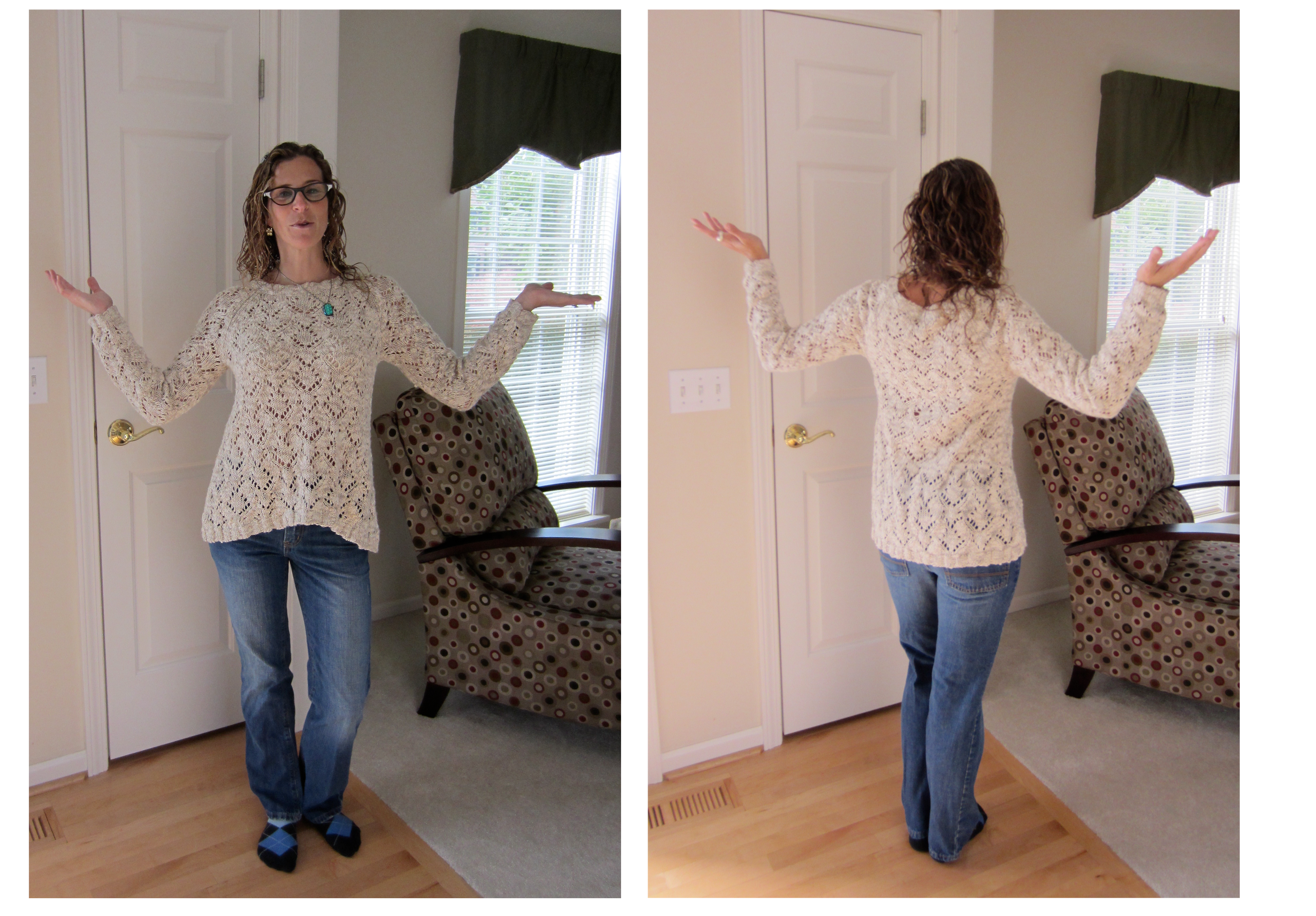
Me in my Express Jeans. Size 2.

It was a regular day.

I spent a few hours at school, met a former student, ran to the post-office, stopped at the grocery store to pick up that one necessary yet missing ingredient for dinner — just like any other day.

On the way home, while sitting in my car, I noticed my jeans were a little… uncomfortable.

You know, they were a little… tight.

By the time I rolled into my driveway, I definitely had a… wedgie.

I couldn’t wait to get out of those pants.

As I yanked the faded denim over my knees, I saw them: little button tabs on the inside of the waistband.

I sucked in my breath.

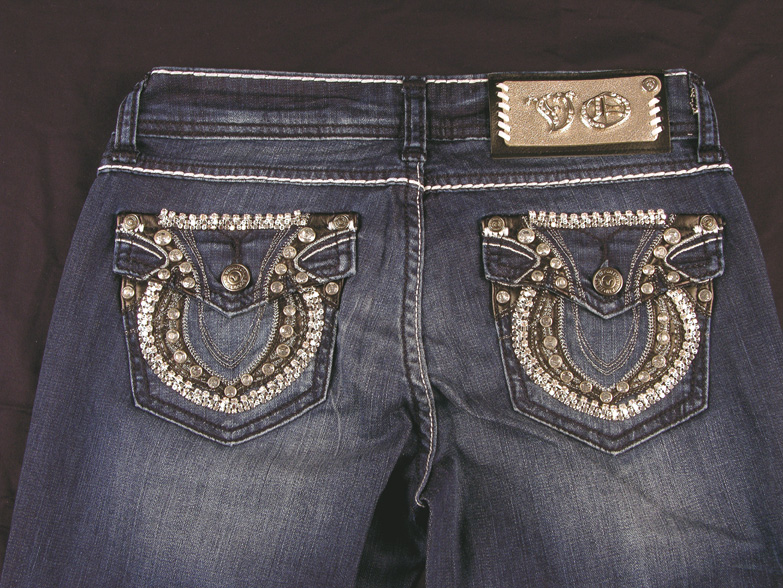
Old Navy Boys Jeans, Size 16.

Because I realized I hadn’t been wearing my pants.

They were my 12-year-old son’s jeans from Old Navy.

I am horrified amazed that my son and I are the same size.

And yet, I shouldn’t be surprised.

We’re wearing the same shoes.

Or rather, I can wear his shoes.

When I hear the mail truck coming, I often slip into his sneakers: the ones he so conveniently leaves by the door.

Of course, I know what this means.

From here on out, he will continue to grow.

And soon he will pass me.

Eventually, I will look up at my child.

And that will be a whole new thing.

Although in some ways, I have always looked up to him.

Watching my son become a man is about so much more than watching him slip into and out of his different sizes of clothes.

Obviously.

He’s always known exactly who he is.

I’ve been the one who has had to adjust my expectations about who I thought he might be.

Just like I probably needed to let out a few tabs on his jeans the other day, now I have to adjust to the idea that my son is becoming a man.

With his own ideas.

And his own interests.

And his own methods.

Which don’t always align with mine.

Emotionally, Tech has always been an old soul.

But now the changes are physical.

I realize our state of equilibrium is temporary.

Like receiving an alert from my iPhone, it is a gentle reminder, that while I am still in him…

…he is out-growing me.

Do boys outgrow their mommas?

(NOTE: Clearly, we have to start being more careful with the laundry. Theoretically, Tech could make the same mistake and end up wearing my jeans. And that would be bad.)

I’m thinking this look would not go over well in the boys’ locker room.

Tweet this Twit @rasjacobson

Calculated Chances: A #LessonLearned by Darlene Steelman

Darlene Steelman grew up in Philadelphia, Pennsylvania: a misunderstood kid with a crazy mind. Finally, at the age of 38, she decided to put that crazy mind to good use and write. When she’s not stopping her car in the middle of the road to protect crossing ducks, she passes time with an office job, writing on her lunch hour, and singing off-key in the car.

By night she works on her first novel. (She also plays me at Words with Friends.)

Darlene’s blog is called Living Sober – Life at Full Throttle. You can also find her on Facebook and stalk her on Twitter at @DarleneSteelman.

Click on the teacher lady's nose to see other folks who have shared their lessons.

• • •

Calculated Chances

As I push 40, there are many things I have learned over the course of those years.  Always say please and thank you; hold the door for old people and be very sure to take the trash outside if it has raw onions in it.

But are any of these really lessons? Maybe the last one.  Maybe.

As a kid I (like most kids) did really dumb things. I once roller skated down my grandmother’s driveway straight into the garage knowing I would fall flat onto my face when I didn’t lift my feet over the lip to get into the garage.

I knew this.  But I wanted to know what would happen.  So I kept my skates on the ground.  Those skates stopped propelling forward when they hit that cement lip. I hurled forward, but not onto my face (thankfully!).  I landed on both knees.  My knees screamed in a bloody fashion as I cried for my grandmother.

My grandmother (who grew up a poor, coal miner’s daughter) called me a horse’s ass and said, “Darlene, get up. Stop crying.  You’ll be fine.”

I was an eight year old in shock at that point.

“Get up?” “Stop crying?” Fine?!”

Turns out my grandmother’s refusal to coddle and baby me worked to my advantage as the years passed.

Well, most of the time.  I still have that “ooh I wonder what will happen if I do this?” mentality.

When I was somewhere between eight and eleven years old, I was in the bathroom at my parents’ house and brushing my teeth with Crest toothpaste or something. My parents used Pepsodent, which is the equivalent of brushing your teeth with gasoline.

Pepsodent toothpaste

Pepsodent toothpaste (Photo credit: Wikipedia)

My mind started going as my eyes drifted over to the Pepsodent.  Pepsodent.  Hmm.  This stuff is pretty strong.  I wonder what would happen if I put it on my eyelids, like eye shadow?

Yes.  That is a thought process I actually had when I was a little girl.

And to keep you from suspense any longer, I did put the toothpaste made with real gasoline on my eyelids.  It burned like hell.  Yet, there was a cool mentholated feeling.

I really think there was potential there to permanently blind myself.

The next three minutes in the bathroom went something like:

“Owwwww!” as I frantically searched around for a towel or something to wipe the damn gasoline off of my eyes.  It was piercing the lids as it seeped into my eyeballs. As I write this I am laughing because I can see myself with flailing arms (much like Jodi Foster in the dark room in Silence of the Lambs) trying to find a wash rag or towel or something in the bathroom to wipe off my eyelids.

Nope. Nothing.  Had I prepared I would have remembered there was never a towel in the bathroom at my parents.  Never.

“Oh my God, I am gonna go blind!” I whispered to myself as I refused to cry.  I could not cry.  Only sissies cried.  I was no sissy.  Gram would not tolerate me crying.

I managed to get myself out of the bathroom and into my bedroom (which thankfully was right next to the bathroom) and get the toothpaste off of my eyelids.  I was able to see clearly about an hour later.

The lesson I learned was this: take chances!  Unless it involves putting chemicals in a creamy mentholated form on your body, then be sure to read the fine print first.

Calculated chances are important.  They build our character and sometimes we learn that the one thing we feared became that thing we loved the most.

When is the last time you really took a chance at something? Did you succeed or fail? Or did you burn your eyelids?

Oy Vey: What To Give (& Not to Give) For a Bar or Bat Mitzvah

A version of this post originally ran back in 2010, but so many people have asked me what is appropriate to give for a bar or bat mitzvah in the last 6 months, I thought I would revise it and post it again. The timing seemed right. Or really, really wrong.

On October 25, 1979, I celebrated my own bat mitzvah in Syracuse, New York. Back then, my family attended an uber Orthodox synagogue where it was uncommon for girls to get the full bat mitzvah treatment. My neighbor (and most favorite babysitter) was the first girl at her Conservative temple to become a bat mitzvah, and I was only a few years her junior.

At our ultra-traditional temple, I wasn’t allowed to have a Saturday morning service for my bat mitzvah; girls had to wait until sundown on Saturday to get things started. I wasn’t allowed to touch the Torah. Or use a yad (pointer). Instead I read from the Book of Ruth, which had been laid on top of the Torah so as to appear that I was reading from the Torah. Mine was a pretty portion. I liked the symbolism of women taking care of other women, and I can still recite the words in Hebrew today.

Thanks to the Reform Movement, today, girls march right up on the bimah, just like their male counterparts. Girls chant their Torah portions beautifully (usually even more melodically than the boys), and congregants have come to celebrate the special days of both sexes with equal parts joy and pride.

I was 100% ready for my bat mitzvah. I have always been a quick study when it comes to language, and Hebrew was no exception. Add a tune to the Hebrew, practice that tune a gazillion times, promise me a receptive audience, and hellooooo… let’s just say, I was ready to perform.

This is not the case for everyone. For some kids, preparing for “the big day” is really strenuous. For introverted kids, it can be a real challenge to get up in front of hundreds of people and not only speak but sing or chant in another language! And then there is a d’var torah where students prepare speeches meant to explain not only what their specific Torah portion is literally about, but also what it means symbolically, philosophically, and how they connected to the portion personally. I always say if a child can get through his or her bar/bat mitzvah day, there isn’t anything he/she can’t do. It’s a crash course in language study, philosophy, essay writing, public speaking and etiquette lessons – all rolled into one.

Google Images

For months leading up to my bat mitzvah, people kept asking me what I wanted. When I was 12, the only thing I wanted was a horse, so I just smiled a lot. And anyway, I knew what typical bat mitzvah gifts were. Besides engraved Cross Pen sets and Webster’s Dictionaries, everyone I knew got the same thing: money, usually in the form of U.S. Savings Bonds. But it wasn’t polite to ask for money, and I would have sounded redonkulous if I had asked someone to buy me a horse.

As my regular readers know, my son’s bar mitzvah is next Saturday, June 23, 2012, and lately everyone has been asking: What does Tech want for his Bar Mitzvah? It’s a hard question to answer. I have to be mindful. I don’t want to say the wrong thing or get myself in trouble.

Whenever anyone asks me about what is appropriate to give as a gift for a bar or bat mitzvah, I feel weird because there is no short answer. I can’t just say, “Buy him a pair of new pair of jeans,” or “Jewish girls love scented candles” because the bar or bat mitzvah is not like a birthday party. It is the recognition that a child has passed through an entryway to life as a responsible Jew, a spiritual rite of passage that connects one generation to another. The day marks a beginning. The ceremony signifies the crossing from childhood into young adulthood and the emerging responsibility to fulfill the commandments and obligations identified with the Torah, the sacred laws and teachings written on parchment by hand in Hebrew. It’s a bigger deal than a birthday party; Jewish children have studied for seven years, including months of tutoring to get them prepared for their few hours alone on the bimah.

That said, I have decided to boldly go where no Jew has gone before: I’m going to suggest what you maybe-might-possibly consider giving (or not giving) to the b’nai mitzvah child.

(*Insert deep breath here.*)

When trying to determine what to give, you have to first ask yourself: How well do I know this person/family? That’s probably the single biggest factor that goes into the decision. You also have to consider how many people are going to attend to event: One adult? Two? The entire family? It matters. Because you have to consider that your host is feeding you. Are there two people attending or seven? Think about what you might pay to have that same group go out for a nice dinner — complete with appetizers and drinks and desserts.

SIGNIFICANT NUMBERS. The #18 in Hebrew means “chai.” (No, not like the tea.) To create the proper sound to pronounce the word “chai” you have to know that the “ch” sound something like an elderly man trying to clear his throat of an enormous ball of phlegm. The “ai” rhymes with the word “hi.” If you can put that together, you’ve got it! For all the math teachers out there, you might be interested to know that in Hebrew, each letter has a numerical value. Cool right? Kinda like a secret code.

The word for “life” in Hebrew is “chai. The two Hebrew letters that make up the word “chai” are chet and yud. Chet = 8 & yud = 10. Chet + yud = 18 or “chai”. Giving money in multiples of $18 is symbolic of giving “chai” or life, so Jewish people often give denominations of chai. In our community, children attending parties alone often give chai in increments: $18 + $18 = $36 (for double chai), $18 + $18 + $18= $54 (triple chai). Sometimes people get creative: a family might give $118 or $236 or one bajillion and eighteen cents — depending on whose special day it is and the nature of the relationship between the giver and the receiver. Family members generally give more than the average party-goer. That said, in some communities, giving $18 may be considered appropriate. It really depends on where you are how the community celebrates.

Some people say they find it helpful to think of a b’nai mitzvah like a mini-wedding, but I don’t think one should think about a b’nai mitzvah like a wedding when it comes to providing a gift for the child. Wedding couples receive gifts because (in theory) they need items to furnish their new home together. Unless you have had a serious heart-to-heart with the parents of the child regarding a specific gift, in general, kids definitely don’t need more stuff.

Traditionally, Jewish people give money to the bar/bat mitzvah child. Why? Because cash is always the right color, the right size, and it goes with everything. (Ba da bump! *snare*)

On a more serious note, historically the bar mitzvah was a way of helping to establish a young man with some money so that he might eventually be able to afford to make a home for his future wife. Yup, back in the old days, 13-year old boys were starting to think about marriage. These days, parents don’t marry off their sons or daughters quite so young. (We kind of like to keep them around, at least until they finish high school.) But once we move beyond that, the b’nai mitzvah became a way to save money for college. That’s just the way it was. All money went into the bank.

Done deal.

Some party-goers have told me they don’t like hearing that all the money goes into the bank; they fret that the child gets “no real gift.” Trust me. Jewish children understand that their gift is the party. They get to invite and then enjoy being surrounded by the people who mean the most to them. They understand that the party is in their honor and that it represents all their years of hard work and study. They understand that they are considered adults (by Jewish Law), and as such they can consider how, and to what extent, they plan to carry out the 613 Mitzvot which cover everything that one might ever do during one’s life. And for a few hours, they get to enjoy being the center of attention.

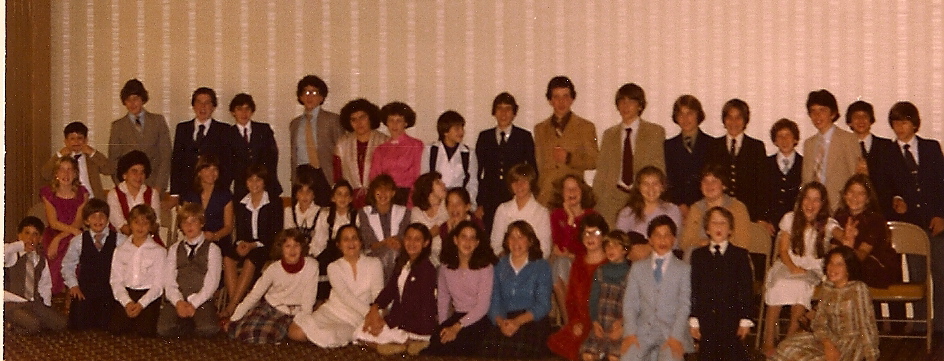
Good lookin’ group. Seriously, we looked good in 1979.

SO WHAT ABOUT GIFT CARDS? People often ask if it is appropriate to give the b’nai mitzvah child an iTunes card, a piece of jewelry, or a gift card to a favorite store.

At the risk of sounding ungrateful (which I am decidedly not), I’m going waaaay out on a limb on behalf of all Heebs out there and asking you (in the nicest of ways) to please refrain from giving b’nai mitzvah kids gift cards.

Consider this: bar and bat mitzvah celebrations tend to be large, so…well… if even 20 kids give the bar mitzvah boy $25 gift cards to GameStop, that child would have $500 to GameStop. Would you want your son to have $500 in store credit to GameStop? Who even knows if GameStop will be in business long enough for a kid to spend that credit! I have heard plenty of horror stories about stores going out of business to convince me to never give anyone a gift card for a bar or bat mitzvah.

WHAT ABOUT GIFTS? Gifts are trickier. I know a lot of people who love to shop to purchase special gifts, like jewelry for girls. But would you want your daughter to have twenty-five pairs of earrings? Or twenty-five “Juicy Couture” handbags? If you give a gift, you have to understand it might end up going back. If there is something you’d like to give a child, the best bet is to ask the parents. They might be able to advise you against getting the kid who doesn’t play sports that cool basketball jersey that your son loves so much.

I know I am not speaking for everyone, but I believe the idea is to save the money for the child to use later — maybe not for an impending marriage — but for something significant, like education or perhaps future travel to Israel.

I know bonds are no longer en vogue because interest rates have taken a dive, but back in the 1970s when that stack of savings bonds went into my parents’ safe deposit box, I understood that the money that had been so generously given to me was to be saved for a time in my life when I would be able to use it for something important. And as my bonds came ripe, many years later, my husband and I were grateful to be able to use that money to pay for our first home!

THE REAL ANSWER. The real answer is there is no right answer because there is no right or wrong when it comes to gift giving. The thought behind every gift is appreciated. Jewish parents don’t plan these celebrations hoping to make money. We plan them to celebrate the years of hard work our children have put in to make it to their special day; because by the time our sons and daughters make it to their b’nai mitzvah day, they have clocked hundreds of after-school and weekend hours learning prayers, blessings, rituals, rites, symbols – even a whole other language while juggling academics, musical instruments, sports, and other extracurricular activities. It really is quite an accomplishment.

Bottom line, when it comes to gift giving, you give from the heart. If you are invited to a b’nai mitzvah, know that the people who invited you really want you there. They really do. People should never give more than they are comfortable giving. Invited guests shouldn’t feel like they are competing with anyone with regard to what they give.

Honestly, the best gift really is money. I know, to some people, writing a check seems like a cold, impersonal gift, but if the day really is about transitioning into adulthood, well… it makes sense that part of the event involves learning about deferring gratification and learning fiscal responsibility.

(Even if the parents aren’t practicing for the moment).

So I’ve talked about the verboten subject. How ungrateful do I sound? What do you think about my advice? And how many U.S. Savings Bonds do you think Tech is going to receive?

Tweet this Twit @rasjacobson

The Book Collector: Bar Mitzvah Tales

Two years ago, Tech and I found ourselves parked in a part of Rochester that we don’t usually frequent. A voracious reader, there was a particular title he wanted to read and only one library actually had it in all of Rochester. And that library was downtown. He was hell-bent on getting it, and he knew that I would not rush to pay for a copy at the local bookstore.

So we went on a wee road-trip.

After he checked out the book with his library card, I suggested he check out their YA section.

After two minutes, Tech returned with a frown.

“This is the worst library ever,” he declared. “There are no books.”

He dragged me over to the YA area, and it was true; the selection was dismal.

“Where are all the kids’ books?” he asked the librarian sitting nearby.

She looked at Tech and told him honestly that sometimes people checked out books from the library and didn’t return them.

“You mean people steal them?” Tech was outraged.

“Some kids don’t have books at home, so they take them from here.” The librarian explained. “Once our books are gone, we don’t have the resources to replace them. And of course, some books just get lost.”

Tech Support tilted his head, trying to wrap his brain around the concept that not all children have shelves filled with books in their homes, the way he does.

In the car, Tech Support made an announcement.

“I want to collect books and give them to kids so they can have books at home,” he said. “Can I do that for my bar mitzvah?”

“Sure,” I said as I screwed around with the CD player.

“Will you help me?” he demanded. “Seriously?”

I looked at my son’s eyes in the rear view mirror.

Tech has always been a collector. When he was younger, it was coins and LEGOs and Webkinz frogs. Later, he fell in love with mechanical pencils and magnets and rubber bands. He has a green bowl filled with origami stars and shelves filled with all kinds of weird stuff.

When my son gets an idea in his head, there is no stopping him.

He decided his goal would be to collect 1,300 books as a mitzvah project.

He picked 1,300 because the bar mitzvah usually occurs on or near a Jewish boy’s 13th birthday.

For him, the number 13 wasn’t unlucky.

It was super-symbolic.

I knew the collecting part wasn’t going to be hard for him.

I just didn’t know what we were going to do with them.

I figured we’d let them pile up and figure out that part later.

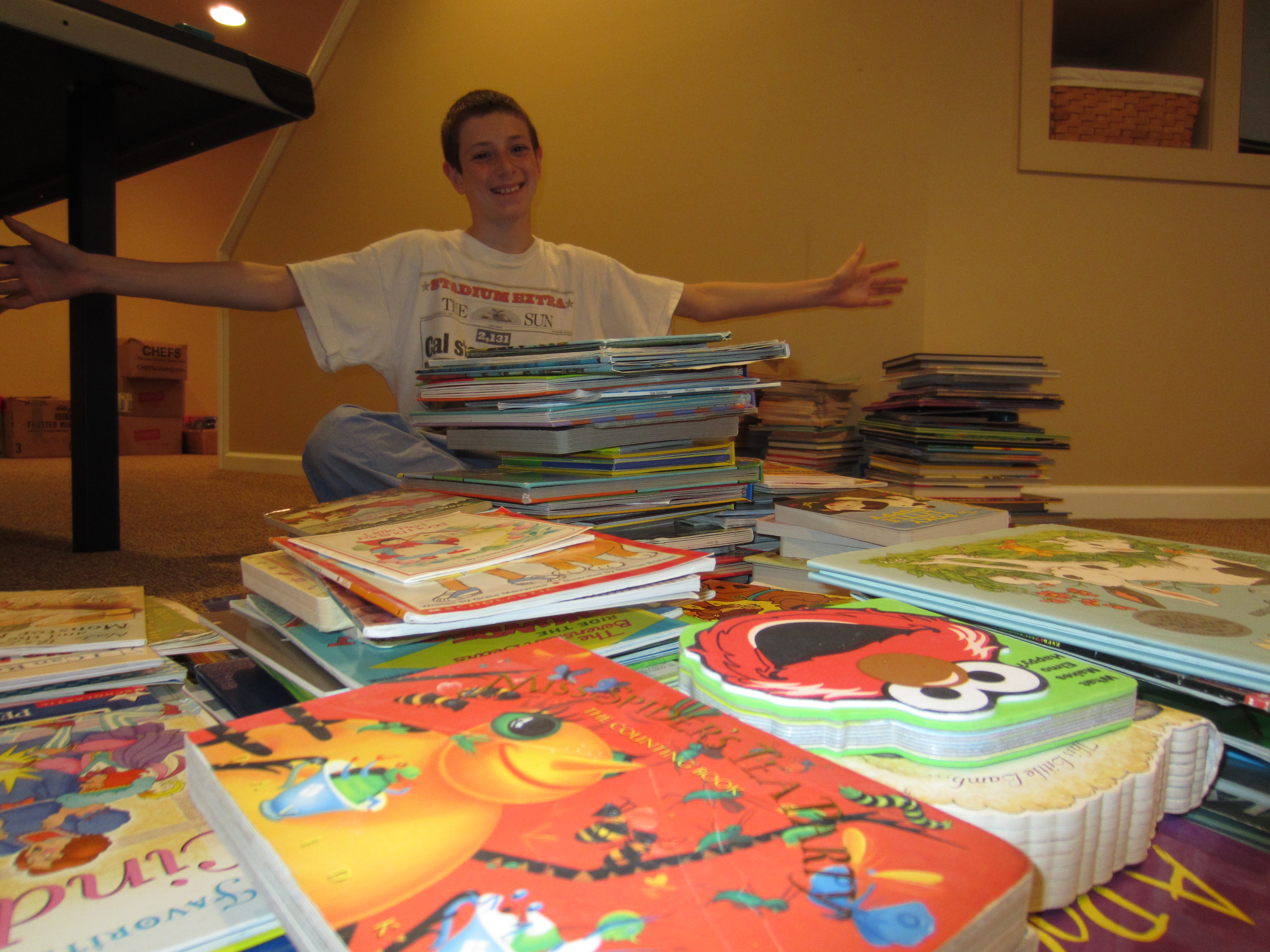
He started collecting just before Thanksgiving and by mid-April and, with the help of wonderful neighbors, friends and the folks at The Rochester Fencing Club, Tech exceeded his goal.

This picture was taken as an after-thought. After I realized we had boxed up nearly all the books.

One afternoon, we stood in the basement.

There were books in bins and boxes and bags.

Everywhere.

“Mom,” Tech said. “Can you find a place where I can give kids the books?” he asked. “So they can keep them?”

“I don’t know,” I told him.

Because I didn’t think I could.

I really didn’t.

I knew we would be able to drop them off somewhere where adults would sort through them and distribute them to other adults for use in classrooms.

But then I stumbled onto The Mercier Literacy Program for Children.

I called the contact person.  We did a little back and forth, and then it happened: a miracle disguised as an email.

It read:

I’m not sure if you’ve heard of the RocRead program taking place in the Rochester City School District. Children read a book, write an essay on it, and once they hand it in, they get an incentive/prize.

So far, students have read 14,000 books through this program.

The details are being worked out right now – but the preliminary plan for Monday, April 30th is to have an event in the library of one of the schools to announce that every child present will receive a book as part of RocRead – with your son present to distribute books.

How does this sound? 

How did it sound?

It sounded like someone took a cup of totally cool and mixed it with three pounds of awesome.

The following Monday, Tech sat in the front seat of my Honda and I drove to school #41 in a car stuffed from floor to ceiling with books which we had sorted by grade level. When we found school #41, Tech borrowed a cart, loaded it up with boxes, and zigzagged his way back into the school.

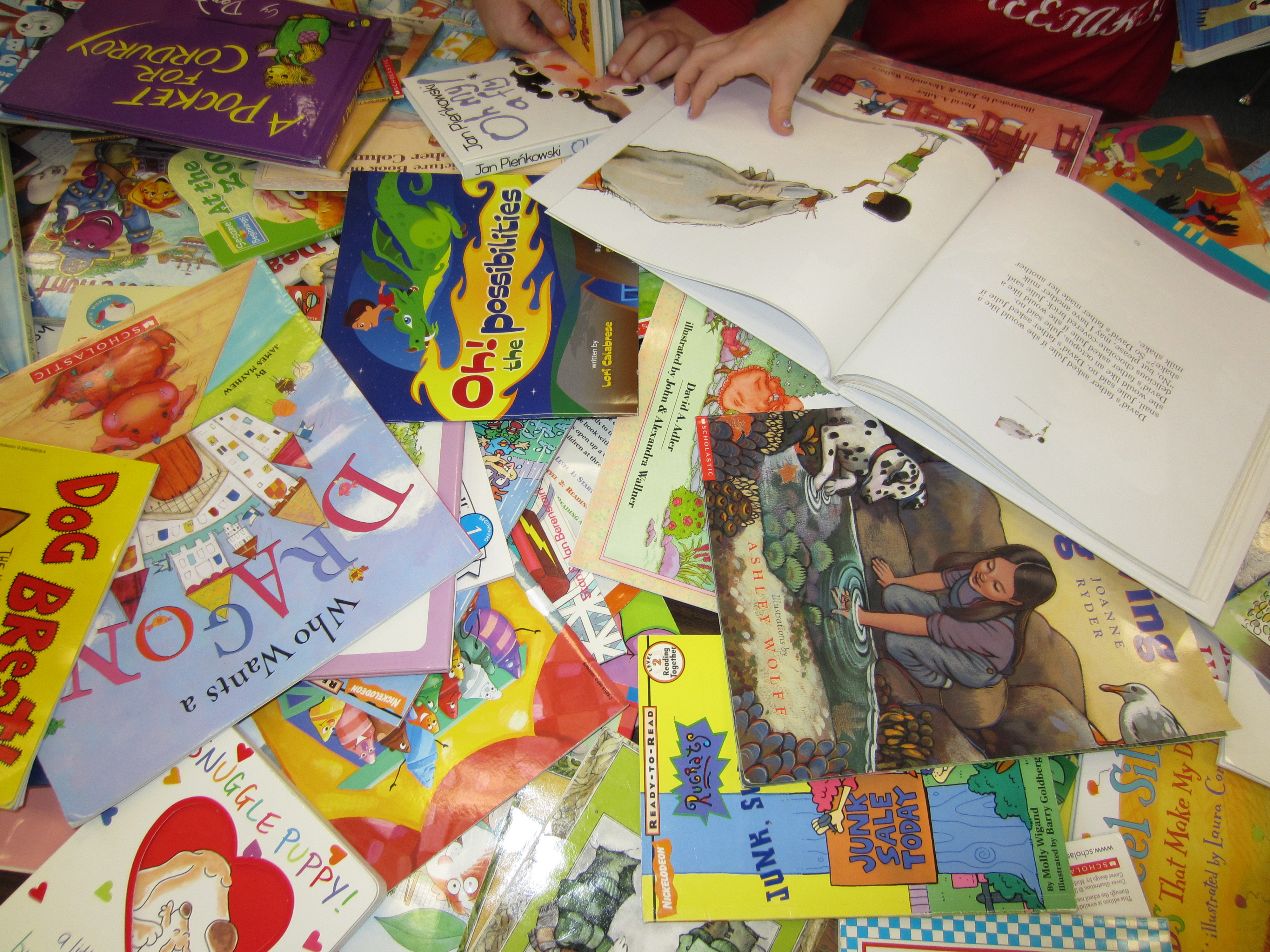
The principal appeared. She greeted my son with a hug, and we all headed downstairs to the library. The custodian materialized with the cart and told us she would bring everything to the library on the service elevator. While Tech chatted it up with the librarian, the custodian appeared and I scattered books across two long tables until both surfaces were covered.

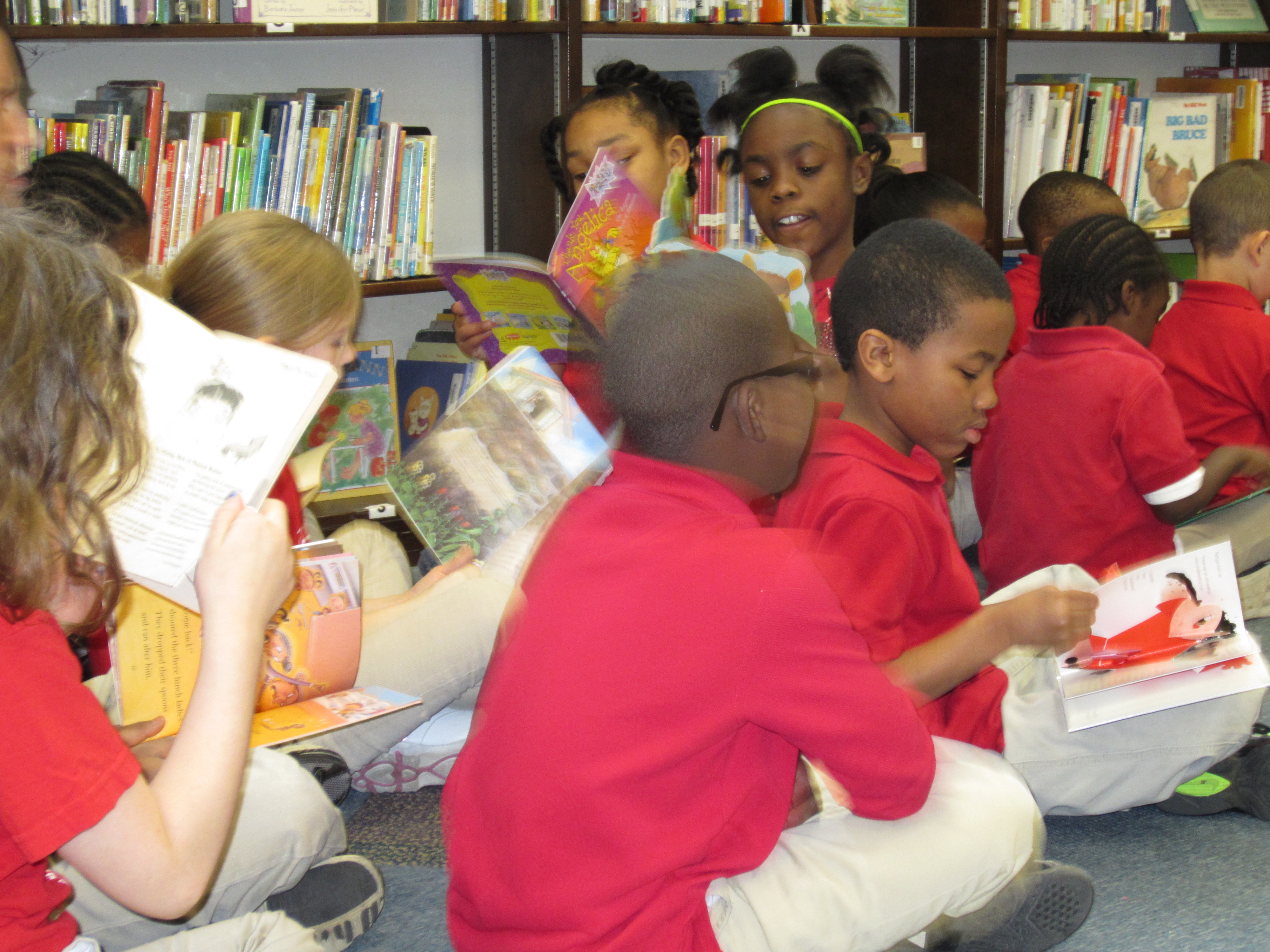
And then they came. Wearing uniform red shirts and khaki pants, the children sat crisscross-applesauce. The school librarian introduced Tech and asked him to speak to the students. I was certain he was going to freeze up. We had not prepared for that kind of thing. He did not know how to speak in front of…

…but there he was.

Doing it.

Explaining why he had started the book collection.

And when the librarian announced that each student was going to get to take home two books from Tech’s collection, the kids bounced up and down and cheered.

Tech smiled.

As the kindergarteners walked around the tables, Tech encouraged them to shift the books around and not to only look at the top layer. Once the children made their selections, they returned to their designated areas on the floor and another group came up.

I have to tell you, it was a beautiful sight.

They were all reading!

Or trying to.

Some silently. Some aloud. Some to each other.

The local television crews were there. Tech was interviewed three times, and even though he really wanted to downplay his role, he went along with whatever the people asked him to do.

I always knew that there would come a day that I would look at my son — the person who carries 50% of my DNA — and see him as the person he might become.

On that day, I saw my son as a person who doesn’t just have the potential to do good things, but as a person who is already doing them.

And I was amazed.

Because up until then, I just thought he was the boy who forgot his coat in his locker.

The kid who left his water bottle at fencing practice.

The dude who still needed to be reminded to brush his teeth.

But on that day, I saw my son as other people see him.

I realized that he likes to help other people.

And not because I told him to help people.

But because he really likes to.

On that day, I thought about the way he used to put together his elaborate LEGO sets, and I realized his tenaciousness was all about creating a person who would sets his sights on a goal and then surpass that goal.

My son is not finished.

Just today he asked, “What should I do next?”

I shrugged, confident he will figure it out.

Because that’s what he does.

This year, my son reminded me that individuals can repair the world.

I almost forgot.

How do your children inspire you? Have you ever done a community service project with your family? If so, what kinds of things have you found the most rewarding?

Tweet this Twit @rasjacobson

Falling Down: a #LessonLearned by Katie Sluiter

Today I have Katie Sluiter at my place, you guys! You have no idea how long I’ve been following, KT! I’ve been reading Sluiter Nation like… forever. And as soon as I learned what Twitter was I found Katie at @ksluiter. I fell in love with Katie because she was a teacher. And then I learned she struggled with postpartum depression, which I am pretty sure I had after Tech was born. I just didn’t ever get a formal diagnosis. Way back at the end of last year, Katie asked me to write something for her — which was super exciting, especially because Katie is a Big Blogger. (Even if she denies it.) Oh, if you prefer, you can follow her on Facebook.

Click on the teacher lady’s butt to read posts by other people who have written in this series.

• • •
Falling Down
• • •

As a little kid, my dad was the one who taught me how to do a lot of things: ride my bike, change a car tire, fish.

Katie learned a lot from falling down.

He also taught me to ice skate.

I remember being out on our frozen pond, bundled up in my winter coat and snow pants with my scarf covering my entire mouth so that when I talked…or breathed…it became moist and warm.

My dad had helped me lace up my mom’s old skates, took my mittened hand, and pulled me out to the open ice.

I don’t remember much of the logistics of the lesson, but I do remember falling down.

A lot.

Finally I got frustrated and whined that I was no good at skating and I didn’t want to do it anymore.

My dad pulled me up and said, “But every time you fall, you are learning. Just think of how much more you know now than you did when we started.”

I gave him the hairy eyeball, assuming he meant I knew a lot more now because I had fallen so many zillions of times.

“No, really,” he continued. “Every time you fall, you learn what not to do next time. Or at least you should.”

This lesson comes back to me every single time I “fall” in life.

But not until I pout a lot and whine about how I want to quit.

I have tripped, stumbled, and flat-out fallen as a mom. Especially when I was a new, first-time mom.

But it’s something I can’t quit. I can’t just say, “Man, I suck at this. I am done.”

Don’t think I didn’t try.

My older son, Eddie, was a difficult baby.

Ok, actually, “difficult” is putting it mildly.

He was a colicky, digestive mess.

This is Eddie being a colicky mess.

It was totally him. Not his fault, but it was him.

But I didn’t know that. Not at the time.

At the time, it was me. I was stumbling…not able to soothe him, not able to provide him with food that wouldn’t upset his tummy, not able to know what his cries meant.

I was sliding all over that iced pond not knowing what to do to keep myself off my ass and skating straight.

Every time he cried, I wanted to figure out what was wrong and fix it.

I didn’t know that sometimes? Babies just cry.

So I fell down over and over.

And I beat myself up for it. Which really, was another mistake. Another stumble.

This became a pattern with my son.

He is now almost three, and I have fallen down millions of times in my education on becoming a mother.

He has not always been the most patient teacher, but he is very forgiving.

Sometimes, my mistakes…my stumbles…are hard enough that we both fall. We both sit and cry and tend to our bruised bottoms.

But we are learning.

We are making it through.

I had no idea how awesome of a teacher he was until my second son was born in March.

Suddenly all those things that caused me to trip and fall–the crying, the spit up, the time management, the anxiety and depression–they were easier. In fact, some of them were non-existent. I skated right through them.

In fact, I am still up on my skates.

Oh, I have tripped here and there, but I have pretty much mastered the basics.

Now I am able to move on to learning fancier moves: taking both kids to Target, bringing them both to birthday parties, showering daily.

Two kids? I think I can.

(What? That was difficult the first time around!)

I still fall down from time to time.

But that’s okay.

I’m in this for the long haul.

I’m a life-long learner.

What are you still figuring out? What are some of the best lessons you have learned as a parent that you wish you had known earlier?

• • •

Tweet this Twit @rasjacobson & @ksluiter