Category Archives: Education

The Giver: Is It A Happy Ending?

The magic in Lois Lowry’s The Giver occurs in Chapter 19 as the main character, the soon-to-be twelve-year-old, Jonas, realizes that everything is not as it seems in his seemingly idyllic community.

Up until Chapter 19, my l’il dude had been feeling really good about the community in which the characters lived their daily lives. He believed everyone lived in total equity. He loved how everything was shared communally, how everything was controlled by “the Elders,” right down to the vocations people were given, the people they were matched up to marry, and the children they received to raise. I think he was ready to up and move there.

Monkey didn’t seem to catch that individual identity had gone the way of 8-track cassette tapes, that no one had any emotions at all, and everyone was essentially just like everyone else.

In Chapter 19, Jonas makes a major discovery. The process of “release,” which is mentioned throughout the book, is nothing more than lethal injection. Needless to say, Jonas is horrified as he watches a video of his own father, a caregiver, performing the procedure on an otherwise healthy infant.

Monkey’s teacher asked the students to please keep the pace with fellow classmates for this book and asked them not to read ahead – something that was exceedingly difficult for my voracious reader.

I promised him there was a reason.

And then one day from the couch, I heard Monkey’s voice “Holy. Guacamole.”

I knew he had reached Chapter 19.

Sitting up, Monkey looked at me. “So…so…so… so… so if they kill people there must be other things that they do that don’t discuss, like who removes the bodies and what do they do with them? There must be tons of secret stuff that goes on.” He paused for a moment, “There are always helicopters flying overhead. I never thought about it. But maybe they are more about surveillance than transportation.”

He was putting things together, making connections. The synapses were firing.

“This book is creeping me out!” he exclaimed and then disappeared behind the couch again to continue reading.

A few nights after Monkey had finished reading The Giver, my son announced, at dinner, there had been a very lively discussion about the end of the book. Apparently, Mrs. English Teacher had asked her students the penultimate question: Do you think The Giver has a happy ending?

Best. Question. Ever.

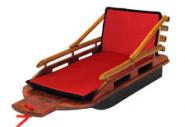
Monkey reported that some of his peers thought the book had a very happy ending, that Jonas had successfully escaped from his community on his bicycle with Gabriel, a sick infant that his family had been caring for.  They justified their answers by saying they knew it was a happy ending because at the very end, Jonas was on a sled with Gabriel, and they were preparing to slide down into a cozy looking village where there were lights. Monkey said those students felt confident that Jonas and the baby were going to be able to survive in this new community called Elsewhere.

I held my breath.

Because that interpretation is soooooo not it.

Nervously, I asked my son if he agreed that The Giver had ended happily.
Monkey chewed his chicken about fifty times, then swallowed. Finally, he shook his head. “Not at all,” he said, adding that he thought that it was pretty much impossible for it to be a happy ending given that the vision Jonas had of his idyllic community was way too similar to a vision that the Giver had shown Jonas earlier in the book.

Monkey said, “Jonas was probably hallucinating and kinda holding onto one last bit of hope before he and the baby froze to death.”

Wow, if my Monkey was gruesome in his analysis, I didn’t really care.

He was spot on.

I asked my son if he had spoken up and stated his alternate interpretation of the ending and he said that he had. He said other students agreed with him, but a lot of people argued that Jonas had made it out and that he and the baby were going to be fine.

“Some people can’t face the truth,” said Monkey, sounding way too mature making me want him to go upstairs and re-read every book in the Diary of a Wimpy Kid series.

Whether or not all the kids agreed about the ending was not the issue for me. I was just happy that my son had turned the corner and gotten from the novel what I believe readers are supposed to get, the concept of dystopia. From the way he explained it, Monkey’s teacher facilitated an amazing discussion about culture and government, people and lies and truth, when people need to know things and when it might be in their best interest not to know things. I was so grateful that this discussion took place in a classroom with a responsible teacher there to facilitate things.

And while every teacher wants her students to have that epiphany about the literature, the reality is that folks will always have different interpretations of the ending of certain books and, frankly, that’s what makes those books delicious. In The Giver, one’s understanding is truly based on his intellectual and emotional willingness to accept that things are not always what they seem.

What makes The Giver a classic is that it is often the first piece of real literature that students read which allows them to look critically at our own government – which can be scary for kids. It forces them to ask uncomfortable questions: Has there ever been a time when our government has knowingly lied to us? Are there justifiable reasons for our leaders to withhold the whole truth?

As I washed the post-dinner dishes that night, I was happy that Monkey’s class had a great discussion and, from the way it was reported to me, none of the students were told how to think or what the “right answer” was. They were, instead, instructed to look to the literature to find the answers and then left to squirm in their own uncertainty, which can be a very good thing.

What’s got you squirming?

Tweet this Twit @RASJacobson

Call Me Relentless

Google Images

Since I didn’t teach this semester, I am a little out of the loop. Okay, a lot out of the loop. It’s amazing how quickly one can fall right out of the loop. So I am a little loopy. And even though Fall 2010 was a tough one, filled with cheaters plagiarism issues and unintentional falls down staircases, and confrontations in elevators, I am pleased to report that I no longer feel like a three-legged table. I am 100% centered again. In my 100% always off-kilter way.

Back in March, I received an email from The Scheduler at the community college where I have taught as an adjunct for the last four years, stating that it was time to start thinking about courses for the fall.

Let’s just say I was a little geeked up excited when The Scheduler’s email arrived, so I tapped out a quick reply. Upon reflection, I see that if I had myself as a student, I think I would kill me. I am one positively relentless human being.

• • •

From: Me

Sent: Wednesday, March 02, 2011 9:30 PM

To: The Scheduler

Dear Scheduler:

Is this form for Fall 2011? Even though it says “Spring 2011 Scheduling Preferences,” in the subject line?

• • •

From: The Scheduler

Sent: Wednesday, March 03, 2011 10:49 AM

To: Me

It should have been Fall 2011!

Thanks for the good eyes!

• • •

From: Me

Sent: Wednesday, March 04, 2011 9:30 PM

To: The Scheduler

I just don’t want to miss my big chance.

• • •

From: The Scheduler

Sent: Tuesday, March 08, 2011 9:36 AM

To: The Entire English & Philosophy Departments

Um….  Mr. Perfect Here.

I realize I didn’t name the Fall 2011 schedule request form correctly.

So, even though the form says “Spring 2011” let’s just pretend it said “Fall 2011.”

And if you’re super picky, here’s the attachment.

Whoops.

• • •

Call me crazy, but I am 97.3% sure that The Scheduler was talking specifically to me when he used the words “super picky.” I decided that the best thing to do was to lay low.

I did.

For 27 hours.

• • •

From: Me

Sent: Wednesday, March 09, 2011 12:07 PM

To: The Scheduler

Dear Mr. Perfect:

Mrs. Anal-Retentive here.

Was that form just for full-timers? Or were adjuncts supposed to respond, too? (*holding my head*) I’m sooooo confused. Anyway, I’m shooting you my response via attached email since I am off-campus because I don’t want to blow my big chance. I hope that is not too much of a pain.

I’ve got a lot of Mrs. Anal-Retentive with a side order of Li’l Pain in the Arse goin’ on.

Either way, I hope you get the gist of what I’m hoping for with regard to Fall 2011.

Any questions, feel free to call me or just berate me via email.

• • •

From: The Scheduler

Sent: Wednesday, March 09, 2011 12:09 PM

To: Me

Hi, Renee!

Yes, you’ll get another form specifically for adjuncts in the next day or so.

It’s less complicated, and it has more information regarding late starts.

Thanks for your patience.

• • •

From: Me

Sent: Wednesday, March 23, 2011 2:22 PM

To: The Scheduler

So I filled in that first form. You know, the one that I wasn’t supposed to?

Can I consider myself in the cyber pile? Or do I need to redo and put a hard copy in your mailbox?

• • •

From: The Scheduler

Sent: Wednesday, March 25, 2011 7:15 PM

To: ENG/PHL adjuncts

Subject: 2011 Fall Adjunct Schedule Request Form

Please complete the form attached, and return it to my department mailbox by Friday, 8 April 2011.  A hard-copy has been placed into your department mail folder. If no form is returned, I will assume that you are unavailable in the Fall. Assignments will be distributed by late April.

• • •

From: Me

Sent: Wednesday, March 25, 2011 7:15 PM

To: The Scheduler

Hi Scheduler:

Okay, I’m re-submitting.

On the correct form.

Just to prove my uber-dedication.

I hope it is not a problem that I am submitting an attachment, as I am not on campus this semester.

I’m not usually a non-compliant, pain in the patootie.

Sometimes it just seeps out a little.

• • •

I experience what feels like an outrageous gap in time. During this three-week silent treatment period, I panic. I wonder how much The Scheduler hates my guts and how low I have slid down the adjunct totem pole. I decide that I will take anything he offers. I decide I will teach at a ridiculous hour, even if it requires hiring someone to drive my child to his after school activities. I consider sending The Scheduler a bouquet of flowers from Teleflora.com, just to show him how much I care.

Instead, I sent him another email.

• • •

From: Me

Sent: Wednesday, April 17, 2011 10:59 PM

To: The Scheduler

Um… Hi Scheduler:

I know you are on break, but – as I explained before – I have been a naughty girl, and I haven’t been checking my school email account as I’m not teaching this semester.

Have decisions been made about the fall semester?

Do I get to have even a single section? (*she asked hopefully*)

I saw Most Awesome Department Chair make a mention about book orders for the summer session, and I know Highly Muscled Book Store Dude likes fall orders to be in as soon as possible.

Let me know when you get a moment.

Thank you.

• • •

From: The Scheduler

Sent: Wednesday, April 19, 2011 12:24 PM

To: Me

I’ll be sending out a fall scheduling notification by the end of April; none has been announced.

This will give you plenty of time to submit book orders for the fall, okay?

• • •

Okay, so I am supposed to wait until the end of April.

I can do that. I think I can. I mean, I will try.

Really. Hard.

• • •

From Me

Sent: Tuesday, May 3, 2011 11:16 AM

To: The Scheduler

Dear Sweet Scheduler:

You mentioned that scheduling should be done by the end of April.

And now it is May.

So I figured I’d just send a quick email to… you know: do what I do.

Hope you had a great Spring Break.

• • •

From: The Scheduler

Sent: Wednesday, May 6, 2011 12:06 PM

To: All Adjuncts

Subject: Fall 2011 Scheduling Update: Adjuncts

Dear ENG/PHL adjuncts:

I ask for your patience regarding schedules that I had hoped to have complete by late yesterday.

Some schedules will be posted today, and the remainder will be completed by Monday.

Thanks, again, for your patience.

• • •

Clearly, my roiling anxiety has caused The Scheduler to send out another email. It is all my fault. He must think I am crazy. I start wondering if he has heard stories about me, if they are discussing me during faculty meetings. I wonder if my constant emailing could be construed as cyber-bullying.

The Scheduler requests patience.

I wait four days.

• • •

From: Me

Sent: Wednesday, May 10, 2011 10:02 AM

To: The Scheduler

Should I freak out yet?

Or are you still scheduling?

• • •

From: The Scheduler

Sent: Wednesday, May 10, 2011 10:05 PM

To: Me

Don’t freak.

• • •

From: Me

Sent: Wednesday, May 10, 2011 10:10 AM

To: The Scheduler

Is it okay if I still freak?

I like to do that on Tuesdays.

But I’m glad I’m not “packing my knives” or “the weakest link,” and I’m glad “the tribe” hasn’t spoken.

You know what I mean.

Phew. (*wipes brow*)

• • •

From: The Scheduler

Sent: Wednesday, May 10, 2011 10:12 PM

To: Me

You’re funny.  Have we met in person?

• • •

From: Me

Sent: Wednesday, May 11, 2011 12:13 PM

To: The Scheduler

Dear Scheduler:

I am pretty sure we have met, but obviously my name didn’t stick.

I’m the cute one. 😉

Will this get me the class of my dreams?

• • •

From: The Scheduler

Sent: Wednesday, May 11, 2011 1:46 PM

To: Me

Hi, Renee.  I have you down for classes X and Y on such and such days at such and such hours. Fabulous Secretary will enter the information into the evil computer system this afternoon.

• • •

From: Me

Sent: Wednesday, May 11, 2011 2:13 PM

To: The Scheduler

Thanks Scheduler!

You totally rock!

And thanks for bearing with me while I have nagged you.

For weeks.

Or has it been months?

I’m like the wife you never wanted.

• • •

At long last, this squeaky wheel knows she will have a place to roll. Come September, I will have people to call my own. Life is good. (It is also good that The Scheduler cannot see me doing my dance of joy right now.) Because we all know what happened the last time I went dancing.


The Right Words

This YouTube video spoke to me.

Once, someone hurt me. Physically. Emotionally. I trusted him, and he pushed my head under the water and drowned me. He never apologized. Until he did. Many years later, he said:

I’m sorry for ruining the thing we had.

Strangely, that one sentence – spoken without defensiveness or anger – made my lungs fill up with air. I started breathing again. I felt I’d set down a thousand pound steamer trunk, and I didn’t even know I’d been lugging a steamer trunk around!

Can you recall a time in your life when you experienced the power of words? When “getting the words right,” – either saying them or hearing them or writing them or receiving them in writing –  really mattered and made an impact on you?


Find me on Twitter @rasjacobson

What The Huh?

This one comes to me from a College-Instructor-Who-Shall-Not-Be-Named, for reasons that shall become obvious. It is hilarious and awful all at the same time.

To: My Professor
Subject: Droped

Dear Professor:

I appologiz for not being in class the last and past week. But there is alot of stress put on me by other classes i can’t find myself a way to get to school on time for ur class. I know the matirial and everything is starting to let up. So i ask u to plez let me bake into the class. i promis to show up for the rest of the classes 😦

Sincerely,
Goin’ Nowhere Fast

Nice, huh.

In this horrendous wonderful day and age, where we can reach out and touch someone via text or email, college educators receive hellish quality correspondence like this all of the time.

All. Of. The. Time.

The lucky recipient of this email told me that this piece of correspondence – which arrived via email – was the first time he’d had contact with the student, and it came after his student had missed 12 out of 19 classes, two unit tests, and one quiz. 

So think about it? How would you respond to an email like this?

Is this what we have come to with all of our short-cuts and abbreviations? Do teachers at the college level have to respond to emails and texts filled with errors like this?

Do you feel sorry for the kid? I mean, he just wants “bake into the class.”

Or would you just say nothing? Because the student has already been withdrawn and, clearly, he is already fried.

I sometimes wonder if parents know that their kids are communicating with their college professors like this.  Seems we have to teach our children about how – sometimes – it is necessary to use different language to communicate to different audiences. About when it is appropriate to abbreviate and when it is necessary to use a more formal tone, proper grammar, and a spell checker. About when to use and refrain from using emoticons. According to Tim Elmore, today’s “screenagers” don’t get it. Or they get something else than us “old folks.”

Crosby, Stills and Nash sang: “Teach your children well.” Are we confusing our kids with all this “texting”? Or do teachers just need to loosen up and accept that the times  (and the language) are a-changing?

What Teachers Make

I can’t imagine that there is anyone in America who hasn’t seen Taylor Mali’s video rant.

But just in case, here it is again, in a different version.

Because it really is true.

What do you think about this piece of free-verse performance art? Does it make you think of any particular teacher? Care to share? And if you are a teacher, which part do you relate to most?

And what exactly do they say about lawyers? 😉

Words That Piss Me Off

Juxtaposition of circle and square cakes

Is it an English teacher thing or do normal other people have a collection of words that carry emotional weight for them?

By this I mean, do regular folks like certain words and dislike other words? Or do most people just walk about the earth caveman-style without worrying too much about things like this?

Let me give you a for example.

I was reading a blog the other day.

It mentioned the word “juxtaposition.”

Do you get it?

I have to tell you that I have a thing about the word “juxtaposition.”

That word pisses me off.

First of all, I missed it on my SAT’s over 20 years ago.

(Okay, fine, over 25 years ago – whatever!)

I totally remember coming out of the lunchroom after being made to sit next to a repetitive pencil-tapper for three consecutive hours on a gorgeous Saturday morning. (Let’s not even discuss the fact that I have a thing about repetitive noises. My closest friends know that if they tap something more than five times in a row, I will throw them to the ground.) Let’s just say, I was definitely a little twitchy.

Anyway, I came out of the cafeteria and went a little ape-shit.

Me (all indignant): Who even knows what juxtaposition means? Anyone? I mean who would know that word?

Everyone looked at me blankly.

And then one person defined it.

Perfectly.

Mr. Smarty Pants: Juxtaposition is the act of placing close together or side by side, for comparison or contrast.

Me: Really, Mr. Smarty Pants. That’s awesome that you know that. Can you use it in a sentence?

Mr. Smarty Pants: ‘I like the construction of sentences and the juxtaposition of words – not just how they sound or what they mean, but even what they look like.’ That’s a quote by Don DeLillo.

Me: Who the hell is Don DeLillo?

Mr. Smarty Pants: Where did you say you want to go to college?

I was sooooo pissed.

But from that moment forward, i have never forgotten the dang word.

Do you get it now?

And the reality is, I love the juxtaposition of words and ideas!

Oh, the irony!

And guess what? Now I use the word “juxtaposition” all the time.

Almost daily.

Just because.

I will not tell you the other skillion words that drive me bonkers bother me because if I am ever taken hostage in a bizarre twist of events that would lead to the taking of hostages, I would rather be water-boarded than have people whisper my least favorite words in my ears.

Can you imagine if my captors juxtaposed the whispering of all those awful words with simultaneous, repetitive pencil tapping?

That, dear readers, would be hell.

(*shiver*)

What words drive you to pain and chaos, and why?

What the “Huck”?

Traditional raft, from 1884 edition of Adventu...

Image via Wikipedia

A few months ago, I wrote a tirade about the Alabama publisher who took The Adventures of Huckleberry Finn and “sanitized” it because school teachers confessed they felt uncomfortable teaching it in their classes due to the  use of the “n-word.”

I ranted and raved about how wrong it is to alter books and how it sets a dangerous precedent.

I never posted it.

I realize that not everyone will agree with me, but I think much (but certainly not all) of the power in Huckleberry Finn is in Twain’s brilliant use of language and how the plot morphs from a story of one, young, rather selfish boy on a journey to a story about a boy and a man, together, against the world.

There is an incredible irony that engaged readers will pick up on that Jim, the slave, referred to as a “nigger” 219 times during the course of the novel, is the most moral, loving, genuine, forgiving, character in the entire book. He is probably one of the greatest father-figures in American Literature. And, if read correctly Huckleberry Finn stands as one of the strongest condemnations of racism in American literature as Huck recognizes Jim’s humanity and says he would rather go to hell than send Jim back into slavery.

I had written much more – about how it is important to discuss the power of the “n-word,” its origins, and its different contexts in different communities; how it is necessary to challenge students about the casual use of the “n-word,” to get them to consider if it is ever okay to use this word and if so, who can say it, when and under what circumstances.

I caught this bit on Huckleberry Finn and the N-word debate on 60 Minutes and about 7 minutes in, I just knew that this report was saying it better than I ever could. If you ever read Twain’s novel or have kids who read it or might read it, it is worth the next 12 minutes of your time. And if you are an educator, I recommend you see it – first, to think about your methods. Because this is a book where one has to be mindful. But this piece of journalism would be great to show in one’s class to get a real discussion on race relations going.

If you were an English teacher, would you use the version with the original text? Or would you choose the new version where the “n-word” is replaced by the word “slave”? Or would you avoid the discussion on race altogether?

Lessons From An Only Child & Three Dead Fish

Calvin is an only child

Sometimes I’d really like to flip Granville Stanley Hall the bird.

Problem is, the dude is dead.

About 120 years ago, Hall established one of the first American psychology-research labs and supervised the 1896 study “Of Peculiar and Exceptional Children,” which described a series of only-child oddballs as permanent misfits. Hall concluded only children could not be expected to go through life with the same capacity for adjustment that children with siblings possessed. “Being an only child is a disease in itself,” he claimed.

Thanks, Granville.

You, like, totally rock.

And by rock, I mean suck.

While much work has been done to debunk the myth of the weirdo only child, most people still think one is the loneliest number. And, shockingly, strangers continue to ask me, over 10 years after my son was born, when I plan to have another. As if having just one is the worst, most unthinkable thing I could ever do.

You’re hearing it here first, folks: I’m not having any more kids.

The womb is closed.

Meanwhile, Hubby and I are doing our best to raise our singleton son, now 11 & 1/2 years old, and we think we are doing a pretty good job of it. I was recently thumbing through a journal that I kept when Monkey was very small, and I stumbled across an anecdote that seemed apropos to share here.

When Monkey was about 3 years old, he won three identical goldfish at a carnival. Actually, he didn’t win them so much as acquire them; the man at the booth said it was late in the day, that it was the last day of whatever festival we were attending, and he basically wanted to unload the fish. So when Monkey’s dart popped one balloon he became the “big winner” of the day and we came home with a plastic baggie o’fish.

Monkey promptly named the trio the best names he could think of: “Mommy,” “Daddy” and “Monkey.” And he fed them (sometimes). And he watched them swim (sometimes). And he disappeared when I cleaned the bowl (always). And for a while, things went along swimmingly. The fish were nice to have, but he didn’t seem very invested in them.

One morning, hubby and I awoke to the sound of Monkey screaming, “Mommy! Daddy! Mommy! Daddy!”

Husband and I jumped out of our bed and ran down the hall to find our son standing on top of his bed staring into the fishbowl.

“Mommy and Daddy are dead,” he announced.

Now these were three completely identical goldfish. There was absolutely nothing to tell them apart. no telltale spots, no interesting marks, no places where anyone had been chomped, so I had to ask.

“Monkey, how can you tell that it’s Mommy and Daddy that didn’t make it?”

My son looked at me like I was an alien. “Well, because as you can see,” he said, pointing into the tiny little bowl, “Monkey is right there. He’s fine.”

Duh.

Hubby and I looked at each other. Our child didn’t seem to be traumatized. In fact, when we asked him what we ought to do with the two fish that had gone belly-up, he replied pragmatically, “Probably flush ’em.”

Like most only children, Monkey has hung out with his cousins and turned his closest friends into pseudo-siblings, knowing it’s not the same as having real brothers or a sisters but not necessarily missing what he doesn’t have. For him, siblings are kind of like the floating goldfish we flushed away so long ago: they were nice while they lasted, but he prefers having the bowl to himself. He has seen siblings who get along beautifully, and he has watched siblings claw at each other like cats. He realizes that just because a person has a brother or a sister doesn’t mean that relationship will be a close one. These days, he also knows that being an only has its perks: No one will mess with his many collections, or go in his room to snoop around, or kick him unexpectedly in the twigs and berries. But he couldn’t have known this back then.

The day the fish died, my husband explained the bowl had been too small, that there had been too much urea in the water and not enough oxygen. He asked our son if he wanted to get a bigger tank, more fish.

“No. One is good.”

Recent studies show that only children are no more messed up than anybody else’s kids. In fact, only children tend to do better in school and get more education — college, medical or law degrees — than other kids. Source Material

So everybody can stop worrying.

The only kid is all right.

Where do you fall in the birth order? Has birth order impacted you? Do you think birth order matters at all? Or is it all a bunch of hogwash?

Lessons From Mahjong

Recently, my mother-in-law tried to teach me how to play Mahjong.

I’ve wanted to learn how to play for a decade, but everyone that I know says it’s awful to try to teach someone new. Besides, my friends who play already have established games, league nights, regular players.

I get it.

But privately, I fancied myself a quick study who would be able to pick up the game easily. I mean, I’m good at games. I love games. Plus, I’m insanely competitive. As my friend Michael will attest, I’m practically blood-thirsty. (Do you know I have beat him at Chess and Scrabble and Bananagrams! It’s true.)

I think this is why I have such a thing about grammar. A competitive perfectionist, I simply had to master it. I also think it is why I become irate every time the rules for MLA citation change. Dammit, I think to myself, I have already mastered this game; I’ve already won! Now I have to go and learn the rules again? Really? But I do. I kick grammar’s ass the same way I beat that punk Pac Man and his wimpy friend Donkey Kong.

Anyway, my mother-in-law showed amazing patience that Sunday afternoon because it didn’t take an Oxford scholar to realize that I was going to suck at Mahjong. Or, rather, that Mahjong was going to kick my ass.

No wonder the Chinese are so smart! That game of tiles and cards and numbers and patterns and dragons and jokers is really freakin’ complicated. Hell, even doling out the tiles is complicated. I will not even try to explain the double-stacking of the tiles or the elaborate way that one is supposed to push out the tiles, or the highly ritualized criss-crossing of tiles across the board as one decides what to keep and what to toss. I’m sure you get the idea that there is very little about Mahjong that was intuitive for this neophyte.

Trying to learn Mahjong reminded me of being back in calculus or trigonometry. Something in my brain wouldn’t click: a little place inside me that kept pushing back, resisting. Even though I desperately wanted to learn, it was very hard. The little ivory tiles have secret code names: “bams” and “cracks,” “dots” and “winds,” “birds” and “dragons.” And while I loved the ritual of setting up and the symbolism of the names and the pretty patterns carved into the ivory, the mental game itself was absolutely grueling.

It was a humbling experience.

I am pretty sure my mother-in-law thinks I’m really stupid. She is probably worried about her son. I mean, we have made it to 15 years, but now she has to be worried.

That said, this was a really important exercise for me.

It has been a while since I have tried to learn something truly new. Oh, I am forever adding things to my little bag of tricks, but this was outside my comfort zone. This was not another word game.

It is important for me to remember that Sunday Mahjong lesson because I am certain that some students experience that same overwhelming feeling of frustration as they sit in my Composition classes every other day for fifteen weeks. After all, it is a required class. Each student has to take it and pass it as part of their distribution requirements. So I had to ask myself, What if Mahjong were a required class? How would I manage? How would I feel on the day-to-day? What kind of support would I need from my teacher? Because there is no doubt in my mind that I would need a lot of extra help to pass Mahjong-101.

Obviously, I teach English because I love language – to dissect grammar, to read critically, for symbolism and irony, to revel in the particularly wonderful turn of a phrase, and because I love to write. But it is also interesting and rather easy for me. Obviously, not everyone has the same zeal for the subject. And that’s okay. I just have to remember that for some students, reading literature and writing essays is…well, like Mahjong for me: really challenging. Which is not to say it cannot be done. I will conquer this game. Eventually.  I will just have to work harder to understand what others seem to pick up with much less mind-bending pain.

Recently, a few foolish kind-souls offered to have me join them in a game of Mahjong. I politely declined. I am not ready for prime time. Not yet, anyway. Right now, I am slow. Even my father-in-law said I am ridiculously slow. It’s true.

I recently read somewhere that it takes 10,000 hours of practice to become expert at something. (I don’t know where I read this, but I fear it may have been a golf magazine.)  I believe there is a naturalness that can come with practice –  when people finally get to that level of play where they don’t really have to think any more. They can just do. It happens in sports, in writing, in music, even in games. There comes a tipping point where, suddenly, a person just “gets it.”

One day, I will become one with the Mahjong tiles.

I will see 1111 222 3333 FF, and decode its meaning with ease, the way I know with certainty in which context to use “their,” “there” and “they’re” or when to use a semi-colon. Someday, it will be completely obvious.

Until then, it is my understanding that my 10 year-old niece can kick my ass.

Lessons From 6th Grade Health Class

The Red ribbon is a symbol for solidarity with...

Image via Wikipedia

The other day Monkey came home wanting to know how old I was when I learned about HIV/AIDS.  (He’s learning a lot in his 6th grade Health class.)

I told him I learned about HIV/AIDS at the end of high school, that I vividly remembered the Surgeon General at the time, the white-bearded C. Everett Koop, coming on television in 1985 to talk to the American people and explain how scientists believed the disease was being transmitted.

“It was a scary time,” I said. “People were getting AIDS from blood transfusions and worrying you could get if from kissing.”

Monkey started schooling me about how HIV/AIDS was a virus that attacked the immune system, that it was not passed via “kiss-spit,” but by blood and urine and other bodily fluids, like sperm. Frankly, I was pretty impressed by what he had learned in school.

“You know,” I said, “HIV/AIDS is still a huge problem in Africa and in other communities. It hasn’t been cured.”

But Monkey didn’t want to talk about the world’s AIDS crisis. He had other designs. Squinting at me from the opposite side of our kitchen island, he turned on me.

Monkey: So when you met daddy you both knew about AIDS?

Me: Yeah, it was pretty big news back then.

Monkey: And you met in what year?

Me: We met in 1990 and started dating in 1993.

Monkey: And when did you get married?

Me: In 1997.

Monkey? So you were together for 4 years before you got married?

Me: Yup.

I could feel his wheels turning. He was going to ask me something big. I held onto to kitchen counter trying to steady myself. Was I going to have to confess that his father and I lived together in New Orleans, that we shared an apartment before we married? And where would that take us? Would he assume we had separate bedrooms? The questioning continued.

Monkey: Did you get AIDS tested?

Me: Can we talk about this when daddy gets home?

Monkey: Answer zee kveschun!

(Actually, he didn’t say it like that. It only felt like I was being interrogated by the Gestapo.)

Me: Yes, we both got tested.

Monkey: Before you got married.

This came out of his mouth as a statement, not as a question, so I didn’t feel the need to tell him that his father and I were AIDS tested about 3 months after we started dating –  waaaaay back in 1993.

But Monkey was satisfied and announced we had acted responsibly and added he planned to wait to have sex until he’d married, too.

I smiled at my 11 year-old son who had grabbed a plum and wandered off to do his science homework. Here, I thought he was about to grill me about safe sex practices and demand to know if his father and I had remained chaste until our wedding night.

I am not ready for that talk.

That same night, I saw an episode of Glee where the father, Burt Hummel talks to his gay son, Kurt, about sex. His monologue was short and sweet and brilliant.

Frankly, I think all parents should be required to memorize this speech before leaving the hospital on the day their child is born so they can use it later.

Here is what Burt Hummel said to his son (with a few gender changes):

For many people, sex is a thing we want to do because it’s fun and it feels good, but we’re not thinking about how it feels on the inside or how the other person feels about it. But it’s more than just the physical. When you’re intimate with someone in that way, you gotta know that you’re exposing yourself … You gotta know that it means something. It’s doing something to you, to your heart, to your self-esteem, even though it feels like you’re just having fun.

When you’re ready, I want you to be able to do everything. But when you’re ready, I want you to use it as a way to connect to another person. Don’t throw yourself around like you don’t matter, because you matter.

Here’s a link to the whole video, if you care to see it.

Watch: Kurt and His Dad Have a Gay Sex Talk on ‘Glee’ Video.

At some point, probably sooner than I think, Monkey might ask me to clarify the status of my virginity prior to marriage. Lord knows, that boy can ask me answer any question that might be roiling around in his brain.

I think I just bought myself a little time.

And next time, we are definitely waiting until his father gets home.