Category Archives: Memoir

The Compromise

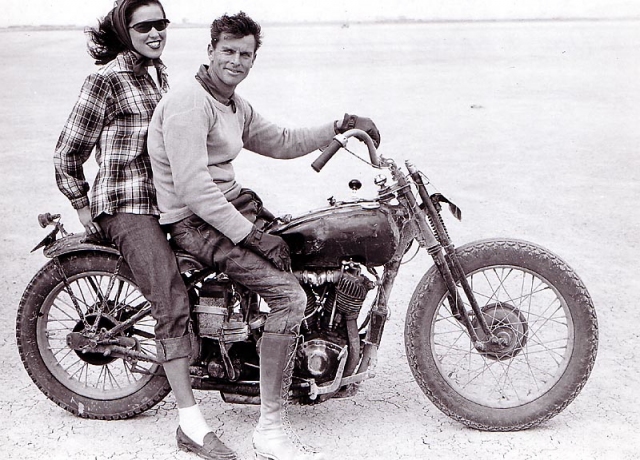
image from Bob Magill Photography

We took his motorcycle and drove for two days straight never stopping to shower, only to refuel and refuel and refuel at small convenience stores in quaint little towns where even the fat counter girls looked beautiful to me. Somehow we ended up tip-toeing in the middle of some farmer’s field where the corn stretched tall and sweet to the sky and roots spread underneath our feet, and I felt safe and believed in magic when he clapped his hands once and — without even having to say abracadabra — thousands of crows lit and seeded the sky like a million dark winged moons.

As he held me, they squawked our names, and he taught me how to decipher the screechings of birds, and I was so sure that love like that could never fly away.

But it does and it has dozens of times since then.

But before the pecking and the clawing there were kisses behind a crumbling wall, flowers sent with secret messages, green turtlenecks and green chairs  and the whole fucking world was green with possibility and if I died in an hour no one would know that still I hold these memories, hoard them like chocolates I won’t share, sweet and delicious caramels oozing with my youth fluttering daily away from me on bird’s wings, and I can’t bear to part with a single one; they are all my favorites.

I need only breathe and we are there, his feathers… feathers flickering radiance.

And no one need ever know I sacrificed that kind of love, chose the warmth of a yellow comforter and a rye bagel each morning over the chill of late September rain on my shoulders, something less dangerous than a motorcycle and the uncertainty of a thousand crows screaming our passion overhead.

This week we were asked write about a relationship we knew was doomed from the start in under 400 words. Click on the button above to read other stories about love and loss.

Tell me about one of your doomed relationships: with a lover, a friend, a parent, a child, a celebrity.

To Get Up or to Zzzzzzzz

alarm clock, bought from IKEA

Image via Wikipedia

Monkey started 7th grade this year. When I think back to 7th grade, I recall I awoke each morning at 6:30 AM with the help of my digital alarm clock which I had carefully set to 62 WHEN the night before.

Once showered, I made myself breakfast — either a bowl of Lucky Charms cereal or a bagel with cream cheese — and by 7:15 AM, I quietly walked into my parents’ bedroom, took four quarters from my father’s dresser (with his permission), so I could buy lunch. I then kissed my mother and my father who were sprawled in their king-sized bed beneath a giant comforter. I was generally met by sleepy sounds, sometimes a little muttering, and bad breath; it was a daily routine, and it worked. They got a good night’s rest, and I got to watch The New Zoo Revue on our 7” black and white television, uninterrupted, for about a half an hour.

Eventually, depending on the weather, I put on the most appropriate outdoor coat — if it was cold, I popped on mittens and a hat. Since UGGS had not yet been invented and boots were totally uncool in 1978, I always wore my clogs. From there, I made opened the front door carrying whatever I might have brought home for homework (read: nothing) and walked about 1/4 mile from my parents’ little house to the closest bus stop and waited with a cluster of other neighborhood kids.

Fast-forward 30 years. Monkey completes a similar ritual where he wakes, dresses, makes his breakfast, gathers his stuff — paper stars, drawings of dragons, pencils, books, two huge binders filled with worksheets and completed homework — and crams it all into his backpack.

I hear Monkey moving around starting at 6:20 AM, and I stick my pillow over my head. Unlike my parents who stayed in bed, confident in my organizational abilities — or never really even thought about if I had everything I needed or not — I feel totally guilty for staying in bed. I mean I suppose I could drag myself downstairs at that unseemly hour, but I am just so dang tired.

And warm.

I don’t know why I feel I should go downstairs and smooch Monkey before he leaves the house. Maybe I feel like I should make sure his clothes match – because he’s not very good at that. Or maybe I feel I should check to make sure that his hair is brushed – because, to be honest, he is pretty lax in that area, too. Maybe it’s his teeth I’m worried about. You know, I just like to make sure that he in minty-fresh before he heads out the door because, again, the whole hygiene thing is currently not his forte.

I don’t do this though.

So typically Monkey does just what I used to do. He comes upstairs to announce he is leaving.

Except some days, he doesn’t.

Some days, the kids he walks with show up at our sliding glass doors and I hear the glass doors roll across the floor followed by a slam. I lie there, imagining him walking down the back steps, towards the enormous school that looms in our backyard. (I know it was designed to look like a dairy farm; still, it looms.)

On those days, I miss him.

My husband wonders what is wrong with me.

He says I should be thrilled that we have raised an independent person who can make cereal and bagels and waffles and eggs and (sometimes) remembers to brush his teeth and hair.

And I am.

But it doesn’t mean I’m not working against some weird maternal energy that wants to “just check” on him.

My parents never sweated over this stuff.

At what age did your parents step out of the picture so you could start doing things independently? How are you about completely stepping out of the picture? And more importantly, what morning TV shows did you watch while your parents were sleeping?
© Renée Schuls-Jacobson 2011. All rights reserved.

Unintentional Galloping

When I was in middle school, I took horseback riding lessons from folks who lived in a broken down old house but who took fantastic care of their horses. Sometimes I came straight from ballet class, and I had to pull my jeans over pink ballet tights, leave my skirt and slippers in the car and lace up my tan Timberline boots. I was a quick study and easily learned how to get my horse to respond. I learned to give the appropriate kicks to get him to trot, to jump over logs, banks and ditches. I learned to canter, my favorite stride.

After a while, I begged my instructor to teach me how to gallop.

I was sure I was ready.

I did not look like this.

She disagreed.

One day, after school, my friend Kim suggested we take her horses out bareback – no saddles or stirrups – “Just bridles,” she’d said. “Because you always want to have the reins.”

An unseasonably warm fall day, the woods near Kim’s house were filled with trails and we casually bumped along on the horses’ backs under pine trees and blue skies. Eventually, we came to an open field where the trail disappeared. Surrounded by tall grasses, the oranges and yellows and browns of late October trees, Kim and I were quiet; our animals walked side-by-side, the sound of their hooves beating the earth was calm and rhythmic.

Until it wasn’t.

All I know is that suddenly I was clinging to the neck of an unfamiliar horse, my legs kicked out wildly behind me, bumping in an unfamiliar gait, which I assumed meant I was galloping. And since I’d never galloped before, I didn’t know what to do — especially without stirrups to steady myself.

And then I started to slip.

I tried to grab the reins that had slid through my fingers, but I couldn’t reach them. As the dust made it impossible for me to see, I had no choice but to give in to the will of a black horse that simply needed to run. And when I could not hold on any longer, I fell onto the ground, smashing my head against a big rock.

I was sure I was going to be trampled to death.

Or at least have a bloody nose.

As I huddled on the ground, I remember thinking, If I survive, one day, this will make a great story.

Truth be told, I loved the thrill of the ride, the holding on and not knowing where I was going-adrenaline-rush.

(Note: The falling off part was not so hot.)

Riding horses isn’t so different from writing. With both writing and riding, there are basics that one must first master. Just as a novice equestrian can’t go from walking to galloping in one day, a beginning writer cannot produce a great novel in a week, a month or a semester. One must first become a smart writer. One must learn the art of storytelling. Of suspense. One must understand the rules of grammar and punctuation. And then learn when it is appropriate to break these rules. One must learn the nuances of language, play with all the modes of discourse, and acquire eyes that can fearlessly revise. As well as a million other things.

If I were still actively riding horses, I would have to practice.

Every day.

Like I do with my writing.

At least seven-hundred words every day.

Because the more I practice, the easier the writing becomes.

Sometimes a piece of writing slides out effortlessly like a new foal birthed in a spring field. But other times — like with that crazy Arabian — my words get away from me and they want me to start describing things like the uncomfortable red chair in the corner of the room, which clearly does not belong in this piece. It’s okay. This ballerina-cowgirl learned long ago that sometimes she has to pull leather chaps over her jeans and tights and click her tongue and say, “No! We are not going over there!” She is not afraid to give a little kick and tug her writing in a different direction.

Some days I drop the reins on purpose and let my muse take me somewhere. And I don’t know where I’m going and the whole getting there is scary and, in the end, what I’m left with is sometimes raw or terrifying. Or awesome.

But sometimes it is a disorganized mess.

It happens.

As I said, I like the thrill of the ride: the not knowing where I’ll end up.

For me, writing is like unintentionally riding bareback on a galloping horse. It isn’t the easiest or the smartest way to get somewhere, and Lord knows it isn’t pretty to watch, but eventually I end up where I’m supposed to be. Usually without even a concussion.

What is writing like for you? I’d love to know. Or maybe you’d rather tell me about your experiences with horses. Or falling off horses. Maybe you’d rather tell me about your experiences as a dancer. Or falling as a dancer. Oh, just say something.

The Day I Got It All Wrong

When I teach, I come to class prepared. In fact, I sometimes come to class with a Plan A, Plan B and an Emergency Back-Up Plan. I think this stems from the days when I didn’t exactly know what I was doing. Case in point: Many years ago, when I was just starting out, students were completing their last day of oral presentations. One girl was standing up before the class doing her thing and a small group of boys were being – well, let’s just say, a little bit disruptive. Nothing major. They just weren’t really interested in the symbolism that she had found so riveting in Ordinary People.

I tried to get the attention of one of the boys. No luck. I tried to make eye contact with another. Nothin’. Finally, I took my pen – a Precise V5 extra fine tip pen in hand and attempted to throw it so that it would hit the main offender: Let’s call him Hugo. It should be noted here – and you can’t make this stuff up – that Hugo happened to have one good eye, having lost the other eye years earlier, although I never found out the circumstances surrounding how it had happened. Anyway, I tried to aim for Hugo’s leg – to get his attention without disrupting the entire class. I figured he’d feel the pen tap his leg, look at me, I’d give him “the death eye” and he’d stop screwing around. It seemed foolproof.

I don’t know how it happened because I usually have pretty good aim, but anyone who was in the class that day would vouch for the fact that the pen did not hit Hugo on the leg. That pen had a mind of its own and fueled by green ink, it launched itself upwards right into Hugo’s face just below (or maybe above?) his good eye.

Hugo stood up before the entire class holding his face, “What the hell are you doing?” he shouted (and with good reason). “You could have blinded me!” And with that, Hugo announced that he was going to the nurse, the principal and, then, he was going to call his mother.

I had done precisely what I had set out not to do. I had disrupted the class completely. At the time, I was pretty sure that I was going to be fired. After apologizing to the student presenter for creating such a commotion, class ended, and I hustled up to the Upper School principal to whom I confessed all my terrible, unforgivable sins. She clucked her tongue at me, told me to call Hugo’s mother, and explain what had happened. Thank goodness, Hugo’s mother was wonderful, supportive and understanding; she even joked that sometimes she wanted to poke out Hugo’s good eye. Later, I also apologized to Hugo who apologized to me for being disruptive and disrespectful.

I have often thought about my experience with Hugo. As a new teacher, I was trying to figure things out. After throwing a pen at my wonderful student, I learned many things: First and foremost, I learned to never throw anything at anyone in class ever again. But I learned a lot of other things, too. Over time, I discovered more creative methods to communicate with students about their behavior without making the class come to a grinding halt. I learned a great deal about respect that day and how quick actions can lead to terrible consequences. I learned that sometimes teachers need to apologize to their students because sometimes teachers are the biggest twits of all. We learn from experience.

Oh, and I didn’t get fired.

What’s a not-so-great thing you did on the job that turned into a huge learning moment?

Kite Drowning at Deb Bryan’s Today

I am guest posting at Deborah Bryan‘s place today. She’s The Monster in Your Closet.

I met Deb after she wrote a very personal narrative, and I fell in love with her right away.

Deb runs weekly guest posts called “For This I am Grateful.”

People have written beautiful things.

Mine is kind of dark.

Different from the stuff I post on my blog.

Brace yourself before you click on the button below to go to Deb’s.

I’d be grateful for any comments you might leave.

I’ll be there.

Be gentle. This one was difficult.

And when you are done, be sure to hang out and read some of Deb’s great stuff. Especially her recent piece on music.

Spot Check

Teacher

Image by tim ellis via Flickr

I’m kicking off Wednesday #TWITS: a fancy-schmancy acronym for Teachers Who I Think Scored / Teachers Who I Think Sucked. (It only took me eleventy bajillion hours to think up that one.) So here is my middle school memory about one very specific moment. Obviously, I have changed the teacher’s name.

• • •

In middle school, I had the meanest homeroom teacher. Unfortunately, she was also my English teacher, which meant I had double doses of her each day. Mrs. Dour ran a tight ship. She liked her rows straight. She liked her students quiet. She hated boys who leaned back in their chairs. She also hated girls who wore clogs. “Too noisy,” she complained. She called on people when their hands were down, and when she wrote words like “onomatopoeia” on the blackboard, she pressed so hard against the slate that the white chalk often crumbled into dust. Mrs. Dour wore her reddish-hair in a tight bun every day, but by 8th period, when I had her for English, most of her hair had fallen down, giving her a slightly deranged look.

I was pretty scared of her.

One June day, Mrs. Dour gave us all a 7-minute writing assignment during which time we were supposed to do something in our black and white composition notebooks.

I can’t remember what we were supposed to do because of what happened next.

Mrs. Dour turned her back to the class to write on the board. She was wearing a lightweight, white top and a long, gauzy, white skirt that day. I remember this because at that time I was preoccupied by what everyone wore. I noted in my superficial middle school manner that white did not flatter Mrs. Dour’s pasty complexion, and I planned to deconstruct her ensemble after class with my two friends during our bus ride home.

Right about then I noticed a small, reddish dot on the back of Mrs. Dour’s skirt.

Initially, I figured Mrs. Dour must have sat on one of her red felt-tipped markers. She was the only teacher who wrote in red felt-tip marker, and her fingers were often covered with red lines by the end of the day. While waiting for inspiration, I stared at the red mark on Mrs. Dour’s skirt – and I noticed the stain had grown larger. I looked around to see if I could catch anyone else’s eye, but everyone was madly engaged in our teacher’s in-class activity. As Mrs. Dour’s hand carefully crafted perfect cursive letters, I tracked the red as it spread across her bottom. What started out first as a dot, morphed into a quarter-sized circle and rapidly grew into an asymmetrical patch of red, the size of my adolescent fist.

I remembered how, midway through that year during gym class, we girls had been made to watch The Movie, a film created to explain what was starting to happen to our female parts. Our innards. I learned why some of us had boobies already and why some of us would have to wait. (In my case, years. Stupid hormones.) I remembered how we had grabbed each other’s hands as we huddled together in the gymnasium, trying to stifle our giggles. And before we left the locker room that day, each of us received a plastic “goodie-bag” filled with a cute little free sample of mouthwash, some deodorant, two sanitary napkins, and two tampons.

So I knew what was going on.

Meanwhile, I waited for someone else to notice. Or do something.

But as I watched the hand on the clock do that backwards-to-go-forwards click, I realized I was going to have to be The One.

I quietly pushed back my chair and, leaving my clogs behind so as not to make noise, I tiptoed across the room to join Mrs. Dour at the board.

She saw me out of the corner of her eye but kept writing, her back to the class.

How I wanted her to turn sideways and look at me, but she didn’t.

“Is there a problem?” Mrs. Dour snapped without so much as glancing my way.

If she had looked at me, I could have been more discreet. Instead, I fumbled for words. It hadn’t occurred to me to get the words right and then approach Mrs. Dour. My feet had just moved me to where I needed to go. I figured the words would follow.
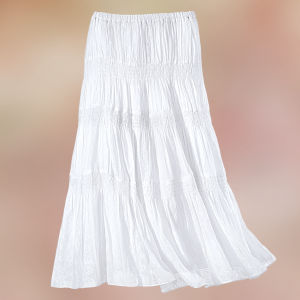
Imagine blood all over this.

“Yes,” I said.

Mrs. Dour spat, “Well, what is it?”

Heads popped up.

As inaudibly as I possibly could, I whispered: “There is blood all over the back of your skirt.”

Mrs. Dour, whom I had always assumed to be very old, was probably in her late forties. She was always so terse; she came off like The Wicked Witch from The Wizard of Oz, which definitely added a decade of scowl lines to her deeply furrowed forehead.

So there I was, Dorothy Gale, stuck in the tornado that was Mrs. Dour.

“Come with me!” Mrs. Dour growled. She took my left arm firmly and escorted me from her desk to the door which she snatched open. Together, we marched directly across the hall to the student bathroom where Mrs. Dour disappeared behind a stall door.

I stood by a trio of sinks, waiting for directions. For divine intervention. For Mrs. Dour to tell me to go. Or stay. Or something.

I didn’t expect Mrs. Dour to cry.

But that is exactly what she did.

From behind the stall, I could hear her pulling the terrible, industrial squares of toilet paper and weeping.

For the first time, I stopped seeing my English teacher as Mean Ole Mrs. Dour, the persnickety disciplinarian with all those rigid rules: the woman who gave me detention at least once a week.

I saw her as a small, embarrassed, woman who didn’t know what to do.

I looked at myself in the mirror and found enough courage to ask Mrs. Dour if there was anything that I could do for her.

My voice echoed against the empty bathroom walls.

“Do you think many people… saw?” Mrs. Dour asked.

“I don’t think so,” I lied.

Truth be told, I suspected that nearly everyone had seen the mess on the back of Mrs. Dour’s skirt, and if they hadn’t seen it with their own eyes, the people who had were likely telling everyone who hadn’t.

I was pretty sure that would be the end of Mrs. Dour. After suffering such public humiliation, I was positive she would resign that afternoon.

Oh, yes she did.

But Mrs. Dour was in homeroom the very next day. She was not any nicer. She continued to do her job just as she had before.

She continued to complain about the girls who wore clogs. She continued to issue me my weekly detention. Mrs. Dour was not a nice teacher. I cannot remember any books that I read or projects that I did that year. I remember only that single incident. But I learned something important from her nevertheless.

I learned that sometimes a person has to push through her fear no matter how scared she might be and just keep moving forward. Sometimes, you have to take a deep breath and face the thing that you fear: which in this case – as is often the case – is the fear of ridicule or the laughing masses. Because sometimes that’s all you can do.

I suppose Mrs. Dour did teach me one other lesson.

A teacher myself, I can tell you I have never, ever worn a white skirt.

Ever.

And I never will.

When is the last time you were truly afraid? What got you to push past your fear?

Lessons From Nicknames

A friend of mine recently told me about the time her younger daughter accidentally cracked her head open on the doorknob at the top of a staircase. Of course this incident occurred the same weekend her daughter had a nasty sinus infection and was horking up greenish-brown lugies, thus earning her the nickname Snorky McStaplehead.

The name didn’t stick.

I’ve had many nicknames during the course of my life: I’ve answered to Ren, Renz, Renna, Nay, Nay-Nay, Née, She-Nay-Nay, Hools, Hoolie, Razz, RAS, RazzJ, RASJ, Teach. Each name is connected to the person that I am/was during a specific place and time. The memories attached to the names are inescapable — but not all were terms of endearment.

One summer, when I was 14-years old and enjoying my time at overnight camp, a few of the boys started calling me Kelloggs. I had no idea why. Finally, one of the guys fessed up.

“Because you’re flaky,” he said unapologetically and without a trace of irony.

He thinks I’m stupid, I thought to myself. I’m not stupid.

In college, I worked my butt off. Graduated cum laude. Learned a secret handshake and got a gold key when I was initiated into Phi Beta Kappa.

No one ever called me Kelloggs again.

Tell me a nickname you’ve picked up during your life? Who gave it to you? Do you like it? And what’s the story behind name?

Lessons From A Meat Truck

Basashi (raw horsemeat) from Towada.

Image via Wikipedia

One year ago I bought truck meat.

You heard me.

Not one but two cute dudes drove into my driveway offering me steaks, chicken breasts and shellfish. Initially, I was skeptical. But then I saw the meat had come from a reputable company, a name I recognized. I considered 36 pieces of filet mignon and 12 marinated chicken breasts. The guys wanted $400.

I looked at the guys again.

I wanted that meat.

“It’s guaranteed for freshness for 24 months,” they insisted all cute and muscle-y.

I hesitated.

They offered to drop the price by $50.

I hesitated some more and batted my eyelashes a little.

They added an extra carton of filet thus confirming I still had my magical powers at 40-something.

The meat dudes did not accept credit cards, so I gladly wrote one guy a check as the other more muscle-y guy concentrated on stacking the bags of meat into our garage freezer.

I was elated.

The two men screeched backed carefully out of my driveway and zoomed off down the street.

Eventually Hubby saw the charge in our checkbook and asked about it.

“I got 48 pieces of fillet and 24 chicken breasts for $318!” I exclaimed.

“Have we had any yet?” he asked.

“No!” I said, “I’m saving it for something special. Maybe New Year’s Eve or something.”

“Open it up!” Hubby practically shouted.

I didn’t know what he was so worked up about. I mean the guys were so honest and I had a 24-month guarantee for freshness. Sheesh.

The meat defrosted on our kitchen countertop and, eventually, we cut open its clear plastic wrapper.

I’m not sure if it was the color or the smell that tipped us off first.

“I don’t think that’s from a cow,” Hubby declared as he plugged his nose and plopped the meat into a trash-bag.

I pictured cats, dogs, gerbils, nutria — and I knew I had done a bad thing.

An organized person, I quickly found the 24-month freshness warranty and dialed the 1-800 number.

Doo doo doo. We’re sorry, the number you have reached is no longer in service.

I called the local distributor.

Doo doo doo. We’re sorry the number you have reached is no longer in service.

I knew I had been scammed.

Few things set me off more than being lied to.

Furious, I called the Better Business Bureau where I learned the company I had done business with had over 300 complaints filed against it. I didn’t care. I would not be a number.

Long story short: It took a few months, but I got our money back.

All of it.

Why?

Because I am relentless.

Were you not paying attention the first time around?

Cross me and this twit will make you wish you had Harry Potter on speed dial so you could ask to borrow his invisibility cloak.

If this were a fable by Aesop, the lesson might be something like this: If your stuff is good, you don’t have to brag about it. Or sell it door to door. So if some guys come around bragging about their meat, just say no because — chances are — their junk is already spoiled.

 Have you ever been scammed? What happened? What weird lessons has life been teaching you lately?

Tweet this Twit!

Lessons From Summer Shoes

photo by rouzeh @ flickr.com

Once upon a time, a November baby met July. The baby’s feet were small and bare and, as she crawled across spiky grass to the place where the lawn met road, she crouched low to pop tar bubbles with the tip of one tiny index finger.

One hot July, the little girl screamed as her mother buckled a new pair of white strappy-somethings firmly onto her feet. And no matter how many people told her how lucky she was to have such fine shoes, she knew she must have been very bad. To her the word sandals always sounded like a lie: a fancy name for prison.

Another July, the girl slipped into a shimmery yellow leotard and jazz shoes. While she was on-stage, she was confident in her dancer’s limbs. And when the audience clapped its approval, she knew her body was moon beautiful.

One July, the teenage girl watched her mother slip into a pair of rainbow-colored high heels. She saw how a 45° angle could transform a woman’s legs, instantly make them longer and leaner, and she decided that, one day, she would have a pair of magical shoes in her closet.

One July, the young woman dressed up in silky lingerie — thigh high stockings, a corset and ridiculously high red platform pumps: a last-ditch effort to make a man she wanted notice her. When he wouldn’t leave his piano, she threw one shiny stiletto at his head and realized it was time for her to live alone.

Later that same July, the young woman saved up all her money to buy a pair of distressed leather boots. As she straddled the back of a horse, her heels pressed into silver stirrups. And despite the fact that the world was shifting beneath her, she felt completely in control, holding the reins of that bridle, cantering into the darkness beneath a canopy of green and gold.

One July, the woman found herself in New Orleans, wearing a sundress with sneakers, and holding hands with the man she knew would one day be her husband.

One July, pregnant and hopeful, the woman learned sacrifice. As her ankles swelled into fat sausages, she could only wear flip-flops. Soon she would be someone’s mother; she understood her body was for rent. And she was grateful the feisty tenant who had taken control of the premises only had a few weeks left on his lease.

Over forty July later, that November baby found herself barefoot on the neighbors’ lawn. The soles of her feet were filthy, but as she turned cartwheels, she realized she owned the magical shoes she’d always wanted. She understood now that the shoes weren’t magic. It was the everything else around her that was positively succulent, that she carried an entire orchard of ripe peaches inside her, that she lived from joy to joy, as if death were nowhere in the background.

What do you remember about July?

Tweet this Twit @RASJacobson

Name That Tune

When I hear Madonna’s “Like a Virgin,, I picture my best friends from high school wearing our father’s boxer shorts to school. We wore black rubber bracelets twisted around our wrists and learned how to grapevine.

I wanted to be Madonna.

(Or at least I wanted to be her friend.)

What song immediately brings you back to high school?