“Out of The Closet” by Chrissy Teague

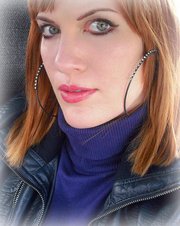
This piece was written by a former student from Monroe Community College, Crissy Teague. She is one smart, beautiful, tough cookie.

image from google.com

Everything I own in the world fits behind two locked closet doors. Last year I divorced, got fired and denied for unemployment. My nine-year old  and I moved back home with my mother. I felt lost. What could I control? I could take care of what little I owned. I locked away clothes, movies, CD’s, shoes, video games and hygiene products. No one would borrow or damage what was “mine.” It belonged to me. My thirteen year-old sister would no longer take my clothes without asking, not even the dirty ones — (I locked the hamper up too). Everything changed, but I would be  in control of my little world.

Then, my son threw two mega fits while we accompanied my mother to the mall. He first cried when I refused his request for a certain video game. Telling him to “put it on his Christmas list,” or “we can’t afford it because Mommy’s not working,” or “you hardly play the the your other Wii games” did not make the tears subside. Mega fit number two came when I gave him a caramel rice cake topped with peanut butter to snack on. His lack of gratitude, and double dose of tears in two hours resulted in up a “starving kids in Africa” speech.

Fuming, I sat arms crossed. How could my child be so ungrateful? Why is he so selfish/self-centered? After a few moments I realized, this behavior is learned: Narcissism as taught by me. I remembered my belongings under lock and key. I’ve been doing this all wrong. Not just training my child, but living. My new conviction: God did not breathe life into me so I could horde pleasures for myself then die, an empty existence.

guest blogger, Crissy Teague

The little I own in the closets now seems like too much. It’s time to come out of the closets. I will give to my local community. I will go through my movies/video games and donate to local orphanages. My son has extra toys, books to give to a daycare, or hospital children’s wing, or library. A dozen fancy dresses and shoes can go to the Fairy Godmother project. Instead of spending nights indoors watching movies, my son and I will volunteer. It is better to give than to receive. I’m going to give my son a rich legacy—a legacy of giving to others.

What are you holding onto that might benefit someone else? Needs have never been greater. What better time to give than now? You may feel like you don’t have much. I understand. I’m a jobless single mother coming out of two closets. I’ve got nothing to lose and everything to give. I challenge you to do what you can. Our relatives, our friends, our neighbors need us. The quality of community is in our hands. Who knows the outcome? The life you change may be your own.

Father and Son: Gone Golfing

A golf ball directly before the hole

Image via Wikipedia

Note: This blog was written the Sunday before the school year started.

My husband and my son have been on the driving range for an hour.

I know this because I have been spying on them from my car.

About twenty minutes ago, it started to rain, and I thought they would stop. But they didn’t. They kept on whacking dem balls, oblivious.

I never thought this day would come.

When my son was 9 months old and just starting to walk, my husband decided May would be a lovely time to get serious about the game of golf and join a local club.

I remember being furious and feeling completely abandoned. I’d imagined the two of us taking turns watching our teetering toddler as he endlessly padded  down the tile floors. But then I became a golf widow, and I lost my husband.

I suppose, at the time, the golf course was a better lover. After all, she was beautiful, well-maintained, undulating, and brimming with splendor. All of that gorgeousness was in sharp opposition to the new-mommy me. When our son was 9 months old, sometimes I looked downright ragged; sometimes I was mean; some days, I didn’t  shower, and I was cranky when my husband came home. I offered no new vistas. At home, every day was the same thing: Diapers, feedings, naps. Or – heaven forbid – no naps.

My husband promised that it would get easier, the parenting gig. And it has. Our 11-year-old son is easy-going, funny, eager to try new things. He is kind, loyal, open-minded, intuitive and imaginative.

And I just watched him whack a golf ball farther than I have ever managed to hit one. The ball flew long and straight, right over the flag.

So he is starting to golf.

It’s kind of cool. Something he can do with his dad.

Maybe one day they’ll go on a guy trip to some fabulous location together and bring their clubs. Talk about guy stuff.

Watching them enjoy themselves as the rain pours on their heads, I realize, it’s time to stop being pissy about the golf thing.

Because they enjoy it.

Even in the rain.

I don’t have to be part of everything. As long as I can meet up with them for dinner, I’m good.

tweet me @rasjacobson

Office Heroine or Immature Coward?

Check out this video. It’s short, and it is a hoax . . . but it raises some interesting questions:

So a girl decides to quit her job with a flash-bang by emailing these photos to her entire (made-up) office. On the one hand, watching the little display feels wonderful. I mean, it’s positively cathartic! Who hasn’t had one of those bosses? The kind that make us wish that we could do something like that? I can imagine the air being sucked out of the room as “Spencer’s” entire life is broadcast (and now re-broadcast and re-broadcast). Maybe the girl should be praised? Perhaps she opened the way for some constructive conversation about how things are run in this office.

On the other hand, it’s an awful lot of drama. Don’t get me wrong, as a voyeur, this is a completely enjoyable guilty pleasure. But it’s easy to have chutzpah as you are walking out the door. And as I said to my friend who forwarded me the message, I’m thinking this girl might have gone about doing things a little differently. She might have tried talking to Spencer about how things feel in the office, about morale, about his breath. It seems awfully unprofessional and terribly immature.

This young lady obviously has burned a lot of bridges, so she isn’t going to get any kind of strong recommendation to help her on her next job (although she has probably decided she does not want to be a broker). But the way the world works these days, she just might get noticed and land a great book deal!

So would you hire Little Miss Thang because she is smart and sassy? Or do you think Little Miss Thang might be toxic to your work environment?

Pep Talk For New Teachers

As the new school year approaches, it occurs to me that there are a lot of new teachers heading out there.  This is my twentieth year in the classroom. It hardly feels possible, but if you were to check my Facebook page, it is peopled by former students from five different schools. Most of these folks now have children of their own!  I figured I’d share some things with new teachers that I’ve learned over the years. And I hope that parents will consider these things, too – especially if you hear your child has a new teacher. Before you start wringing your hands in despair, understand that new teachers bring enthusiasm to the classroom. They are eager to work, eager to get to the business of teaching. Help them; encourage them. They have to figure things out very quickly.

August. A new class arrives. Wide-eyed, unformed, brimming with enthusiasm, the youngest ones tinged with trepidation. They find their rooms, sit in desks which have held many before them, smile brightly, secretly thrilled, eager to ponder great books, study unfathomed formulas, devour complex theories, dream noble dreams. This is the ritual of August, right?

Sort of. I mean, maybe for the first week or two. But by the end of the first month, when that ho-hum routine is kicking in, and summer feels like past tense, students may become hauntingly silent, or worse, horribly restless. This is when a new teacher may begin to panic. Because  there are papers to be graded, charts to be updated, forms to be completed and returned to somebody’s office: It’s grueling and even more difficult when you are still trying to figure out whose office is where and which key opens what door.

When I was a teacher at Metairie Park Country Day School in New Orleans, Louisiana, I was on a Committee that helped to create a new faculty handbook filled with enough information to get a new teacher started, but not so much as to overwhelm.

New Teachers, see if any of these things help:

photo by Eric James Sarmiento @ flickr.com

1. Don’t take things too personally. You have to know this up front. Your students are going to talk about. If you are lucky, they will say nice things like, “I like Mr. X’s hair,” or “Ms. Q. is kinda cool.” More likely, you will overhear them in the halls: “(Insert your name here) is unfair. Not flexible. Boring. Biased. Unqualified.” Let’s face it. Not every student is going to die for your class. Not every student is going to find the Quadratic equation fascinating. Not every student is going to care about conjugating verbs. They won’t all be interested in Mendelian genetics. Some of them won’t like your unit on Lord of the Flies, or insects, or rain forests. Listen to their comments, glean from them what you will, and then let them go. This is especially true for teachers of older students when you receive your first batch of student evaluations.

2. Don’t be afraid to ask for help. Usually teachers are the nicest bunch of folks you can ever meet. (Except when there are budget cuts. When there are budget cuts, hide your construction paper and bolt down your stapler.) But generally speaking, if you need support, a new teacher can ask just about any other faculty member to explain how to un-jam the copier or for directions to the nearest bathroom. No matter what your problems might be, if you are in need, there is someone who can help you. Teachers like to be helpful.

3. Don’t forget to forgive yourself. One of the greatest advantages to teaching is the forgiving nature of children. That same characteristic which makes your students forget the complex theory which you masterfully presented to them just yesterday allows them to completely forget your prior day’s blunder. Even older students will be tolerant of your errors if you are honest about them and don’t try to pretend they didn’t happen. You should apply this same forgiveness to yourself. Some of your lessons are going to suck. But some will be brilliant.

photo by Nick J. Webb @ flickr.com

4. Don’t forget to take care of yourself. This is not in any  handbooks I’ve ever read on teaching, but it’s actually really important. If your new teaching experience is anything like mine was, in addition to your teaching responsibilities, you’ve probably already taken on extracurricular responsibilities. Whether you’ re working on a yearbook, organizing a dance or proctoring for SATs, helping to make costumes for the play or coaching a sport, no doubt you’ve got your new teacher hands full. And just as you are getting a grip, someone pops his head in and offers you another great “opportunity for growth.” Don’t be afraid to say no. It isn’t always easy, but you don’t have to take on additional responsibilities you don’t feel ready to handle. Because if you take on too many activities, you’ll get sick. This is because new teachers spend late nights planning, and grading, trying to stay one day ahead of their students. So while it sounds obvious, don’t forget to get enough sleep, eat right, and take lots of vitamins.

5. Don’t forget to laugh. If necessary, look for something funny! Just watching a group of kids at work or coming down the hallway is usually sufficient. There’s usually someone picking his nose, someone with an unzipped fly, someone with pants down around the knees, some girl wearing waaaay too much make-up — (and I’m pretty sure this applies from kindergarten all the way up to college level, folks!) And don’t take yourself so seriously that you can’t appreciate the hilarity of the moment when you learn that you have chalk on your butt. It’s funny!

6. Don’t feel like you have to have all the answers. The most seasoned teachers will tell you that even fifteen or twenty years from now, you still won’t know everything – especially these days with the technology changing so quickly, the kids will, no doubt, be teaching you many things. Let them. If you don’t know something, don’t make something up. Tell the student you don’t know the answer to the question. Write. It. Down. Do some research, and get back to the student with the answer. That student will know that you care.

In May, when you feel more relaxed, more comfortable, more competent, you will walk from one end of the campus/quad/building to the other and each time experience something different — a burst of magnolias on the east side of the auditorium; on the terrace, a gathering of students, intense in their chatter; the sturdy dark wood of the dining room, inviting and scented with red sauce; in the middle school wing, you might see mouths devouring a snack. If it is a Thursday, maybe they might be eating donuts (*she said nostalgically*); outside, during recess, the littlest ones will swing and climb, jump and shout; and everywhere fluffy squirrels will scratch up the nearest trees. You will smile at a colleague while passing her and return a wave to a student who enjoys your class. You will remind someone to throw his plastic something-or-other in the garbage can. You will begin making plans for next year’s classes. You will feel calm. You will feel you belong. You will have survived your first year, the gauntlet.

I promise you, the following year will be a lot easier!

Seasoned teachers, how did I do? What did I forget?

A Bridge From Cyber Chaos to the World of Words

The Facebook Man. Facebook is celebrating its ...

Image via Wikipedia

I am forever trying to make sense of how to balance the world of books (which sit quietly, unobtrusively on tables) and the world of screens (which flash and bing and ping noisily for our attention). To me, they are like two different kinds of children.

Today, I was reading Madame Librarian’s Blog, and I saw that she had stumbled across something wonderful that struck a chord for her, and also struck that same place in me! She found a quote from an interview with Jonathan Franzen where he says:

I think novelists nowadays have a responsibility—whether or not my contemporaries are actually living up to it—to make books really, really compelling. To make you want to turn off your phone and walk away from your Internet connection and go spend some time in another place. I’m trying to fashion something that will actually pull you away, so I’m certainly conscious of the tension between the solitary world of reading and writing, and the noisy crowded world of electronic communications.

I continue to believe it’s a phony palliative, most of the noise. You have the sense of “Oh yeah, I’m writing in my angry response to your post, and now I’m flaming back the person who flamed me back for my angry response.” All of that stuff, you have the sense, “Yeah, I’m really engaged in something. I’m not alone. I’m not alone. I’m not alone.” And yet, I don’t think—maybe it’s just me—but when I connect with a good book, often by somebody dead, and they are telling me a story that seems true, and they are telling me things about myself that I know to be true, but I hadn’t been able to put together before—I feel so much less alone than I ever can sending e-mails or receiving texts. I think there’s a kind of—I don’t want to say shallow, because then I start sounding like an elitist. It’s kind of like a person who keeps smoking more and more cigarettes. You keep giving yourself more and more jolts of stimulus, because deep inside, you’re incredibly lonely and isolated. The engine of technological consumerism is very good at exploiting the short-term need for that little jolt, and is very, very bad at addressing the real solitude and isolation, which I think is increasing. That’s how I perceive my mission as a writer—and particularly as a novelist—is to try to provide a bridge from the inside of me to the inside of somebody else.

Franzen goes on to discuss how people who love books love to hold books, the whole experience of a book. I, personally, am a sloppy margin scribbler. I turn back corners and make notes. I underline and star things. No one wants to borrow a book after I have read it, and if I have ever borrowed someone else’s book, I usually have to buy them a new copy. Not because they wouldn’t take back the marked up copy, but because I simply can’t give back the book once it has become part of me.

This is probably partly why I have resisted getting a nook or a kindle, even though numerous people have told me I would love it. That I could still make my marginal notes; they would just be typed, and all my comments would appear in chronological order and be easily found. I understand all of this. It’s just, well . . . I just finished reading a book called The Dumbest Generation: How the Digital Age Stupefies Young Americans and Jeopardizes Our Future by Mark Bauerlein. And frankly, it caught my attention. The premise of the book is that parents and educators have been sold a bad bill of goods, promising that computers will help make learning easier and more enjoyable for students. They have also been promised that their children’s test scores and literacy will go up as a result of this new technology: that the whole world is at their fingertips.

The author points out, however, that this is not the way teens use the Internet technology that is available to them. Teens don’t independently look up information about history or art or follow politics or listen to any music except popular music.  Young users have learned to upload and download, surf and chat, post and design, play games and buy things online, but they haven’t learned to analyze a complex text, store facts in their heads, comprehend foreign policy, take lessons from history, or spell correctly. They require teachers, parents, religious leaders and employers to teach to pull them from their adolescent ethos towards a more mature ethic which will expose them to the idea of serious work, civic duty, financial independence, personal and family responsibility.

And as ironic as this is going to sound coming from an online blogger, I am trying to minimize my screen time. Yes, I will continue to blog, but I’m trying to live a little more unplugged because I truly believe (and now have well researched and documented support, thanks to Bauerlein) that all this screen time is leading us down the path to a place of incivility that breeds incompetence in school and the workplace. I see people losing their ability to connect to each other. And, as a teacher and a writer, I want to be that bridge, so I have to work on being that bridge.

Franzen’s interview came at the right time for me. As I continue to write on a manuscript that has been like birthing an elephant. And by that I only mean it is taking a really long time. One day, I would like to hold that book in my hands, and I would like to dream that somewhere, someday, someone might write all over it. Underline. Make stars. Question marks. Pen, “This sounds like me” in the margins.

I want to be a real (metaphoric) bridge, though. Starting Wednesday, September 8, 2010, I plan to help my undergraduate students figure out how to pull their own stories from out of themselves and put them on paper; show them that the conventions of Modern Standard English matter, that an outstanding vocabulary can help them get ahead.

I don’t think it is possible to be a cyber-bridge. You have to really be present to help people make their journey, especially when they are scared. And, believe me, when you ask 18-24 year olds to put away their technology — even for just 50 minutes — they are scared.

So I will gently take their hands and pull them away from their addictions and try — for 15 weeks — to get them to let me be their bridge.

I just hope they don’t walk all over me. Or that they, at least, tread lightly.

Are You Cool With Coed Sleepovers


photo by Adri S. @ flickr. com

I have been hearing more and more about kids getting together en masse for coed sleepovers. Some parents have been very positive about these group adventures in nocturnal cohabitation and insist there is little to worry about — the kids are all just friends, no one is drinking or doing drugs or hooking up, that the kids just like to “hang out together” in their jammies; sometimes they even text while sitting next to each other on the couch!

Think I’m making this up? Amy Dickinson from Time.com wrote an article back in 2001 about a 17-year old boy who was able to persuade his parents to hold his first coed sleepover. The family eventually hosted three coed parties with 20 to 30 guests–one on New Year’s Eve! Dickinson contends that the boy and his father “established very sound party-giving techniques that [she] believes would benefit any parents who are thinking of having or letting their teen attend such an event.” And then she lists the guidelines.

More recently (in April 2010), journalist Amanda Morin wrote an article called “Losing Sleep Over Coed Sleepovers” in which she cites Dr. Linda Sonna, a psychologist and author of 10 parenting books, including The Everything Parenting a Teenager Book. Sonna says increasing numbers of parents say their teens want to attend coed teen slumber parties. For many parents, there’s no discussion about it – coed sleepovers are out of the question. For other parents whose teens who are hosting and attending these boy-girl events, it’s merely a sign of the times, a natural extension of the ever-expanding platonic relationships between the sexes. Some parents are clueless; their child simply tells them he/she is going to sleep at a friend’s house, but the parents never call to check in with the host parents, so they have no idea the event is coed.


How do you feel about group, coed sleepovers; they seem to be the new “cool” thing? Yay or nay? When would you allow your child to have someone of the opposite sex sleep at your house? Could they share a room? A bed? What about same-sex sleepovers? Do you let kids sleep in the same bed?

Being Neighborly

photo by Our City Forest @ Flickr.com

Growing up, I knew everyone in my neighborhood. The girls across the street were my babysitters, and they let me sit in the funky purple bedroom and play with their Barbies. The older couple who lived next door to my parents had a tiny little poodle, and the Mrs Z. liked to watch me practice my gymnastics on the lawn. The neighbors on our other side were a little standoffish, but we understood this about them and still waved as they passed in their beige car. There was an older woman who nurtured a fantastic garden in her backyard. She taught me my first words in French: “J’adore les fleurs.” The people behind us had children, and my brother and I would stay out late playing kickball and running barefoot in their tall grass until it grew dark and we could no longer see the ball. I loved knowing my neighbors, and I suppose I have tried to reproduce similar kinds of connections no matter the type of community in which I found myself living.

Being a good neighbor has always been important to me. In graduate school, a cool guy named Roger lived downstairs and we regularly got together on Thursday nights to share dinner and watch Seinfeld, Friends and Melrose Place. In exchange for Roger’s many kindnesses — like his terrific banana bread and fettuccine — I tried not to wear my clogs inside my apartment because I knew if I did, well, my floor was his ceiling, so it would have been like stomping directly on his head.

Fast-forward fifteen years, and suddenly my husband and I found ourselves living in our first home: a cedar-sided, contemporary on a cul-de-sac. We didn’t know anyone, and no one seemed to want to know us. I was lonely. I couldn’t help myself; I set out to figure out who everyone was. Walking from house to house, I asked people if they would supply their names, their children’s names, and email addresses, so I could create a big ole neighborhood directory. As it turned out, nearly everyone was interested! In fact, in meeting my new neighbors, many people confessed they were embarrassed that they had lived in their homes as long as they had without knowing the people who lived on either side of them, but they always added, it seemed too much time had gone by to ask.

I was happy to be the New Girl and, at the very least, help everyone learn each other’s names. We distributed the directory digitally and used it to organize garage sales, to remind people to drive a little more slowly in the summer, to announce births and graduations, to share pertinent neighborhood information. People would thank me, and I would always tell them creating the list wasn’t a completely selfless act.

I did it because I liked, no . . .  I needed to know my neighbors.

Not too long ago, I sat down for cupcakes and coffee with Peter Lovenheim, the parent of a former student of mine. Peter is the author of the book In the Neighborhood: The Search for Community On an American Street One Sleepover at a Time, a non-fiction narrative which chronicles a murder-suicide that rocked his neighborhood in 2000. He wondered how such a thing could happen in the neighborhood in which he lived: the same neighborhood in which he had grown up.

In his book, Lovenheim sets out on a mission to meet his neighbors, to try to make sense of what happened on the night the tragedy occurred. In the process, he meets families and pets and witnesses daily routines, asks what it is that makes a place a home, and a street more than merely an address. In reaching out, he finds others also searching for connection and longing for what used to be and, in doing so, he inadvertently becomes a “connector,” bringing people together to help each other. Lovenheim writes:

In the Hebrew Bible, the word most often translated as “neighbor” rea can mean variously: friend, tribesman, fellow Israelite – pretty much anyone not a close relative or foreigner. “Love your neighbor as yourself” (Lev. 19:18), therefore, is a broad injunction to treat kindly most of the people we encounter daily. But rea also has the narrower meaning of a person living nearby: “A close neighbor is better than a distant brother,” advises Proverbs 27:10.

In this age of texting and Skyping, email and Facebook, we have what I call the illusion of connection, but I believe many people crave deeper connections with each other. More neighborly connections. Quiet moments when people who may not share any kind of common past can share a street, can know each other enough to agree to take in each other’s mail, to water each other’s flowers, to feed each other’s pets, maybe watch each other’s children, share each other’s joys and — if it feels right — extend themselves during times of sorrow. In the very least, they can wave hello.

These days, my husband and I (along with our 11-year-old son) live in a different neighborhood. And with the exception of a few folks, I recognize nearly everyone in my neighborhood. Okay, so maybe I don’t have to sleepover at everyone’s house, the way Peter Lovenheim did, but it’s nice to be neighborly. I love that my son knows the neighborhood kids. In warm weather, they jump on trampolines, squirt each other with water guns, and play with LEGOs in people’s basements. In the winter, they sled together, slim slices of color against the white snowy field. With the help of neighborhood email, annual Halloween parades are arranged and concerns about suspicious vehicles are passed along. A Book Club was born, and a piano was last seen being rolled across the street from one house to another.

I have found that when you get down to brass tacks, many people don’t know their neighbors. Not really. When you ask people if they know their neighbors, many say, “Sure.” But if you probe deeper, you find that most people don’t know who lives in which house, what people do, the last names of their immediate neighbors. People living next door to each other don’t know each other — at all. Folks drive in: garage doors go up, garage doors go down. I’m not saying this is an inherently horrible thing. I’m just asking people to think about the scenario that happened in Brighton, NY in 2000.

Could you borrow a cup of sugar from someone right now? Would it feel weird to even ask? Do you have someone in your immediate vicinity whom you could go to if you felt unsafe? Because in an emergency, having to drive ten minutes to a friends’ house is sometimes too far.

In this New Millenium, where there is so much media hype telling us to be afraid, knowing one’s neighbors can offer a lot of solace.

Peter Lovenheim is on tour speaking in various venues about his book. If you are lucky, you will catch him!

Do you know your neighbors? A little? A lot? How important are your neighbors in your life?

tweet me @rasjacobson

How I Fell in Love with Words

photo by Matthijs Rouw @ flickr.com

For a period of years, I exchanged letters with a boy. He was smart, and I felt flattered by his long-distance attention. I loved the way his words looked on the page, and after devouring the content of his letters, I would stare at his penmanship. His handwriting was distinctive; long, thin strokes in the “T’s” and “L’s”; his vowels undersized, tiny and tight. Very controlled. My “P’s” and “L’s” wanted to loop. My vowels were large and open, like my heart.

During this period, I focused on composing the best letters I could. I explained – dissected – deconstructed and reconstructed the world for him in an attempt to get him to see things through my eyes. I showed him the beauty of the cigarette butt left on the filthy street corner, and wondered about the woman with the orange-red lipstick who had held it in her mouth. I addressed my envelopes, licked my stamps, sent my poetry and prose. And since there was neither instant messaging nor Skype nor Facebook nor email in the 1980s, I had to wait  . . . and wait. . . and wait for the postal carrier to (finally) bring me a long anticipated envelope. And always his responses were wonderful: filled with answers and more questions, more observations which led to more thinking, reflecting, writing.

Through our correspondence, I fell in love. With words. I learned how, in English, multi-syllabic words have a way of softening the impact of language, how they can show compassion, tenderness and tranquility. Conversely, I learned that single-syllable words could show rigidity, honesty, toughness, relentlessness. I saw how words could invoke anger, sadness, lust, and joy. As an adult, when speaking, I sometimes feel like I did not say quite the right thing. But when writing, I have time to be careful, to ponder, to find a new way to say something old. I can craft something magical.

I have always said that the best writing is born in obsession, rooted in a specific place.

My favorite word is “apricot” because it invokes a specific sense of smell, of taste and touch – but for me, it also reminds me of a particular morning in a particular place when the sun rose and made the world glow. It is a juicy word. A sweet word. A golden word scented with summer. I use the word “apricot” to show my students how one image can hold a lot of weight.

Some day I will thank that boy who made me want to revise, who made me want to give him only my best, most delicious words, my most ferocious images. Wherever he is, I hope he is still writing, too.

If you are so inclined, I would love to know if you have a favorite/least favorite word, what it is, and what it evokes for you.

Interview with Janet Goodfriend • Author

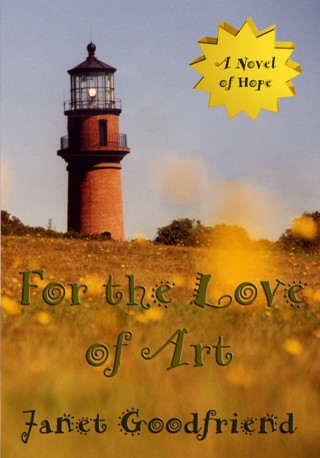
When my old summer camp friend, Janet Goodfriend, decided to self-publish her own book, For the Love of Art, my ears pricked up, and I took notice. There are differing opinions about self-publishing. Some folks feel that it is the kiss of death for an author but  others swear that if sales are brisk and reviews are good, it can springboard an aspiring author’s career. Here is a little bit about Janet’s new book.

Tell me a little bit about yourself, where you grew up, etc.

Born in Rochester, New York where I spent most of my early childhood along with fading memories of Fort Devens Massachusetts, our family eventually settled in Ithaca, New York — the setting for my first novel, Straight Up. After earning a B.A. in English with a teacher’s certification from Fredonia’s State University of New York, I made my way to the Boston area and picked up a Masters in Literacy and Language Arts from Framingham State as I began my teaching career. The last several years have been devoted to raising a family and pursuing the dream of becoming a novelist. Though successful on those fronts thus far, selling a book in an extremely down market is an entirely different story. My hope is to be just success enough to allow me to continue to do this crazy thing called writing.

How did you develop an interest in writing? Did you go to school for writing?
My debut novel, For the Love of Art, is dedicated to my grandmother (a school librarian) who first passed down her profound fondness for literature and education. With a mother who kept me immersed in books and a father who nurtured my interest in poetry, it is no wonder that writing became a favored activity. After being editor of my high school literary magazine, I went on to pursue writing for my college newspaper. There, I was reprimanded before the entire newspaper staff because my journalistic style of reporting was considered “overly creative.” Though I concurred, the dreaded task of  reporting “just the facts” sent me packing. I have written poetry and prose over the years and, now with three novel length manuscripts, I find myself pining after a fourth. If only the business of publishing were not so all-consuming. For now, I will just have to be content for now to let that next book percolate among my thoughts a while longer.

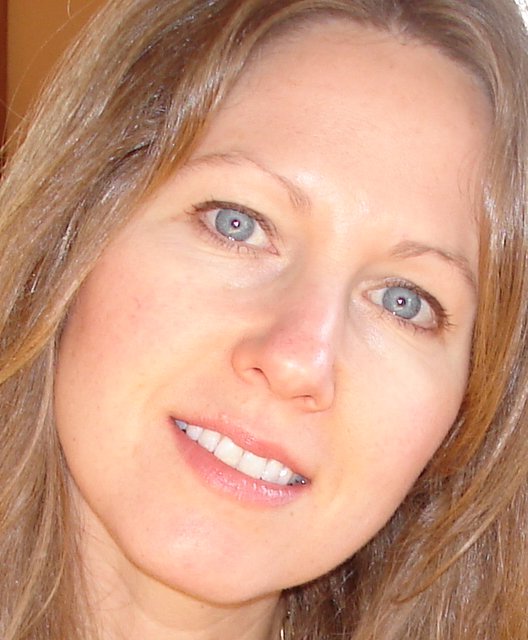
Author, Janet Goodfriend

Who is your favorite author and what is your favorite book?
I am so not good with favorites. Always reading something, I often find myself having “I’m-not-worthy” moments as I amble my way in awe over the pages of another author’s cunningly lucid descriptions. Though I do have a penchant for contemporary fiction, I read all kinds of things. This year my favorite novels are The Power of One by Bryce Courtenay, Shelter Me by Juliette Fay, The Story of Edgar Sawtelle by David Wroblewski, and The Lace Reader by Brunonia Barry. If I had to pick favorite books that truly stand the test of time, my mind would dance over everything from The Lorax to Catcher in the Rye, to anything penned by Shakespeare, to The Diary of Ann Frank before comfortably landing on To Kill a Mockingbird.

What is For the Love of Art about?

A novel of hope, this literary mystery is about three mothers (one a writer/teacher) vacationing sans children, on Martha’s Vineyard, who become embroiled in an art heist. Their escape ironically turns into a pointed quest giving the reader an intimate look at some of the locals. The cast includes love’s lost painter, a visceral and passionate sculptor, a besieged poet, an introspective detective, an art teacher, a salacious reporter and a homeless man. It is my hope that people will not only be entertained but better value what seems most basic in life, recognize their part in tending our earth, raising its children and ultimately feel compelled to preserve art that moves us and validates our worth.

Where can people buy your book?
Currently my book is for sale on www.janetgoodfriend.com via Amazon. However, the publishing company will donate $5.00 per book to your school if purchased directly through Painted Wood Press, P.O. Box 1006, Upton MA 01568. Just send a $20.00 check to Painted Wood Press along with the shipping address. Price includes tax, shipping and a $5.00 donation to the education fund or school district in your town toward its Arts fund. In a book club? Consider Skyping me into one of your meetings! Contact Janet at: janetgoodfriend.com for more information.

What words of advice or wisdom do you have for aspiring authors?
With so much negativity about the economy and dooming words about how print is dying, it is nearly impossible not to absorb such stifling chatter. In spite of the stone cold anonymous face of the publishing industry, if writing is in you, you must do it because you love to write and have something to tell. Only after you have completed your masterpiece, should you agonize over how to go about piercing a market clad with impenetrable locks and barriers. Upon your final rejection  — and you’ll know it’s the last one because you will have stopped keeping track of the rejections, and feel as though your manuscript might actually combust inside your computer from the continuous fingertip friction upon the keyboard or, worse, you will be ever aware of your inner-quakings due to the punishing silence from publishers and agents who simply cannot respond personally to the 300 plus queries they receive on a weekly basis.) That said, you can polish your work as well as a professional editor and publish it yourself. We’ll see how it goes. Ask me again next year.

What are your plans for the future?
For the Love of Art is my debut into the bursting at the seams world of print. With any luck and sustained support for this title, I plan to bring Straight Up to the press in 2012 and follow it up with Surrender Flash.

Be sure to check out Janet’s website as she adds more books to her repertoire!


Lessons From Folks Who Biked Across America

My former student, Rachel Timmons, and her husband, Brian Gottleib, recently finished biking across America. Yep, they biked 3,886 miles: starting in Florence, Oregon on May 14, 2010 and finished on August 6, 2010 in Rehoboth Beach, Delaware.  They planned their trip for a long time. The items they would bring, their expectations high. Along the way, they encountered physical and emotional challenges so grueling, they weren’t always sure they would make it. They had to dump gear, change routes. Adjust. But they never gave up. They just kept meeting people, collecting stories, photographs and memories.

Before their journey ended Brian wrote:

There has been so much emotion on this trip. So much happiness, so much anxiety, so much love, so much discomfort, so much triumph, and so much inner and outer conflict. There have been . . . years worth of tears abbreviated in a few months. Most have been tears of pain, it’s true, but not exclusively.

Before this trip, I only remember crying once out of joy, it was at my wedding. I’ve broken down in tears of joy three times on this trip. I’ve been surrounded by so much beauty and freedom that I found myself crying uncontrollably and being unsure why.

I hope to remain in this feeling of freedom after this trip draws to a close. It’s not a physical freedom or the freedom of being on a vacation, but a freedom of the mind . . . Perhaps I owe it to the monotony of the routine. Every day, we pedal six to eight hours. When it rains we pedal, through heat we pedal, in traffic we pedal, when sore we pedal. There was no perception of choice or option, there was only the pedaling.

For the first month, the discomforts magnified each day—within hours the rain became a mental monsoon and the wind a mental hurricane. A small disagreement in the morning could become a huge rift in my mind within two hours. But at the end of the day, I would look around and there would be no monsoon, no hurricane, no gap in our love for each other. And this repeated for days and weeks, and then I became more accepting of the routine and occasionally forgot to judge the rain, the wind, the small disagreements. I focused on the pedaling and a light rain remained a light rain and a breeze remained a breeze and I stopped clenching when a truck passed from behind.

Now . . . I look back at all the intense emotions and they are all my favorite part. The best days were the ones I felt the most, regardless whether it was intense joy or grueling discomfort. The worst days were the days of sterility and numbness, the days that I turned off and hid from both lows and highs. Perhaps my mind believed it was only hiding from the lows and was still open to the highs, but it was mistaken. In hiding, I hide from both.

I don’t see this trip as ending. My goal is to keep this trip going forever. I want to transition back into daily life as I’ve pedaled through these best of days: free. I want to let in all the feeling I can, high or low, as I pedaling through my next assignments at work, my search for a new place to live, and my lifetime adventure with Rachel.

I loved reading about Rachel and Brian’s youthful adventures avoiding buffalo and sleeping in freezing cold temperatures, finding country jamborees and attending rodeos. These days, I know so many people who are struggling: kids trying to figure out how to deal with new schools, new teachers, new routines; young adults working three jobs so they can afford to continue to take classes; graduates tirelessly trying to obtain meaningful work while toiling daily in low-paying jobs. I have friends going through terrible divorces and friends wrestling with terrible illnesses. I know people who have recently lost parents, best friends, spouses. I know people living in poverty. Sometimes, there is little to offer people in the way of words.

So I would like to offer up some of Brian’s optimism, and remind people that — despite the sad/frustrating/annoying/angst-filled/seemingly unfair parts of the story — life is still an amazing journey worth making. Remember that little goofy Blue Tang fish from Finding Nemo, Dory? Remember when she and Marlon come to a deep, dark, seemingly hopeless point in the ocean, and Marlon wonders what to do? Dory’s answer is “Just keep swimming.”

When Dory swims, she doesn’t do it resentfully, but with a kind of faith that shows she believes that the dreary, dark water will – one day – end, and that, eventually, a more pleasing stretch of life will reveal itself. It is just downstream; she’s sure of it. Her funny amnesia propels her forward so that she can only focus on the moment, the swimming. We laugh at her, but there is something innocent and yet profound about her trust in the cosmos.

So, like Dory, the Blue Tang, and Brian and Rachel, I urge everyone to just keep going. And I urge everyone to think about where they would like to be in five years. Because sometimes having a vision of where you would like to be can help you move forward and think beyond the hard times you may be having in the moment. Keep pedaling and swimming. Keep reading and learning. Just keep moving forward. Why? Because Dory said to.

Where do you want to be in five years? When you look back, what would you have liked to achieve?