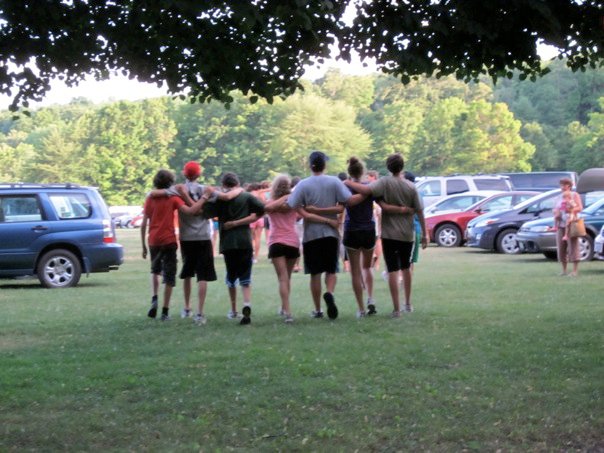
In Which Season Do You Shine?

Photo by RAS Jacobson

Yesterday, my summer son landed back on planet Earth. He came from summer camp via yellow bus and was deposited in a parking lot along with his summer siblings. His voice, gone from three weeks of cheering at Color Wars and singing songs in the Dining Hall. He said this was his best summer yet. And next year, he wants to stay for four weeks. We spent hours listening to him talk about “camp stuff.” What he did, what he ate, moments he loved, moments he didn’t love. If there were any pretty girls. How everyone got along; how his counselors were. And much, much more.

Alas, we are going to have to kick into school mode pretty quickly.

First of all, the middle school is looming there in my backyard; we simply cannot ignore it. And he has a formal orientation later this week.

Yesterday, before he fell asleep, he pulled me down toward his face. “Mom,” he whispered. ” I love you, but I will miss summer.”

I understand completely.

He’s a summer person.

Today, we will find his locker and he will try out his very first combination lock. He will find his homeroom. He will look around, take in the landscape. Figure out the lay of the land.

And then we are back to the banal tasks, like shopping for new sneakers (he outgrew his while in camp), new shirts and pants (he outgrew his while in camp), and we need to consider things like . . .  food. Because while he was away, my husband and I didn’t set foot in the grocery store. (Which was divine.)  But, with boy back at home, we simply must return to some kind of routine. We   simply cannot continue to eat cereal for dinner. Or peaches and cheese. Or one tomato with salt.

The laundry is spinning as I tap out this quick blog. And my real life looms, too. I have to figure out the time line for my curriculum. Make a few copies. Invite a few guest lecturers. Line up my instruction day in the library so students know how to conduct reliable research in 2010.

Like my son, I  have always been a summer person. I sparkle and shimmer and shine in June, July and August. I love the heat and the water, from pool or ocean. How I used to look forward to the summer. Summer camp. Skinny-dipping. Getting a deep dark delicious tan. (In the 1980s we did these things.) A plain girl, I felt prettier in the summer. Transformed, I always fell in love in the summer. I married in the summer. My son was born in the summer.

But now, I feel autumn creeping up on me, wrapping her fingers around my throat.

It has been a wonderful summer, and I am so grateful to have everyone home together.

Yesterday, I was waxing nostalgic for the many wonders of summer, a friend informed me that she actually hates summer. That, in fact, it is her least favorite season. I was shocked. Horrified. How could it be? She explained her story to me, and I understand it — but it is a foreign concept to me. I’d like to hear from others.

In which season do you feel the most alive? Can you explain?

What’s with the Tats?

photo by mickiky @ flickr.com

In Leviticus 19:28, it is written: “You shall not etch a tattoo on yourselves.” This prohibition applies to all alterations of the body besides those made for medical purposes such as to guide a surgeon making an incision. Although some believe that this is one of those “outdated commandments,” others offer explanations for the prohibition. Some argue the human body is G‑d’s creation, and it is unacceptable to change, alter or mutilate G‑d’s handiwork, and the Jewish Torah forbids practices that emulate pagan customs, considering that following their traditions is the first step towards ascribing to idolatrous beliefs and services.

These days, however, tattooing has ballooned in popularity. Speak to anyone with a tattoo and you will find a person who believes that the tattoo is not an act of physical mutilation but a deeply personal form of expressive art with a story behind each tattoo.

Clearly, having a tattoo is not a subversive act anymore as so many people have them.

So why are so many Generation Yers (18-24 year olds) getting tattoos? What is the allure of getting a tattoo? If you have one (or many), what motivated you to get the very first one?

To Touch or not to Touch?: That is the Question

My soon-to-be 6th grade son will attend the school that is  — literally — in my backyard. I’m not kidding. If you stand in my kitchen and look outside, it’s right there: A two-story brick building, designed to look like a dairy farm. If I were a better golfer, I could hit it with my 7 iron. My husband can probably hit it with his sand wedge; it’s that close.

People have warned me that my child will have “no social life” if he doesn’t have a cell phone with a texting plan because kids these days only communicate via text. I am inclined to pshaw this argument because I truly believe that if someone wants to hang out with my son, that kid will resort to (gasp) calling him on our land-line. Yes, that child might have to talk to an adult for a second or two, but it’s my understanding that I’m kinda okay to talk to, so, until I hear otherwise, I’m not worrying about that.

I’ve also been given the “safety” argument from practically everyone, as if having this device will somehow make him safer. I am fortunate to live in somewhat of an old-fashioned neighborhood where people look out for each others’ kids a little bit. If my son can’t get into our house – which would be really a rare instance because he knows the code to our keypad and has the key to the inside door in his back-pack –  he has a Plan B, a Plan C and a Plan D with regard to which neighbors’ homes he might go. He doesn’t need to call me at the point of the problem. He can try to solve his problem and call me when he gets to his destination and let me know where he is. I try to follow the “safety” argument. I get the idea that if your kid is out riding a bike and she falls or her tire pops or the chain fell off, well . . . I suppose a cell phone would be nice so she could call you and say, “I’ve fallen, and I can’t get up,” or “My bike is busted,” but assuming there was no real injury – wouldn’t you just want her to get up all by herself, brush herself off, and push the bike home? Because I’m thinking that’s when kids feel a kind of strength, a kind of confidence in handling a problem themselves – without the adult swooping in for the rescue. And if my kid is in THAT bad of shape, somebody, please . . .  call an ambulance. Oh, and I feel compelled to remind you — the school is about 75 yards away. Maybe. How much trouble can he get into between here and there?

Currently, my son and I have an understanding. I don’t want to be the crazy mother out there screaming his name at 7 o’clock when it is time to eat dinner, so he tells me where he is going and if he changes location, he asks politely to use the telephone to call me. This system works beautifully. (For now.) I know where he is; he doesn’t need a cell phone. And I don’t have to be attached to my technology either, waiting for a bing or a ping.

My son’s 11th birthday is fast approaching. He has not asked for a cell phone, but he has asked for an iPod Touch. In my mind, this device brings its own set of problems. It’s expensive. It requires Wi-Fi to send text — which is not always available. I worry less about his social life than about his grammar deteriorating with all the stoooopid abbreviations. He is only just beginning to learn the nuances of conventional grammar, and studies suggest texting interferes with all of that. Texting will also open him up to the not-so wonderful world of cyber-bullying. On the other hand, having an iPod Touch would hold all his music and his old first generation Nano has long been maxed out.

image from google.com

It is the only thing he wants for his birthday.

Still, it seems premature. He’s only 11.

I know adults don’t always want to blab with the chatty parents who are hosting the sleepover, that it is easier to text

im outside

than to get out of the car and go inside and get the child. Isn’t that the real reason we give our children devices with texting plans? For our convenience? To me, it seems like an inconvenience. I simply don’t want to be that attached to my phone. And what is he really getting: a fancy iPod with the ability to play games? Well, he can do that on the computer. And I can set limits on the computer. Right now, when he’s on for an hour, the computer gives him a warning at the “15 minutes remaining” mark and again at the “one minute remaining” mark and then it logs him off. I don’t have the ability to do that with a portable device. (Do I?) What types of rules do people have in place for these things?

Somebody help me out. What is my problem? Am I making much ado about nothing?  What rules have you put in place? What has (or hasn’t) worked for you? What should we expect if we get him one of these gadgets?

The Blessing of the Ugly Casserole Dish

photo by Stacy Lynn Baum @ flickr.com

A little nostalgia, if you will indulge me. My husband and I attended a wedding this past Saturday night: Fifteen years and two days after our own wedding day. The day after we were married, as my new husband and I were opening our wedding gifts, we quickly noticed someone had given us a used casserole dish. It was yellow and chipped; it was even a little dirty. I ranted: “Who would give us a used dish?!” I was astonished and, frankly, pretty pissed.

Then I read the card.

The casserole dish had come from a distant aunt who was in her early 90s at the time, and quite ill. Still, Aunt Bea wanted to send us something. Her husband, whom she had loved dearly, had passed away by then and she was alone. In her beautifully written penmanship, Bea explained that a dear friend had given her (and her new husband) that very casserole dish that I now had before me over fifty years earlier. She apologized about the chips and dings, but pointed out that the dish had seen her family through the good years and the lean years. That casserole dish had fed them through The Great Depression, fed their children and grandchildren. She told me that – while she no longer cooked her own meals – she still cherished the dish, but now she wanted me to have it.

Suddenly, everything changed. I no longer hated the old, used casserole dish; I cherished it. It was infused with so much meaning, and over the years I used it all the time. I always put sweet things in it: apple crisp or blueberry cobbler. So many yummy things.

Not too long ago, my casserole dish split into two pieces as I carefully washed it in the sink. It was old and fragile. Its time had come. Nevertheless, I wept. Who knew that something that I had thought represented such a thoughtless gesture would become one of my most precious possessions? It was hard to throw away the pieces.

Now whenever my husband and I attend people’s weddings — while we don’t give them something used — we nearly always give the couple a hand-thrown casserole dish, usually one made by my husband’s uncle, Earl Jacobson, a talented, local potter, and we attach a note explaining the story about the casserole dish we received on our wedding day. We always wish the bride and groom well and hope that — in the very least — they always have a pot to cook in. (Then we stick a check inside!)

It is amazing how one’s perspective can quickly change when presented with the right lens through which to view things. Ugly things can become beautiful; things that seem like curses can be blessings in disguise. Aunt Bea taught me that sometimes my eyes lie. Sometimes people have to go deeper and see with their hearts.

What is something you have unexpectedly come to cherish?

Summer Camp Blues

photo by D Sharon Pruitt @ flickr.com

Scenario: Your 11 year old daughter has been excited for many months about going away to overnight camp. She has gone to this same camp before and had a great time, but now you are receiving upsetting letters saying that she is homesick and would like to come home after two weeks, instead of three. You call the camp, talk to the assistant director who assures you that your daughter is having a good time. You see pictures on the camp website where it appears that she is having a good time. When you finally speak to your child, she says she just wants to come home. Simple as that. Nothing is really wrong, per se. She would just prefer to be home. Financially, you will lose $1000.

What would you do? Would you get your child and bring her home early? Or would you have her stay the final week? If so, what would you say to your child?

The Secret Benefits of Being a Summer Camp Counselor

As summer winds down, it seems like the perfect time for the 3rd part in my 3 part series on the benefits of summer overnight camps.

Most staff members at summer overnight camps would likely agree that moving from camper to staff is one of the most difficult transitions they have to make. One summer, they are the kids being entertained and – shazzam! –  the next, they are the adults in charge of making sure their own campers are safe and happy. And while being a counselor is one of the hardest, most exhausting jobs, it can be one of the most rewarding jobs they will ever have. It is not uncommon for staff to feel everything from relief to sadness when it is time to pack up and leave. Whether they love it or hate it, the experience of being a camp counselor often becomes a powerful source of strength and a knowledge base from which they can draw on their entire lives.

The long-term benefits of working at a summer camp include:

1. Experience working with kids. Working with children provides staff members with opportunities to be empathetic, problem-solve, be creative and silly, and learn new ways to relate to others. Most people eventually become parents, aunts, uncles or just have some other special relationship to a child. Kids offer amazing opportunities and lessons that, hopefully by having an opportunity to work with them, staff members learn to appreciate an enjoy more. That said, working with kids can also be fabulous birth control. I’m serious! While plenty of people enjoy working with children, few actually realize how hard a job it actually can be, and, at camp, that job is 24/7. While working as a counselor, many staffers realize Whoa, I do NOT want to be a teacher, or a pediatric dentist, and I do NOT want to have kids any time in the near future. These are all good things to know about oneself.

2. Gaining leadership experience. Campers live and breathe for their counselors. They watch them and imitate them. As a counselor, staff members get to feel the responsibility for actions of others. Staff may be asked to teach an activity while ensuring the safety of the campers but also making it fun and exciting for them. Regardless of the job titles staffers may earn later in life, the best camp counselors develop integrity, accountability and compassion — all traits that every employer, partner and friend look for, making former camp counselors valuable assets to people’s lives. Case in point: Once, I was visiting a summer camp on the day they were holding their annual 5K Bug Juice Run. It was a 90+ degree day, and my nephew, a staff member at the time, had started a hobby group to help train campers to prepare for the big event. He was so far ahead of the pack at the second lap, I was certain he would win the race. But suddenly, he disappeared. The kids lapped him once, then twice, making me wonder if he was okay: Could he have fallen? Could he be bleeding? Eventually, he emerged from the woods — running full-tilt, making up for lost time, he wound up winning the 5K. When it was all over, I asked him, “Where did you disappear to for a while there?” He said, “Oh, a camper overheated. She was dehydrated, and I thought she might have heat exhaustion, so I stopped to help get her something to drink, cool her down. I waited until someone else could come and be with her before I took off again.” I was beyond impressed by my nephew’s willingness to put his competitive streak aside to take care of another human being.

3. Experience putting others first. My youngest nephew is now an overnight camp counselor. Recently, on his day off, he went scouring garage sales, looking for little props to bring back to camp. He found a bunch of crazy hats, and he was really pumped about bringing his loot back to camp. Why? Because at camp, people appreciate individuality: The counselors who are most remembered are the ones who are the loudest, the ones who are willing to wear wacky clothes, the one’s who are willing to cross-dress, all in the name of fun! Every employer appreciates a free-spirit; someone willing think outside the box and take a little risk.

The communal nature of camp often requires counselors to put the needs of the group ahead of their own. Yes, there are plenty of times when counselors can have fun with another staff member, but there are also moments where counselors are expected to be their for their own bunks despite their immediate desires. One never knows when a tiny disagreement between campers could turn physical; staff members have to be there ready to deal with confrontations, homesickness, real sickness (schlepping campers off to the infirmary), helping with hygiene — especially with the littlest ones. None of these things have the appeal of a giant mudslide or a fabulous campfire s’more, but they are part and parcel of the job. Camp counselors are truly surrogate parents for as long as the kids are at camp, and our children count on them to put them first.

4. Gaining independence by making new friends and being in a new environment. At my son’s summer camp, many staff members are local but some are international and hail from New Zealand, Australia, Israel, Poland, Mexico and other places I’m sure I’ve forgotten to list. Since they did not attend camp as campers, sometimes they feel a little bit isolated being thrown into the camp routine, especially if they are nervous about their English competency. But whether they are native speakers or longtime-campers-turned-staff, ultimately everyone develops his or her own core group of friends who bond just like the kids — through common experience and their own cheesy inside jokes. And for staff who are new to a camp, going into a new experience without knowing a soul and coming out the other side successful is an amazing feeling!

5. Summer Lovin’. Many staffers experience their first real relationships at summer camp, away from the prying eyes of parents. There is hardly a better place to experience young love than at camp as nature provides the perfect backdrop: sunny days; a sparkling lake; leafy trees that rustle in the darkness; berry bushes to collect and share fruit, quiet places to sit and be still with another person. At my son’s summer camp, it is not uncommon for people to meet, date and later marry. To date, over twenty-five successful unions have their roots at Camp Seneca Lake. It’s not that surprising when you think about it, really: People who go generally share a similar background, are often paired up as a result of liking similar activities, and – as I have said before – camp provides that place to live with people and really get to know them in an unplugged way. Camp couples know how to communicate with each other. If couples can continue to stay in touch once summer camp is over, they stand a good chance of being able to make things work for the long haul in the real world.

6. Makin’ Major Connections. I am pretty sure that I am not speaking only for myself here, but nearly 30 years later, I still put Camp Seneca Lake on my resume. Why? Because someone always says, “You went to Camp Seneca Lake? My mother/brother/sister/cousin/friend/wife went there!” We chat about the experience a bit, and 95% of the time, I have ended up getting a job out of it! People recognize what it means to have spent one’s summers working one’s butt off to make other people’s children happy. It says a lot about a person’s character and work ethic. While they are in the moment, most counselors probably think the biggest benefit to being a staff member is getting to go into town and get pizza once in a while! Not so! If a person does things right, he should leave camp with a solid recommendation from the camp director! So to all you parents of camp counselors whose kids are just completing their summer experiences, don’t forget to remind them to put “Camp Counselor” on their resumes: What they did, how many kids they were responsible for, how many weeks they worked, how many people they worked with (or worked under them, if applicable). Sad as it may sound to them, eventually everyone does grow up and has to find a real-world, four season job! And sometimes camp friends land really great ones! Sometimes camp friends even start their own companies! There is major power-networking to be done if summer friends stay in touch with each other! Just another secret benefit to being a camp counselor.

What lessons did you take away from being a summer camp counselor?

Shopping as an Art Form

photo by Maureen Lunn at flickr.com

My sister-in-law, Sheryl, possesses the uncanny ability to walk into any store and put together an unbelievably amazing outfit from random separates. To watch her fingers dance across the racks, shifting and sorting, occasionally holding things up to herself, keeping and discarding, making complex decisions is truly incredible. It doesn’t hurt that she is a size 0 – what doesn’t look good on a size 0? – but still, she really knows how to shop.

For a long time, Sheryl was outfitting three children, herself, as well as her husband. I have always told her that she should be a professional shopper because then she could get paid to spend all her time in the mall, but it’s not a joke. Shopping for five people takes time. A lot of time. Oh, and did I mention that my sister-in-law would do all this putting together of perfect outfits while talking to friends on her phone?

I have to really concentrate.

Really. Concentrate.

I do not have Sheryl’s super-power. Unless I see the outfit fully formed on some mannequin, I’m pretty lost.

My friend Ellie also has shopping super-powers. That girl can find a bargain like nobody’s business. One day we were looking for boys’ boxer briefs. (Exciting, I know.) I quickly picked up a package of Fruit of the Loom marked 4 pairs for $5.99; I was ecstatic. Meanwhile, Ellie moved two feet beyond the display to a box marked “Clearance” and found 6 pairs of the same brand for $4.99. Suddenly, I was less than enthused with my find, but content that I didn’t miss out on the better deal a mere 24 inches away. Just the other day, Ellie and I happened to be at an amusement park with our children, when she ran into someone who asked, “Hey, do you happen to know where I might find a fanny pack?” (I actually thought this was a totally ridiculous question and almost said, Nobody should know where to buy fanny packs in 2010, but, seeing as I didn’t know this woman, I refrained.) Not only did Ellie know where to find a fanny pack — (“Wal-Mart, right next to the women’s underwear”) — but she then produced the aforementioned fanny pack. Who carries around a spare fanny pack? Ellie, Lord love her.

Meanwhile, another friend — Sara — has been busily planning her wedding. Sara found her wedding dress for $9 at a consignment shop. When she noticed it on the rack, it still had the original tags on it and had been dramatically slashed from its price of $1925.00! Okay, so what if it was a 2005 model? That makes it vintage! Sara’s wedding is going to be phenomenal, not only because two people who really love each other are getting hitched, but also because of all the little touches that she keeps finding and buying for bubbkes (with coupons from Michael’s and A.C. Moore, of course). Sara has long been the “The Queen of Curb” and has collected amazing items for her homes over the years from items that others decided to throw away. Several years back, she found a gorgeous buffet on garbage day which she promptly slid into the back of her car. I absolutely covet this piece of furniture, but I must confess, had I seen it roadside, I probably would have just driven right by.

When I was in New York City not too long ago, my friend (and favorite City Mouse) Nancy brought me to Canal Street, at my request. If being on Canal Street is what Attention Deficit Hyperactive Disorder feels like, I totally get it now. I was completely over-stimulated. Every where I looked there was something to see, to touch, someone making noise, someone offering something. People wanted us to go into super-secret back rooms and make decisions about items in under two minutes. I could barely move. Where I was paralyzed, Nancy was cool. She knew what she wanted and how to find it. Nancy came forth victorious; I wound up with 12 self-adhesive moustaches for my son to bring with him to summer camp.

What is wrong with me that I do not have the ability to shop like these people? When did they give the lessons on how to really shop? Was I absent that day?

Are you a good shopper? If so, where did you learn how to do it? And can you share some tips?

Handling Stupidity

"frozen tongue" from http://www.preventfreezing.com/

If your child does something incredibly stupid, do you get angry? Scream? Lecture? Give the silent treatment? Or let it go? What do you do?

Lessons On ‘Tween-Age Swearing

photo by baileyraeweaver @ flickr.com

Figuring out the rules about swearing can be confusing for ‘tweens. Up until about middle school, most parents teach their children not to use “bad words,” or at least try to discourage the use of profanity. But suddenly, around the end of 5th grade, kids start trying out their new understanding of these “naughty” words and begin to throw around a little language designed to shock teachers and impress peers.

My son tends to be a rule following type of guy. As an only child, he isn’t used to hearing the “s-word” or the “f-bomb” thrown around by older siblings. And frankly, hubby and I try to keep it clean when he is around. For a while, our son was expressing some anxiety when he heard his friends swearing, and he admitted that he was trying to rehabilitate his friends on the playground.

He said casually, “I told them, ‘Instead of saying ‘What an ass,’ I suggested they say, ‘What an asp.’”

Oh. My Gosh. He’s trying to fix his friends? I freaked out a little, picturing my child getting his “asp” kicked after receiving a super-atomic wedgie.

Hubby said, “Listen, I understand that you don’t like to swear, but it’s important that you worry about your own actions and behaviors and that you don’t police your friends. Let the teachers handle that. Kids who make bad choices eventually get in trouble.”

My husband and I tried to explain to our ‘tween that there are different types of swearing –- that there is a kind of subtext to each — and that he would need to understand them all. Mind you, we were not encouraging our son to swear, we just wanted him to understand it is not his job to police his friends as they try out the new words in their lexicon.

Here’s how we broke it down:

photo by meddygarnet @ flickr.com

1. The Frustrated Swear. You get to school and realize you’ve forgotten your math textbook at home. “In cases like this, someone may exclaim, ‘Oh shit!’” we explained, “It’s like a giant ‘Omigosh’ where you are talking to yourself more than to anyone else.”

2. The Filler Word. You say something funny or unbelievable, and your friend says, “You’ve gotta be shitting me!” Used in this context, the swear word is kind of a compliment. It like a giant, “No way! That’s awesome!” we explained. “It means you’ve impressed someone.” No harm, no foul. No one gets hurt.

3. The Whispered Swear. This one, we explained, is trickier. You could be in school, listening to a presentation when someone leans over to you and says something quietly behind a cupped hand: “I wish she was shut up with this stupid shit.” This one, we continued, depends on who is saying it and how it is being said. If you are both bored to tears, it can be camaraderie building. You share a quick little nod or smile, and it’s over. But if someone you don’t know well says this to you, they may be trying to get you into trouble, by getting you to respond with a comment or a more obvious kind of disobedience. We told our child he’d have to use careful judgment there.

4. The Threatening Swear. Again, this one can be confusing, as it is all about the people involved, the tone and demeanor. If a kid says, “You are a stupid piece of shit!” to another kid, it is up to the recipient of the comment to decide how to react. If the comment comes complete with a finger-poke to the chest – the recipient of the comment may feel the need to minimize contact with the chest poker, potentially tell an adult, particularly if there has been a history of bullying between the two. But if two good friends say the same comment and they are playfully giggling, it is probably safe to assume that it is not a threatening situation.

“Bottom line,” my husband said, “We don’t want to ever hear that you have been heard swearing in front of any adults. No teachers. Coaches. Friends’ parents. Or mom and me. Ever. Got it?” Hubby asked.

Child nodded.

Twenty-four hours passed and our family attended a fabulous gathering with a friends whom we hadn’t seen in a long time. The air was warm, the kids were getting along perfectly; the grass was emerald-green. The food was piled high and everything is delicious.

Suddenly, our friend (and former neighbor), Steve, came over and said, “Wow! Your son has quite a mouth on him.”

Hubby and I weren’t sure where he was going with this.

“He just told me I have a fly on my dick.”

“What?!” Hubby and I asked in stereo.

Within five seconds, we had our child cornered under a tree for questioning.

“What did you just say to Mr. L?” I asked.

Without hesitation, Monkey confessed. “I told him he had a fly on his dick.”

“Are you kidding me?” Hubby looked up at the sky. “What did we just talk about?”

“What?” asks our son. “Dick isn’t a swear.” (Insert a long, confused pause here.) “Daddy goes to Dick’s all the time!”

“Dick’s, the retail sporting goods store, is not a swear,” I agreed. “It’s a place to buy golf balls and baseball pants and sneakers. Dick can also be a person’s name, and that’s not a swear word, either. But if you are talking about private body parts or what private body parts do, well . . . that’s not appropriate.”

(Call me a terrible parent, but it was soooo hard not to laugh.)

Our child looked embarrassed and completely baffled.

“Look,” Hubby said, “You’re going to figure it out.”

Boy looked doubtful.

I have every confidence that my child will figure out the swearing thing.

I am bracing for that day.

Shit.

How do you teach your kids about swearing? Or do you just let them say whatever they want?

Why Overnight Camp Rocks: Part II

This is the 2nd part of a three-part piece on why I send my child to overnight camp. Click HERE to read part I.

As I mentioned in my last entry, there are definitely parents who buy into the whole ethos of sending one’s child to overnight camp. This entry is not written for them, as that would be preaching to the choir. Really, these pieces are for all the people who have ever looked at me sideways, gotten all judgmental on me, and wandered off whispering to a friend after I have proudly admitted that I send my son to summer camp. And yes, he has been going since he was 8 years old and, yes – eventually – instead of a mere 3 weeks, he will likely spend his entire summers there.

If my last entry didn’t convince you, here are even more benefits to sending your child to summer camp:

6. A chance to be a little bit naughty. Some of my favorite camp memories involve being a little bit “bad.” We girls would raid the boys’ cabins, get all their underwear, and hang them on the flagpole in front of the dining hall. Then, they, of course, would get us back. We would stay up way past our allowed bedtimes (at home) and torment the on-duty counselors in the village, claiming there were ghosts in our cabin. (Really. There were. Three of them.) Sometimes we refused to participate in a particular activity – just because. We were kids exercising a little bit of control that we knew we probably wouldn’t have gotten away with at home. My son said that one of his favorite “naughty moments” happened one year when the counselors and campers threw rotten plums, mustard and ketchup  at each other. “It was like getting slimed!” he exclaimed. He mentioned that a few kids also “smeared shaving cream all over each other”; these are things campers all across the country do each summer, but to kids, these oldies but goodies are eternally new. And of course, all of this programming is created and orchestrated by a very capable staff who oversee everything and make sure no-one gets  too out of control.

7. A chance to get down and dirty. During the school year, kids worry so much about their physical appearance. They want the “right” clothes from the “coolest” stores. At camp, with the exception of a few special programs, campers can relax and not worry about their clothes or their hair. If it rains, they can cover themselves in mud, go mud-sliding, make mud pies, and then  wash-off in the lake. They can have a huge all-camp Color War that goes on for days and culminates in one crazy event like a giant colored water balloon contest and laugh as the inky ballons explode on impact. Heaven help me, but they can go to bed without brushing their teeth. They can even go to bed with dirty feet. Now I may be an extreme neatnik, but it’s hard for me to imagine even the most mellow parent appreciating a mud-covered kid lounging on the couches or dragging funky feet over freshly vacuumed carpets. At camp, anything goes when it comes to good, wholesome, messy fun.

8. A chance to make lifelong friendships. When people live together for extended periods of time – adopt the same schedule, perform the same daily rituals, sing the same songs, chant the same cheers, share the same inside jokes – a community is formed. And when people return year after year, this community becomes a kind of family. Many of the people I consider to be my closet friends are the people I went to summer camp with nearly 30 years ago. Some of them live nearby, some of them live farther away. These relationships ebb and flow, but I feel confident when I say that I have a core group of folks whom, I believe, that if I needed them, I could count on them to be there for me. To loosely quote James Taylor, I could just call out their names, and they’d come runnin’…

9. The opportunity to rediscover my spouse. During the year, husband and I tend to become so child-centered that we often toss our own interests aside. Even our connection to each other sometimes falls on the back burner. It’s always there; it’s just that sometimes it’s on a low simmer. While our boy is off enjoying himself at camp, we can refocus our energy and rediscover each other — which is nice. So after he is done with work, hubby gets unlimited, guilt-free golf; and I get to swim and write and write and write without interruption. We eat later than we usually do, and we talk about adult stuff. We go out with friends — often with plans made at the last moment — and never have to fuss about making sitter arrangements. We watch movies that we have been putting off forever, and we even have a chance to make plans about the future as individuals and as a family. We are dangerously free, which is kinda nice. Honestly, alone-time with the spouse is not to be minimized!

10. The Big Reunion. Unlike Alice who falls down a rabbit hole and unwittingly lands in Wonderland, or Dorothy from Kansas, who accidentally lands in Munchkinland after a tornado carries her house away, there is nothing accidental about our son’s departure. The week before he leaves, we create a “staging area” where we label all his clothes. We make a very intentional trip to The Dollar Store for glow sticks and decks of cards, whoopee cushions and over-sized sunglasses, and all kids of other goofy kid stuff that he can use while at camp. He packs his favorite books and magazines and a few packs of gum. And, believe me, that kid is psyched! That said, like anyone who has ever journeyed from home for a while, while one certainly appreciates the change in scene, the people, the opportunities to do things you have never done before – perhaps you never thought you’d ever get to do – at the end of the journey, it always feels so good to go home. We are all reminded of the meaning of the words “fortunate” and “grateful” and “love.” Our son remembers how comfortable his bed is, and we are amazed at how quickly children grow.

For a few days, I don’t mind when my son carelessly tosses his sneakers about or that he forgets to put his dishes in the sink; I realize he’s out of practice. I don’t mind the seemingly endless loads of laundry, the piles of important rocks that he’s brought home, and I actually enjoy washing a few extra dishes because I am just so happy we are together again. I kind of love that 80% of his sentences start with, “When I was at camp…” or “Did I tell you about the time at camp when I ….”

What can I say? It’s in his blood. He drank the bug-juice and loves it.