Tag Archives: teaching

Toni Flores: A Woman Who Opened Minds

I first met Professor Toni Flores as a student at Hobart and William Smith Colleges. I was told by an upper-class student, “You have to take Toni,” and so I found myself in Professor Flores’ Introduction to Women Studies class which was filled with many first-year William Smith students. (The class might have even been called “Our Bodies, Ourselves” as that was our major textbook.) In her class we discussed things I’d never thought about before: sex and gender, the history of motherhood, feminism and the abortion debate, date rape. She challenged nearly every assumption I’d brought to college and turned it on its head.

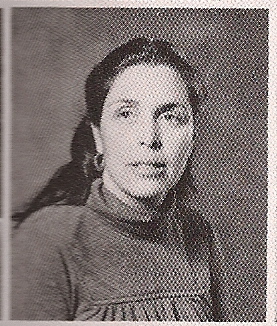
Professor Flores in 1980s

As the weeks passed, I had the opportunity to get to know Professor Flores and she asked if I had any interest in babysitting for her, then, two young sons. I remember feeling terribly flattered that this woman, this icon, this goddess with long black hair, could have chosen anyone to watch her children – but she chose me. I felt this responsibility, this honor, as I arrived at Toni’s house. Her house was a little dark inside, but it was immediately obvious to me that her house epitomized her. Everything felt casual. Comfortable. There were no areas that were “off-limits” to the kids. There were artifacts – treasures – from her numerous trips to Mexico scattered about, blankets and lots of throw pillows. And books and books and books.

Professor Flores, late 1990s

At some point, during one of my visits with her children, I remember being in her kitchen (probably getting somebody a snack) and noticing a long line of ants marching directly from Toni’s sugar bowl in the cupboard, down the wall, across the floor and out a wee crack in the far wall.

When she arrived home after her meeting, I thought she might want to know about the bug situation, so I showed her the ants. Unfazed, and – true to her spirit – she crouched down over the little guys and watched them intensely for more than a few minutes. I remember looking at her, studying her, and seeing her smile. I remember the creases around her mouth, the joy she found in watching those little ants. She was able to find so much happiness in the little things. She was who I wanted to be when I grew up.

During my four years at college, she helped me with many things – personal things – but it is that little moment in her kitchen that I cling to.  Toni Flores, Professor of Women’s Studies and American Studies, died on November 3, 1997, after battling a long illness. Toni wasn’t horrified by life, any of it. She was amused by it, mostly. And I have tried to take that lesson from her.

Who was your favorite teacher, and what do you remember about him/her?

Sure, I’ll Write You A Recommendation…

Mr. Stephenson circa 1980s

In 11th grade, I needed three stellar recommendations that I could send off with my college applications. I felt confident that I would receive solid letters from two of my former English teachers, but then I was kinda stuck. There was no way I could ask any of my math teachers. I mean, I enjoyed Geometry, but I wasn’t necessarily good at it, and my Algebra teacher had retired.

Finally, I decided to ask my French teacher. I’d been in his class for two years. I was reasonably interested in the material (kinda); I liked him a lot (that should count for something, right?); I did my homework (sometimes); and I tried not to laugh too much. Yes, I decided, Monsieur Stephenson would be the perfect person to write me the outstanding recommendation that I was seeking.

You can imagine how shocked I was when he flat out said no.

“Think about your performance in my class,” he said. “Do you give 100% ? Do you take everything seriously? Do you show me that you want to be here? Do you do anything extra?” He pushed his hair back with the palm of his hand and sat up straight in his chair. “Think about the answers to those questions and then you’ll understand why I can’t write you a letter.”

He did not say he was sorry.

Fast forward 25 years, and here it is, recommendation letter writing season and my former students are returning to me, sometimes three semesters after I’ve had them as students. Like frantic homing pigeons who have been lost for an awful long time, they ask me to write them all kinds of letters –  to get into four year colleges, to enter the military, to give to potential employers – so I find myself thinking of Monsieur Stephenson a lot.

Mr. Stephenson in the 1980s

When Monsieur refused me that day, he gave me a big dose of reality. It is not enough to simply show up: A person must do more than make a good impression. Many of my former students think that because they liked me – that because I was kind to them and they passed my class – that they are entitled to strong letters of recommendation, but the best letters of recommendation are not just about “passing the course,” but about work ethic and character, growth and potential.

I am grateful to Monsieur Stephenson for refusing me, as I see his wisdom in holding up the mirror before me and having me take a good hard look at myself and my choices. I understand that his mediocre letter could have prevented me from getting into the college of my choice. Students need to think carefully and be direct in asking any potential letter writer if that person can produce a strong letter of recommendation on their behalf. If a student cannot find a professor or teacher, they may have to get creative and look to coaches, neighbors, religious leaders, perhaps someone who has witnessed their involvement in community service.

I learned more than just French from Monsieur Stevenson: I learned to be selective about whom I agree to write letters of recommendation. They are time consuming endeavors; labors of love.

Having said that, I am happy to write one for you – if you deserve it.

Anybody refuse to write you a letter of recommendation? How’d you take it?

Ode to Mark Kelly: The Man Who Helped Me Accept Chaos

It was my third week at Metairie Park Country Day School and I could barely distinguish the administration building from the science building. I didn’t know where the nearest bathroom was, who to call about the broken desk in my classroom, or how to make the copier stop jamming.

For the first two weeks I called him Jeff. By the time I got it straight, I realized that Mark Kelly was not the technology guy; neither was he the Athletic Director. He was the Middle School Principal, and he’d come to the English office to pay me a visit, to see how I was doing, if I needed anything. How nice, I thought, how friendly the folks are around these parts. Little did I know that he was out to get me. Little did I know that I’d come face to face with the meanest practical joker east of the Mississippi. I made the mistake of sounding secure.

Mark Kelly

“Everything is great,” I said, trying to sound confident.

“Have you been to the Lower School?” he asked.

“Been there.” I said, feigning a yawn.

“What about the library?”

“Pu-leeze,” I lied.

“So you know what you’re doing?” he said, raising his eyebrow. “You have it all together?”

I nodded my head, snapped my fingers two times for effect, and headed off to class.  Later, after school ended and I had erased the blackboard, reorganized the desks in a circle, and collected my mail, I returned to the English office. I saw it from all the way across the room; my desk had been cleared. Everything was gone.

When I realized the gravity of the situation, I gasped aloud: “My grade book!” It held all my students’ grades, all my attendance records.  I think I vomited a little in my mouth.

Sitting behind me, looking calm, was Mr. Kelly.  He smiled, arms crossed over his chest.  “So, you’ve really got it all together…”

“Where is it?  What have you done with it?!” I squeaked.

“It’s around,” he said coolly.

Suffice it to say that Mr. Kelly sent me on quite a scavenger hunt. During my journey, I located the Lower School atrium, the Upper School attendance office, the library – and I met fabulous folks all along the way. In the end, it turned out that Mr. Kelly had stashed all my goods in an empty file cabinet drawer right there in the English office, about two steps away from my desk. I pulled all my belongings out of the drawer, unharmed, and set about reorganizing. Mr. Kelly gurgled and chortled behind me.

Truth be told, I miss the way Mark Kelly batted me around the way some giant cat might play with a mouse or a bird. I miss hearing his booming laugh behind me at school plays; I miss his multi-colored Tabasco ties; I miss his wit, his charm, his teasing, and his teaching. Mark put a little bounce in my step. He taught me to stay on my toes.  He taught me never to brag about being done with something early. He taught me how order in the world is artificial and how easy it is to lose control. He made me explore, go out and meet people, go into unfamiliar territory, and find answers. It is so easy to get stuck in our own little comfort zones.

Mark has been working as Head of School at Annunciation Orthodox School in Houston, Texas for the last 14 years. I like to think that this little Grasshopper has become like her master and that I instill in my students the same thrill for exploration and the same joy at being slightly off- center.

When is the last time someone made you feel a little off balance – in a good way?

Lessons From Mrs. Church

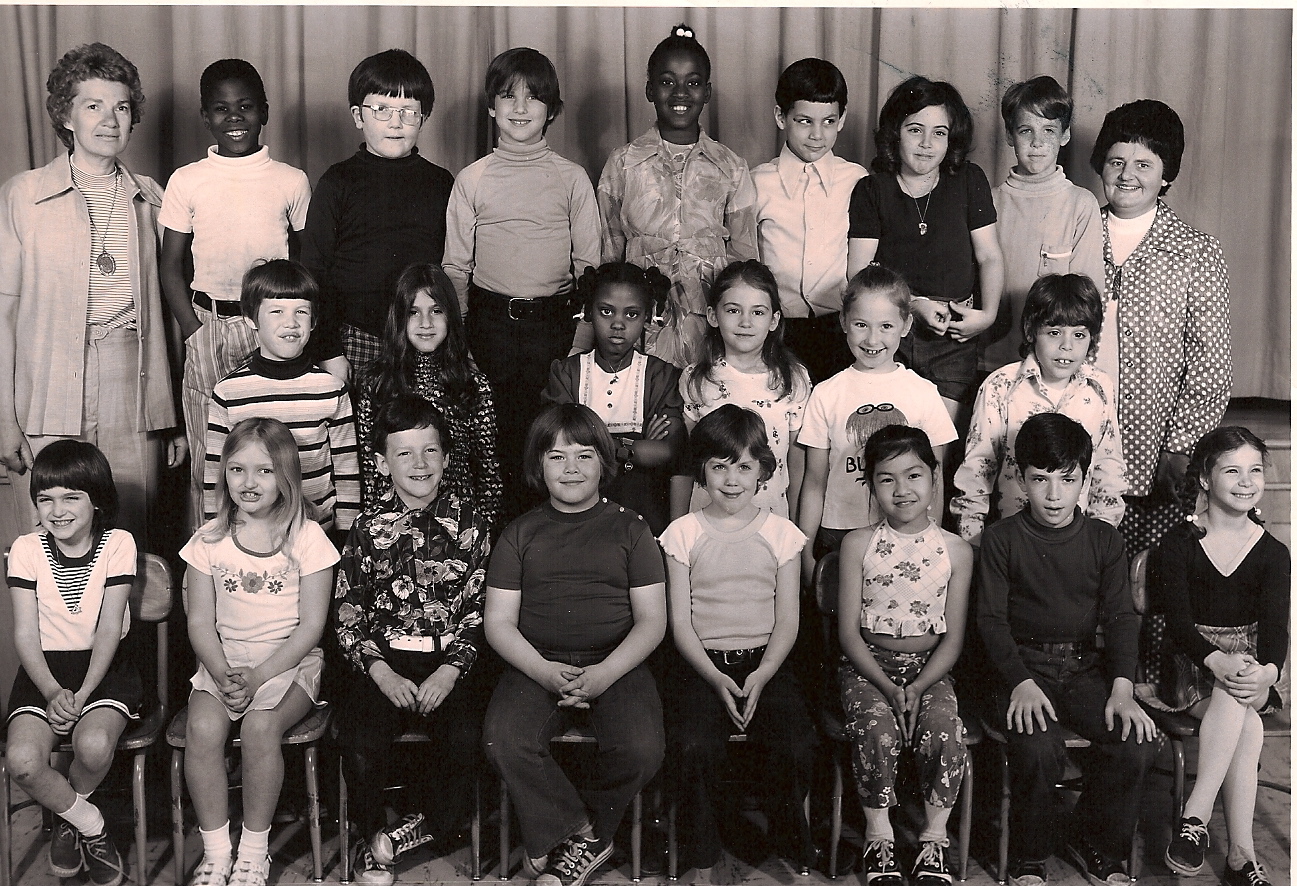
Mrs. Church stands in the far right of the back row.

I loved Mrs. Church, my 2nd grade teacher, from the very first day of school. Among other things, she taught a unit on Hawaii where we made grass skirts and learned songs about “going to a hukilau”: I still know the words. She let us sample real sugar cane and poi, each of us dipping our fingers into the community bowl with our two fingers. Lord knows where she got the stuff. She wore crazy, clunky necklaces that epitomized the 1970s – owls with big eyes, huge butterflies, giant yellow flowers. She wore two-piece, polyester, polka-dotted pantsuits, and her ragged-edged haircut made it appear she did the job herself at home.

Mrs. Church literally had my back, and she rescued me when a certain twit who sat at the desk directly behind me decided that it would be fun to cut my hair with his dull-bladed scissors. She must have read his mind because I barely felt the tug of his hands on the back of my head when she called out, “Mr. So-and-So, you may bring those scissors up to my desk now.”

She encouraged me to write and revise, and – eventually – to enter a writing contest held at our local library the spring of my 2nd grade year. I don’t know if I won or not (probably not), but I remember the way she made me feel: like I could do anything.

Please share a memory of one of your favorite teachers. What did he/she do that makes you remember him/her all these years later?

The prompt was to write about a favorite mentor in under 500 words. I wrote about this when my blog was very new, and I had very few followers. I’d love to honor my old teacher, a woman I think about nearly every day.

Tweet this Twit @rasjacobson

What’s So Cool About Boys Who Sew?

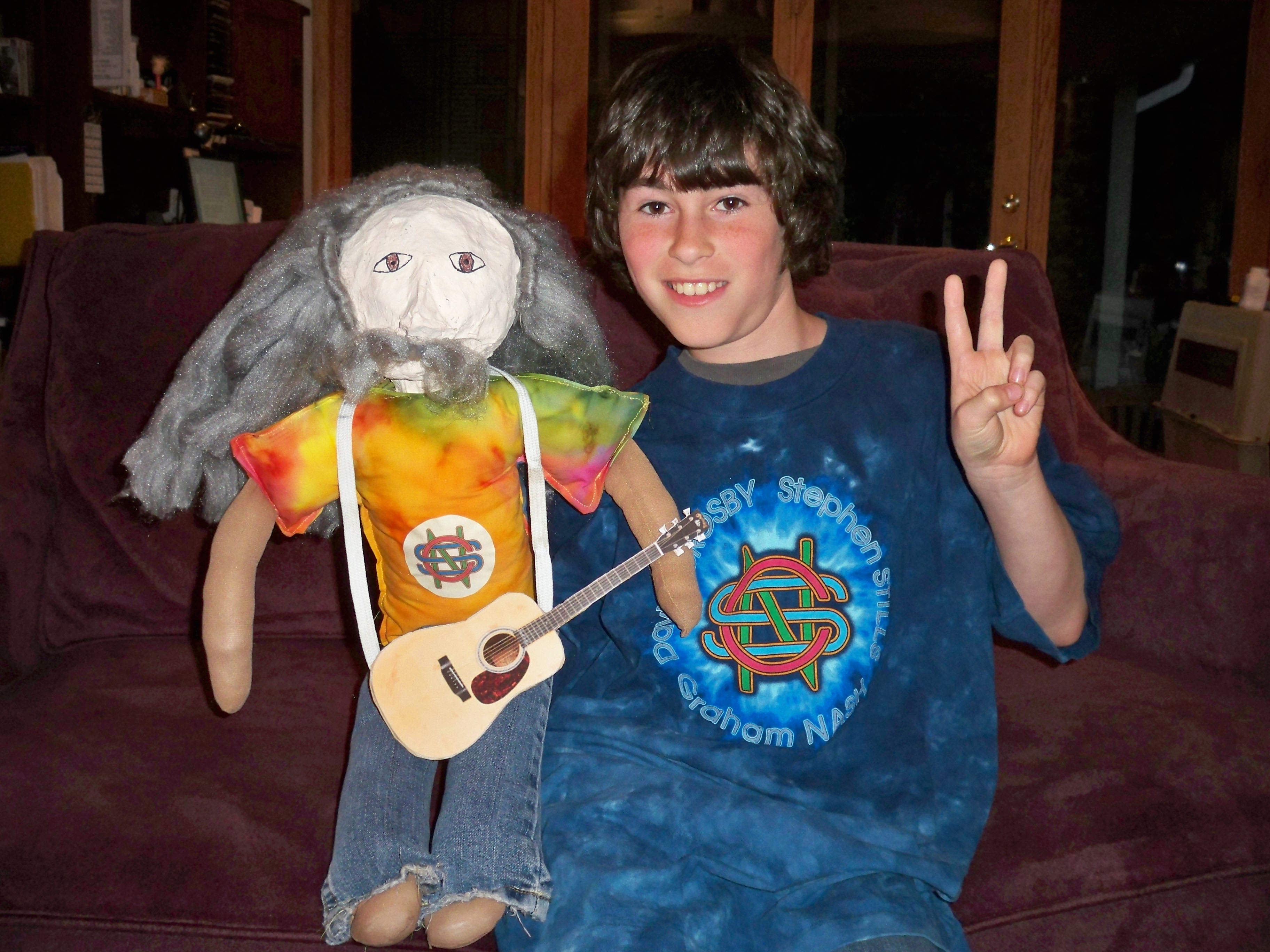
5th grade boy sews David Crosby puppet

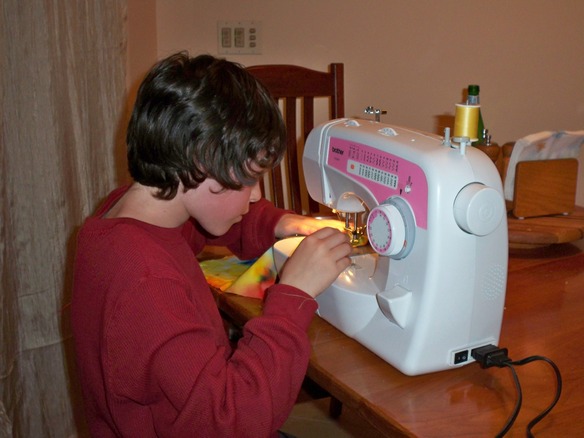
I know three smart, funny, semi-rambunctious 5th grade boys who have taken to sewing. One has been embroidering, another has been knitting, and the other created a stuffed puppet as part of a biographical research project where he chose to study singer/songwriter David Crosby of the classic rock group, Crosby, Stills and Nash. The puppet resembles Crosby as he appears these days: complete with long gray locks, tie-dye t-shirt and jeans. Sewing “Stuffed Crosby” was no small undertaking, but with a few quick lessons from his mother, this l’il dude learned how to work a sewing machine. And he enjoyed it!

These boys are not weirdos: They all love their video games, have excellent social skills, and plenty of friends. Each of these boys knows how to get down and dirty. One of these boys is downright crazy. That said, each of these kids has recently learned that sewing – whether it be by hand or by machine – can be relaxing and the results rewarding.

Boy Sewing

I know lately everyone is talking about the obesity epidemic in the United States so everyone has their kids in a million after school run & jump activities. Personally, I’m thrilled to see these boys taking a little time to develop a slightly different skills set: patience, precision, concentration, and the ability to sit in one place for an extended period of time without a gaming device in hand.

Perseverance is potentially the most important quality for any successful working professional, athlete, or individual. Most well known breakthroughs in life have been attributed to perseverance alone. In life, as in sewing, sometimes things go wrong and things get all knotted up. In those moments, one has to persevere – move beyond the frustration – by developing different strategies.  For these boys, the outcomes have been wonderful pieces of art, but each has also discovered a new creative outlet.

Who knows? Maybe they might start patching the holes in their jeans. Now that would be something!

Is it Okay to Just be Okay?

Fente d’assaut, originally uploaded by n.vasse.

Today my son participated in his first fencing tournament. He’s been taking lessons in Saber at the Rochester Fencing Club for just under a year and, I must confess, I still can’t tell who scores. Even when the judge is there officiating, I can’t tell who has won the point. My son tries to teach me about the parry and repost and a host of other things with fancy names that I can’t seem to retain. I don’t know what my problem is because I want to understand it, but I just can’t. It’s not that I’m not trying to understand. It just seems like everything is beyond my aptitude. Meanwhile, my 10 year-old understands everything and seems to pick things up easily and by osmosis.

Trying to understand something but not being able to was humbling and it reminded me that not everyone is going to understand the message I am trying to deliver to them. No matter how hard I try, no matter how many visuals I include, whether my class is web-enhanced or not, some of my students still are just not going to get it.

My son didn’t win the tournament, but he did win a few matches. Most importantly, he is willing to keep trying. He was not broken down by the experience of losing. He wasn’t discouraged. He was actually inspired to be better the next time. I guess in some ways I am like an Intro Level Saber teacher; I provide my students with the basics, and some of them will excel and some will be okay. Others will be lousy, and the least inspired of the bunch will drop out.

It is rather awful to not be able to understand something. Frustrating, for sure. And while I suppose it is not the end of the world to not be able to “get it” when it comes to fencing, I am having a hard time convincing myself that it is acceptable for some students to never move beyond a basic skills set when it comes to reading and writing.

Is it okay to just be okay?

Words To My Students Whom I Adore

springtime classes, originally uploaded by Wolfram Burner.

People generally remember a favorite teacher, but what they may not realize is that we teachers also become very connected to our students. We aren’t supposed to have “favorites,” but there are one or two who always weasel their way into our hearts because of their talent or wit, their work ethic or their ability to get their peers back on track. Over the years I have collected many favorite students. They were not always stellar English students when I taught them, but they have all become stellar people. This poem was written many years ago while teaching at Metairie Park Country Day School, but it epitomizes how I feel at the end of each academic year.

To My Students

We pepper the field
sprawled in comfort,
air on faces
in hair, on cheeks, freckled
and sun-kissed, we
relax together, separately
seeking inspiration and
silence in a too noisy world
saturated by too many good ideas
already created. Children shriek
around us, the squeak of
swing-sets swinging, pony-tails
bobbing, we were children
once too, clawing at the dirt
unafraid to scream or spit
point or stare, but now
we care.
These months
we have explored
together, through heat
and humidity
through the wet-kiss of storm, we have
connected, grown closer
a tight group of bodies
and minds which dip
and soar like butterflies
over cornfields. It is springtime
already and they
blossom before me, open their petals
stickily preparing for bigger gardens.
As we sit scattered across the field
surrounded by outside smells
I miss them already,
these people that I love.

Tell me about one of your favorite teachers!

Notes For Twits?

Cliffs Notes, originally uploaded by Purple_man.

I stumbled into a local Barnes & Noble yesterday and happened to enjoy watching a small group of high school students studying together. One student had a laptop and was tapping away and the others were reading. It was at that point I realized these students were reading those insipid CliffsNotes. You know the ones: Those skinny little yellow pamphlets designed to help English students better understand literature. For those of you who just landed on the planet, a well-intentioned guy named Cliff Hilegass started the company in his basement with a few Shakespeare titles; the company (no longer owned by Hilgrass) now offers notes on hundreds of titles. Detractors of the guides claim they allow students to bypass reading the assigned literature. The company, of course, claims to promote the reading of the original work, and views its material as a supplement, not as a substitute to the assigned reading.

I can only tell you what I saw: Several high school students sitting in the café sipping expensive coffee drinks not reading the primary text. They did not even actually appear to have the original text with them, and in between reading the CliffsNotes, they alternately texted friends, took phone calls, listened to music on their iPod Touches, and chatted it up with other friends who entered the café area.

Here’s my feeling on this topic. Ick. While these were high school students, I have no doubt that this is a similar process with regard to the way my college students approach reading and, later, writing. These days I feel a little hesitant about praising the work of students whose work I think is interesting or fresh, as I worry I may be positively reinforcing the habit of some students of picking up critical information from an outside source – a practice commonly called plagiarism.

I know that there are a million other sources available to students today besides CliffsNotes. Hell, they can purchase entire papers right off the Internet. Last year, a student actually listed a posting on Craigslist requesting someone to write his final English paper because he just didn’t have the energy to do it. He was willing to pay $150. I believe someone from the Monroe Community College English Department responded to the post and nailed the lazy, little twit. But I do wonder what has happened to personal pride and the hard work ethic. I wonder how many parents actually sit down to discuss cheating with their children. Do students understand that taking someone else’s ideas and presenting them as their own (without giving citation) is actually unethical? Do their parents?

For me, the person who uses CliffsNotes is a type of person who is afraid to think critically. Reading literature gives students practice in making their own connections, drawing their own conclusions, which can be supported by the facts with which they have been presented. I want my students to practice critical thinking so that they recognize that their voices and opinions are vital, and have power, not only inside the classroom but outside the classroom as well. The fact that students would trust a person that they do not even know just because he/she has a few extra letters after his/her name (PhD, M.S., D.D.S., M.D., J.D., etc..) represents another problem we have today; namely, people are too willing to take it from “the experts” before considering things thoroughly themselves. Students who use “Notes” of any form are not only cheating themselves, but they are cheating the world of their ideas. The best students are ones who are willing to take risks, engage in a dialogue about the literature: They are the ones who will be prepared to deal critically and creatively with opposing views, and recognize they need not feel threatened by ideas or beliefs which are different from their own.

I know great students exist. It just seems so dang easy to cut corners these days, like we have made it too easy for students to not do all that hard work that must occur inside their brains long before the pen ever hits the paper, or fingertips ever touch the keypad.

What do you say to your children to encourage them to think independently and express their own ideas, especially if they are struggling with the material?

The Day I Got It All Wrong

photo from goldsardine at flickr.com

When I teach, I come to class prepared. In fact, I sometimes come to class with a Plan A, Plan B and an Emergency Back-Up Plan. I think this stems from the days when I didn’t exactly know what I was doing. Case in point: Many years ago, when I was just starting out, students were completing their last day of oral presentations. One girl was standing up before the class doing her thing and a small group of boys were being – well, let’s just say, a little bit disruptive. Nothing major. They just weren’t really interested in the symbolism that she had found so riveting in Ordinary People.

I tried to get the attention of one of the boys. No luck. I tried to make eye contact with another. Nothin’. Finally, I took my pen – a Precise V5 extra fine tip pen in hand and attempted to throw it so that it would hit the main offender: Let’s call him Hugo. It should be noted here – and you can’t make this stuff up – that Hugo just so happened to have one good eye, having lost the other eye several years earlier although I never found out the circumstances surrounding how it had happened. Anyway, I tried to aim for Hugo’s leg – to get his attention without disrupting the entire class. I figured he’d feel the pen tap his leg, look at me, I’d give him “the death eye” and he’d stop screwing around. It seemed foolproof.

I don’t know how it happened because I usually have pretty good aim, but anyone who was in the class that day would vouch for the fact that the pen did not hit Hugo on the leg. That pen had a mind of its own and fueled by green ink, it launched itself upwards right into Hugo’s face just below (or maybe above?) his good eye.

Hugo stood up before the entire class holding his face, “What the hell are you are doing?” he shouted (and with good reason). “You could have blinded me?” And with that, Hugo announced that he was going to the nurse, the principal and, then, he was going to call his mother.

I had done precisely what I had set out not to do. I had disrupted the class completely. At the time, I pretty sure that I was going to be fired. After apologizing to the student presenter for creating such a commotion, class ended, and I hustled up to the Upper School principal to whom I confessed all my terrible, unforgivable sins. She clucked her tongue at me, told me to call Hugo’s mother, and explain what had happened. Thank goodness, Hugo’s mother was wonderful, supportive, understanding – and even joked that sometimes she wanted to poke out Hugo’s good eye. Later, I also apologized to Hugo who  apologized to me for being disruptive and disrespectful.

I have often thought about my experience with Hugo. As a new teacher, I was trying to figure things out. After throwing a pen at my wonderful student, I learned many things: First and foremost, I learned to never throw anything at anyone in-class ever again.  But I learned a lot of other things, too. Over time, I discovered more creative methods to communicate with students about their behavior without making the class come to a grinding halt.  I learned a great deal about respect that day and how quick-actions can lead to terrible consequences. I learned that sometimes teachers need to apologize to their students because sometimes teachers are the biggest twits of all. We learn from experience.

Oh, and I didn’t  get fired.

What’s a not-so-great thing you did on the job that turned into a huge learning moment?

Should We Let Our Kids Sink Their Own Ships?

My son happens to be a very cool kid. A smart boy, he naturally gravitates to science and math, thus making me wonder how it is possible that he sprang from my loins – but then my husband is a math-science guy, so it makes sense. A voracious reader, my Monkey cannot easily be torn away from a book. I have never had to ask him to do his homework. He comes home from school, makes himself a snack, eats it, puts his dishes in the dishwasher, and then disappears to do his homework. He just does it. I know some of you must be wondering what could this woman possibly have to complain about, so here it comes.

Recently, Monkey’s 5th grade teacher asked me to take a look at his English assignment due that next day. Monkey had been asked to answer a question, making sure to provide the title and genre of  the work, and a thesis statement. He was also asked to use topic sentences and provide textual support and cite the page number as well as explain how the quote supported his idea about the topic. I was elated. I mean, this was a friggin’ awesome assignment and not too different from the type of assignment I might give to my own students in an Intro to Composition class.

“What should I be looking for?” he asked.

“Monkey doesn’t integrate quotes into his papers; I’d just like to make sure he understands how to do it.”

Seemed simple enough.

That night, I explained to my Monkey that his teacher had asked me to take a peek at his assignment. His handwriting was solid, his topic was interesting, he included the title and genre of the book, but – nope, she was right, no textual support. I asked Monkey about the missing quote. He shrugged his shoulders and said he “didn’t care” because he knew he was “still going to get a high score on the rubric so it didn’t matter.”

“You need to find a quote,” I said quietly, handing him his notebook.

“It’s fine,” he said, attempting to slide his notebook into his backpack.

“It’s not fine,” I insisted. “Please revise it.”

“It is fine, and I’m not doin’ it.”

“You need to do it,” I argued, my voice a little louder.

“No, I don’t, and I’m not!” he shouted.

If an alien had landed in my kitchen at that moment, it would have thought that – on Earth – children communicate by screaming and crying and that mothers communicate with their young by wrestling them to the ground and screaming even louder. I am quite certain that we looked something akin to Bart and Lisa from one of those episodes of The Simpsons where the siblings are choking each other; in these episodes, they are generally screaming,  their necks are really long, and their eyes are bugging out of their heads.

Finally, I brought out the big guns.

“If you do not do this, you will have a huge consequence.”

A people-pleaser, my Monkey hates consequences, so with resignation he took his notebook and retreated to the office, closing the door behind him. Like I said, he’s a smart kid; he didn’t want to lose his screen time for the rest of the week. One-half hour later, he emerged with a fabulously fabulous journal entry that was even better than the first. It was neatly written, well punctuated, included capital letters; he even remembered to include the page number for his quote. So why all the drama?

I don’t micromanage my son’s academic career. Lord knows, he’s moved beyond me in math and science already, and when it comes time to create a Power Point presentation, he’s my go-to guy. He accepts criticism from his schoolteachers and baseball coaches, his fencing instructor, and his piano teacher. He accepts fine-tuning in violin and he doesn’t mind when his religious school teacher tells him he has mispronounced something. So what is it about the parent-child relationship that brings out such ugliness, such hysteria when it comes to academics? Why couldn’t he just do it for me?

Had Monkey’s teacher not asked me to look at his homework, I would not have found myself involved in that little power struggle, which is really what it was. And what stuck in my craw was that he said he was getting good grades for not doing all the work properly. Could that be true? It occurred to me that if my son’s teacher had given him a low grade – a really low grade – on any of the assignments leading up to that one, it might have motivated him to work harder to give her what she wanted. He’s no grade grubber, but seriously, what motivation is there to change your ways if you’re being rewarded for doing something half-assed?

I called Monkey’s teacher the next morning the moment he hopped on the bus and told her that, while he had completed the assignment, it created real tension between us.

“Do me a favor,” I added. “Next time, if he doesn’t follow the instructions, give him a low grade. He isn’t motivated to work harder because he says he has been receiving high grades on these assignments even without doing what you’ve asked him to do.”

“I can’t believe you are telling me to give him a low grade,” she said. “Would you want him to have the opportunity to redo the assignment if he really blows it?” she asked.

“No,” I said. “I want him to see what it feels like to fail.”

I wonder how many teachers feel held hostage by American parents, afraid to give low grades to students who aren’t really living up to their full capabilities. They must know that if they give low grades, they will face an onslaught of angry emails and phone calls. But how does inflating grades help our children? From where I stand, all it means is that I have to teach it to them later when they hit college level.

Yesterday I made a mini-resolution: From here on out, unless my child specifically asks for my help, I am going to consider him the captain of his own seafaring vessel. That means he’s pretty much on his own, but he’s equipped with a CB radio with a direct line to me. I’m there on the beach in case of rough waters (or confusion about how to use semi-colons) in which case I’ll hop into my little motorboat and ask permission to come aboard. And once the seas have calmed and he has control of his ship again, I’m outta there, back to my spot on the beach.

How involved are all of you in your kids’ daily homework assignments? And could you stand by and watch your child go down with the ship?