Tag Archives: education

Lessons on Slowing Down

Nearly every parent I know has wrestled with deciding how important it is to have their children take Advanced Placement (AP) courses. Parents want their children to have all the opportunities they can get so that they can succeed and be happy in life. (If only happiness could be achieved that easily!) Meanwhile, kids feel the pressure and report feeling exhausted, unhappy and anxious.

People often ask me, as a person who has spent nearly twenty years in the classroom, what I think about AP classes. Should their child take this AP or that AP. And they are often surprised when I respond with a question: “Does your child love French? Because if he doesn’t love it, why would you want him to take the AP which is going to require so much of his time and energy?”

What people (and by people, I mean parents) do not seem to understand is that the demand of an AP class is designed to be similar to a 100-level college class. The difference is that, in high school, that class will likely meet every day – while in college, there is usually an “off-day” where students have time to read and generally better manage coursework.

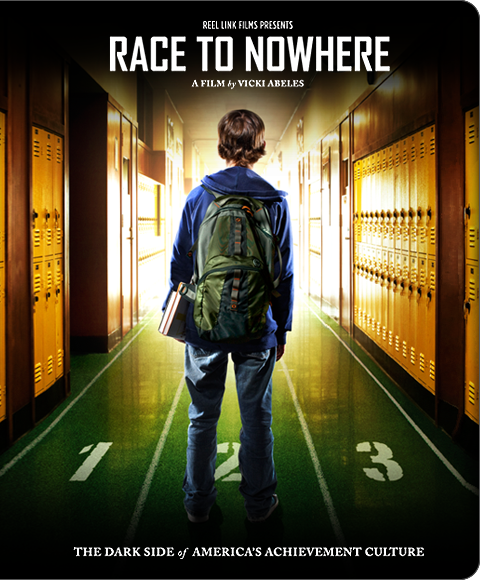
In RACE TO NOWHERE, filmmakers Vicki Abeles and Jessica Congdon speak to educators, parents, tweens, and teens about the pressures they face academically and emotionally, and the physical toll these expectations exact. What results is a picture of a fractured educational system that pushes kids to become successful — but at a cost.

During the Post World War II Advanced Placement pilot program, AP courses were designed to draw the top students into a small class of other students who LOVED the material. In 1952, AP classes were designed to be small so teachers could move at an accelerated pace because of the students’ voracious love of the subject matter. The idea was excellent.

Of course, what has happened over time, is that parents have demanded that their children be allowed entry into AP classes because, these days, there is a warped race to create the best college application. (Believe me, parents want those AP’s on their college applications.) So AP class sizes have ballooned, and there is less one-on-one with teachers. And kids who had no business being in an AP in the first place struggle. Because AP classes are hard. Really hard. When the idea was created, I don’t think anyone from the Ford Foundation would have recommended that any one student take five AP courses.

I always tell parents that AP courses are not the be all/end all. When I say this, they look at me like I have five heads. Then they ignore me completely. (I’m telling you, parents don’t like to hear this.)

I truly believe that the point of education is for children to love to learn. When students are getting sick, when they arrive at college unprepared and unmotivated, there is a problem. Students who feel too much pressure to perform, burn out. Feeling the pressure to achieve, students self-medicate, turn to drugs and alcohol as an escape, and sometimes cheat to complete the ever mounting pile of assignments which need to finished – now! From my vantage point, I see kids who are over-scheduled and overtired.

School should be the place where our teens learn about balance. Schools that allow students to skip lunch periods so they can take five Advanced Placement courses have bought into the hype (or caved into parental pressure). And that is sad. Lunch should not be optional. Humans need to stop and eat healthy food (not a bag of chips) to provide their bodies with energy. I don’t care how many times a parent calls and says, “I want my son to take 5 APs.” Administrators need to grow a set and say, “I’m sorry, but we just don’t think that is beneficial to your child.” Students need help learning how to make healthy choices. Sometimes that means they need the school to shield them from demanding parents. And anyway, kids don’t have to be enrolled in a course to take AP tests: a really self-motivated kid who loves to learn should be able to access all the material he needs to prepare him/herself for any AP test.

For the love of Pete, I’m a Tiger Momma. I believe our children need to pick the things they do and do them well. But we need to help guide them to understand they cannot do everything. Our kids need to study hard – absolutely – but they also need to eat. They need to be able to go to the bathroom without worrying they are missing crucial information. And they need to be allowed to tune school out for a while so they can exercise and nurture friendships. They should not be running from this practice to that recital just be sitting on their asses in front of their computers every night.

When I was in high school, I had the opportunity to take regular English, AP English, or  Syracuse University Project Advance (SUPA English). At the time, SUPA was a college curriculum class taught by our own high school instructors who had been trained to teach the course. I worked my butt off in that class, and I did not always excel. I remember getting one paper back with a big fat “D” on it. (Maybe it was a “C,” but in my mind, I remember it as a “D.”) I also remember taking that paper to the library and weeping next to a huge potted plant. I had worked so hard on that paper. And English was the subject in which I was supposed to excel. I did not understand how I could have failed. My ego was battered, but my love for the subject matter made me want to figure things out. I busted my hump in that class. It was truly an amazing experience, and I believe it was the course that best prepared me for college.

When I think back on it, I cannot imagine how grueling it must put in that kind of work into every subject, every day. To me, taking all those APs seems utterly unnecessary. No one has ever asked me: “How many AP courses did you take in high school?” (Well, one pretentious fuck did, but it was after he had polished off an entire bottle of red wine himself.) In fact, many colleges don’t even accept AP credit anymore. It’s true.

So, my recommendation is this: If you’ve got a kid who is interested in some accelerated academic experience, have him/her enroll in a summer course at a real college. That looks good on college applications, too. And the credit might actually transfer somewhere, and it might help transition him or her to the realities of actual college life. Help your child live a balanced life. Have your kid go to summer camp, get a job, plant a garden, try something he/she has never done before. Not for the college application, just because.

In the United States, success has long meant making a lot of money. And the way to do this has traditionally meant attending a great college. But we need to redefine success for children. We have gotten caught up in this “race to nowhere,” as described by Abeles and Congdon. We need to teach our kids to do what they love – not pressure them into taking five AP classes because it will make them look good on paper.

In 2010, over 1.8 million students took over 3.2 million AP tests at about $87 bucks a pop. I’m no mathematician, but even I can tell that some people are taking more than one test. And I’d like to know five years down the line, where those kids are, and if they feel all that pain was worth it.

Check out this clip from the film below. Tell me you don’t want to see it!

NYS Grads Ain’t Reddy For College

graduation caps

Image by j.o.h.n. walker via Flickr

In case you have not already seen/heard this by now, I am reposting Sharon Otterman’s article: Most New York Graduates Are Not College Ready – NYTimes.com in its entirety. If you like, you can click on the link above and read it in its original format. Frankly, this is the kind of news story that makes me weep inside.

If you prefer, you can read my repost below and catch all my snarky comments in blue. Red indicates sheer horror. (This is why I cannot loan out my books, people.)

• • • • • • • • • • • • • • • • • • • • • • • • • • • • • • • • • • • • • • • • • • • •

February 7, 2011

Most New York Students Are Not College-Ready

By SHARON OTTERMAN

New York State education officials released a new set of graduation statistics on Monday that show less than half of students in the state are leaving high school prepared for college and well-paying careers. The new statistics, part of a push to realign state standards with college performance, show that only 23 percent of students in New York City graduated ready for college or careers in 2009, not counting special-education students. That is well under half the current graduation rate of 64 percent, a number often promoted by Mayor Michael R. Bloomberg as evidence that his education policies are working.

But New York City is still doing better than the state’s other large urban districts. In Buffalo, Rochester, Syracuse and Yonkers, less than 17 percent of students met the proposed standards, including just 5 percent in Rochester.

The Board of Regents, which sets the state’s education policies, met on Monday to begin discussing what to do with this data, and will most likely issue a decision in March. One option is to make schools and districts place an asterisk next to the current graduation rate, or have them report both the current graduation rate and the college ready rate, said Merryl H. Tisch, the chancellor of the Board of Regents.

The move parallels a decision by the Regents last year to make standardized tests for third through eighth graders more difficult to pass, saying that the old passing rates did not correlate to high school success. (Oh good, let’s make new, harder tests. That should fix everything.What else is going to have to fall out of the curriculum so that our kids can pass these silly tests?)

State and city education officials have known for years that graduating from a public high school does not indicate that a student is ready for college, and have been slowly moving to raise standards. But the political will to acknowledge openly the chasm between graduation requirements and college or job needs is new, Dr. Tisch; David M. Steiner, the state education commissioner; and John King, the deputy state education commissioner, said in interviews last week.

With President Obama making college readiness and international competitiveness a top national goal, and federal and philanthropic money pouring into finding ways to raise national education standards, that equation is changing, they said. “It is a national crisis,” Dr. Steiner said.

Statewide, 77 percent of students graduate from high school. Currently, a student needs to score a 65 on four of the state’s five required Regents exams to graduate, and beginning next year, they will need a 65 on all five.

Using data collected by state and community colleges, testing experts on a state committee determined last year that a 75 on the English Regents and a 80 on the math Regents roughly predicted that students would get at least a C in a college-level course in the same subject. Scores below that meant students had to often take remediation classes before they could do college-level work. Only 41 percent of New York State graduates in 2009 achieved those scores. (No duh! This is what I have been seeing for years: Baffled community college students claiming to be “A students” in high school who have absolutely no idea how to read for meaning or write in complete sentences. No wonder they start freaking out when they suddenly get C’s on their essays!)

In the wealthier districts across the state, the news is better: 72 percent of students in “low need” districts are graduating ready for college or careers. (You get that, right? Over 25% of students in more affluent suburbs aren’t pulling their weight when they get to college.) But even that is well under the 95 percent of students in those districts who are now graduating. (We live in one of these “low need districts.” I have tutored students in grades 6-12 who still have not mastered basic comma rules. I have had to teach them commas, semi-colons and colons. I’ve thrown in a few mini-lesson on thesis statements for good measure. But that’s about all I can do. But seriously, the schools can’t do it all. I know they can’t. Why? Because public schools are so busy being mandated to prepare students for standardized tests that they simply do not have enough time to make sure that students have mastered certain things, so they have had to let some things go. I think folks at The Board of Regents must believe that kids pick up things like grammar by osmosis.)

The data also cast new doubt on the ability of charter schools to outperform their traditional school peers. Statewide, only 10 percent of students at charters graduated in 2009 at college-ready standards, though 49 percent received diplomas. The state has not yet calculated results for every district and school. (So charter school are broken, too? What a surprise!)

State officials have also begun a series of meetings in local districts to introduce this data and ask local officials what they want to do about it. A common reaction, Dr. Tisch said, is shock and hesitancy. There are fears of plummeting real estate values, as well as disagreement, particularly in rural areas, with the idea that all students need to be prepared for college.

Jean-Claude Brizard, the schools superintendent in Rochester for the past three years, said that while he was surprised by the data, he welcomed the effort to move the conversation away from simply graduating. In an effort to improve, Rochester has closed half its high schools and opened new schools, including its first high school that allows students to earn credits at several local colleges. 

In New York City, roughly 75 percent of public high school students who enroll in community colleges need to take remedial math or English courses before they can begin college-level work. (I would argue the same is true here in Rochester. Many of my incoming first year community college students are not anywhere ready for regular Comp-101. They need a more basic English class to prepare them for Comp-101. That is what my community college is grappling with now. This semester faculty in the English Department started developing a new diagnostic tool as the old AccuPlacer was proving ineffectual. Not everyone had to take it and part-time students slipped through the cracks.) City education officials said the 23 percent college-ready rate was not a fair measure of how the city would do if graduation requirements were raised to a higher standard, because students would work harder to meet that new bar.

While it has not gone so far as to calculate an alternative to graduation rates, the city has already begun tracking how each high school’s students fare in college, and in 2012 it will begin holding principals accountable for it. “Last year, well before the state announced this plan, we told schools we would begin including robust college readiness metrics in school progress reports,” said Shael Polakow-Suransky, the chief academic officer.

One thing that is helping districts get over their shock, Dr. Tisch said, is the opening of a discussion about how to improve things. On their tour, which has visited Albany, Buffalo and Rochester and will visit New York City, Westchester County and Long Island in the coming weeks, officials are presenting a menu of options. (Oooh, a menu! Well, I’ll take one helping of smaller class sizes: Eighteen students would be lovely. I’d like two helpings of students with parents who value and support education. I’d like a pile of teachers who are enthusiastic about their subject matter. I’d like intelligent principals who support their teachers and support staff. I’d like a double-helping of students who accept responsibility for their actions. I’d like to see Honor Courts comprised of the most ethical students, as nominated by teachers and peers. I’d like all students to sign an contract stating that they understand no one has the right to interfere with anyone else’s right to learn – because if they do, they will be expelled. And, um, I don’t see this on the menu but if it’s not too much trouble, I’d like to request students who remember to bring the necessary materials to class. Every day. Or at least just a pen.)

One idea is to simply report a college-ready graduation rate as an aspirational standard and leave it at that. (I have no idea what this means. So a principal could report: “We aspire to have 35% of our students graduate by 2015. That is insane! That is called The Anti-Aspirational Initiative.) Another is to impose tougher graduation standards — like requiring that all students in the state take four years of math and science, or permanently raising the passing score on high school Regents exams to 75 in English and 80 in math. (Be still my heart! Could it be that The Board of Regents is starting to realize a 65% is not really a passing grade. It’s a friggin’ low D! Way to go, Board of Regents. For the love of Pete, it’s only taken thirteen years for you to realize that teaching to a low standard is only bound to enforce that standard. Oy!)

But they are also discussing increased flexibility for districts and students, so that they can spend more time on the subjects they are interested in. For example, students might be permitted to choose at least one of the Regents exams they must pass to graduate — currently all students have to pass math, English, science, global history and American history. Students might be able to substitute foreign language, economics or art for one of the five. Or students could replace one Regents with a vocational skills test in an area like carpentry or plumbing. (Non-snarky response: I actually love this idea. Traditional education is not for everyone, and we need to value our vocational students more. Honestly, those middle and high school years are the only times in life where we expect people to be universally excellent at everything from foreign language to math to science to social studies to English to gym to sewing and cooking! People aren’t made that way. It would be great if we could allow students to specialize in their areas of interest. I mean, you could have asked me if 5th grade if I was going to be a nuclear scientist and I would have told you, “Hells bells, no!” and then I would not have had to suffer through calculus. I can honestly tell you that in my career, I have never used calculus. Ever.

Alternatively, the state could grant flexibility to districts to give credits based not on how many hours students sit in a classroom — currently 54 hours per semester per credit — but on whether students show competency, based on examination or online course work. (Really, so a student who can demonstrate that he already knows his shit might not have to sit through a required class. Just because the State says he has to take it? Now that’s somethin’!)

To press their case, state officials said they hoped to get political support from Gov. Andrew M. Cuomo. The political environment was particularly challenging now, because the state will roll out a new system in July to evaluate teachers that has the potential of strong opposition from teachers’ unions. (Oh great. Let’s blame the teachers who can’t “fix” their students in one calendar year, and if their numbers aren’t high enough, let’s put them on probation (or possibly fire them), ‘cuz teaching is not stressful enough without wondering if you are going to have a job the following September. And everyone knows that when students fail, it’s definitely the teachers’ fault.)

“The obligation at the end of the day,” Dr. Tisch added, ” is to make sure that when youngsters graduate, that graduation means something from New York State.” (I think Dr. Tisch meant to say: The obligation is to make sure that graduation from New York State means they have a set of skills which will enable them to succeed in college and in life. Because right now, that is just not the case.)

To Kindle or Nook? That Was The Question.

Benjamin Franklin.

Image via Wikipedia

So you remember how I blogged about how I couldn’t decide which e-device to go with.

Well, I decided.

I went against the trend.

Nearly everyone said to go with the Kindle, except for the few diehards who said to stay with books.

(These were the same people who, when polled, said they preferred using an abacus to a calculator.)

But I went out on my own and conducted my own research and came to the conclusion that this was the right decision for me:

I decided to go with the Nook.

And I tried it. I really did.

But after a week, I returned it.

(*insert gasps*)

I know, you are all horrified.

The reality is I’m a Book Girl.

Although it is possible to make notes on the device, I found it incredibly arduous. Plus, there was no way to make smiley faces or stars! 😉 I didn’t like that I couldn’t refer to the back of the book. (You know, to remind me what the hell I was heading with my reading because, frankly, I need to be reminded). I didn’t like not being able to physically see how far along I was in my reading. I missed using a real bookmark – especially when the “save your page” feature didn’t really seem to work reliably. Despite all the reports from friends telling me that they are reading “so much more” with e-Readers, I found I was falling asleep almost immediately after starting to read! I guess I need to take notes when I read, or it’s lights out. Who knew? Even after just one week, I missed the idea of not going to the library. Benjamin Franklin was so friggin’ brilliant when he came up with that invention. When I finished my first book and I wasn’t dying to download another, I suddenly realized I do not want (or need) to own every book I read.

So I’m back on library books because I truly believe borrowing books is the most earth-friendly decision a person can make. And if I love the book enough after reading it, then I’ll buy it.

As for my decades of accumulated book clutter (as seen on the floor in the photo above), those are going to the library for the annual book sale. (I just haven’t said goodbye to them properly yet.)

And when I drop them off, I’m going to pick up a bunch of other books to borrow.

For free.

And then I’ll going home to listen to my transistor radio… and play with my abacus.

So… um… what have you been reading that you have loved?

Lessons From Losing

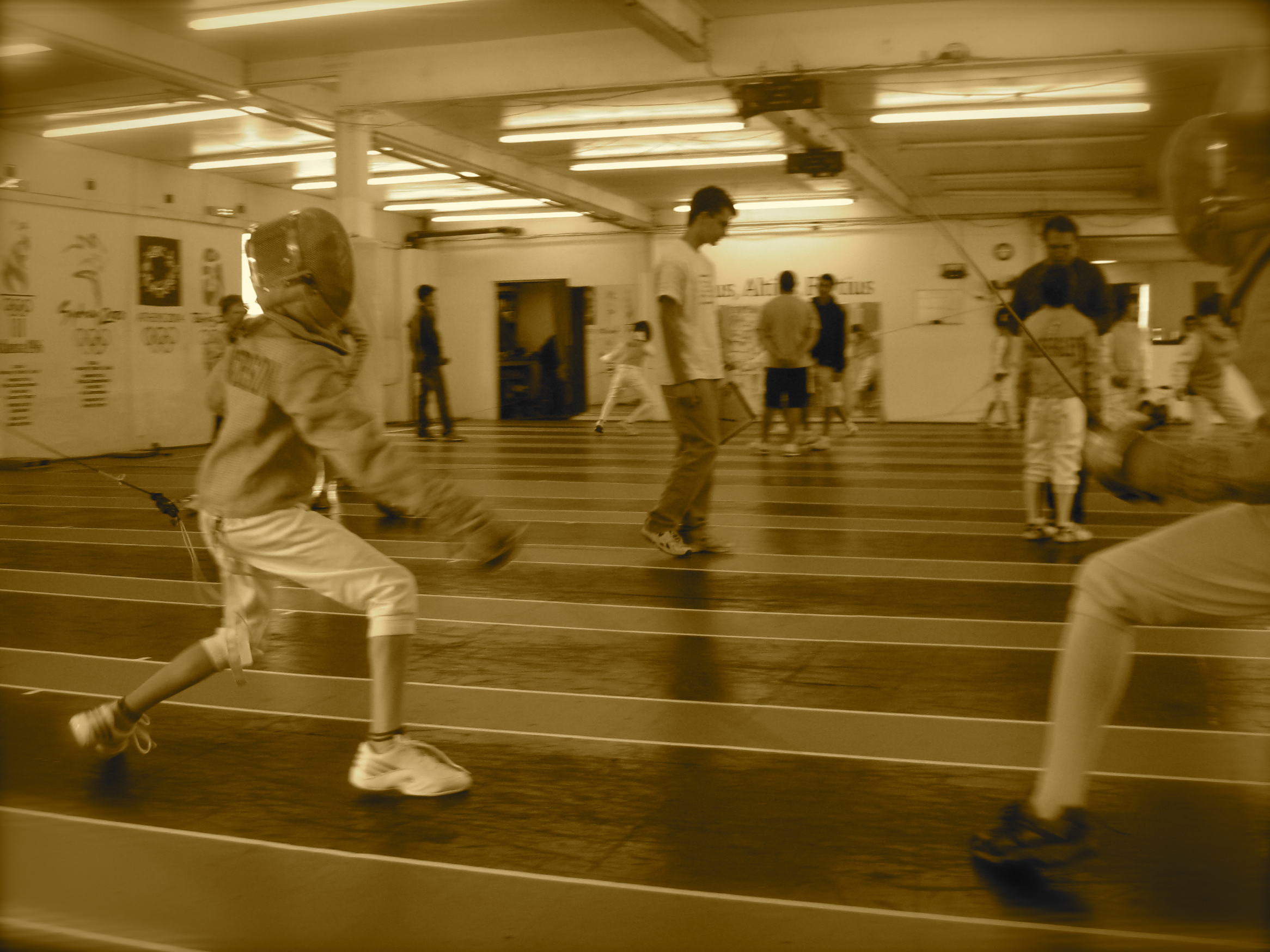
As a self-admitted, ridiculously competitive parent who wants her child to know how good it can feel to work hard and win, it is my duty to report that my son competed in a fencing competition last weekend. On the strip, he fenced his butt off and did not lose a single match. As parents, my husband and I were internally beyond psyched, but externally we tried to contain ourselves.

After two hours, Monkey came over to the area where we were standing and said, “Explain how I have won every bout but I am now ranked #7?” Husband and I looked at each other and said (practically in unison), “Don’t ask us! Ask the guy with the clipboard.” So Monkey did. He marched right up to his coach who is like nine feet tall and tattooed and has a goatee and sometimes yells at kids or bonks them on their helmets for not paying attention. (It should be said, this treatment is always deserved. Elliott is an amazing coach, but he can be intimidating.)

Several adults were standing in a small cluster when Monkey barged in. From my vantage point (wedged against husband and the cola machine), I could see Monkey say something and point at the clipboard. Then I saw everyone look at the clipboard. And then I saw four horrified adult faces. I watched people erasing and nodding. Eventually, words were exchanged and Monkey came back over to us.

Apparently, an error had been made. One of the refs accidentally wrote down the wrong last name in the brackets and so Monkey’s competitor, the kid he had beaten, moved ahead of him.

When the error was brought to his attention, my son was composed. He stayed for the remainder of the competition and watched other fencers compete. He even congratulated the winners afterward.

Later in the car, Monkey was mad. It’s the first time I’d ever seen anything close to a kind of fire in my son. He said he was frustrated – really frustrated. That he had wanted to go as far as he could, and he was mad to have been prematurely stopped in his tracks. He did not have a hissy fit or cry. He understood an error had been made. He knew it was not intentional. He knew that by the time the error had been caught, it was too late, as fencers were already fencing in the semi-finals. He just kind of wished he had known about the mistake earlier.

So there were lots of lessons that day. Lessons we take through life. Monkey kept his head about him and kept his cool, despite the fact that he got a bum rap. He understood his disappointment wasn’t so much about the losing so much as it was losing the opportunity to do his best. That was the frustrating thing for him. (And I’m guessing next time, he’ll be the kid hovering around whomever is holding the clipboard.)

There were lessons for this trophy-seeking momma, too. I have to admit, my first instinct was to feel anger. I felt Monkey had been gypped. Privately, I wanted the coaches to go all the way back in the seeding to where the error was made and start over. I didn’t care if it meant another grueling two hours for the fencers; I wanted justice! I was surprised by how quickly my inner Tiger Momma wanted to pounce: claws bared, teeth clenched. I wanted apologies and a free year of private lessons. I wanted someone to publicly acknowledge my child’s amazing composure. For the love of Pete, I wanted to scream, Someone mention that you guys screwed up and my kid did not really come in 7th place!

Of course, I didn’t.

I squished these urges down, but it wasn’t easy. But I took my cue from Monkey, and I rode the tide. And just so we’re all clear, I’m not a great tide-rider. But on that day, I had to be. We all did. Because sometimes life really does just happen and — even if you have a sword — sometimes you just have to put it away and prepare to battle another day.

Dinner Anyone?

This flyer arrived in the mail today advertising a new, cool place to eat dinner. Yummy.

And then I saw it.

Oopsie! Do you see it?

It takes a moment…

Who can spot the error first?

Who can leave me the funniest response? Ready? Go!

Lessons on E-readers

A Picture of a eBook

Image via Wikipedia

I’ve been considering getting an e-reader for a long time because I read a lot of books, but I hate the clutter that they leave behind. In fact, a Facebook friend recently commented on my sloppy bookshelves which were in the backdrop of a photo. Can you imagine? (Thanks a lot, Todd!)

Anyway, I have been holding out on getting an e-reader for three reasons:

1) Sheer laziness: For a long time, I just couldn’t justify moving up “Research e-readers” in the queue ahead of “Buy new bra.” Guess what? Went to Victoria’s Secret yesterday! 😉

2) Fear. I am definitely afraid that the e-reader could become a chore, another gadget that I have to charge and worry about losing. I worry that I won’t like the experience of an e-reader because I like to write in my books. Back in 1940, Mortimer Adler told his readers in his article “How to Mark Up a Book” that:

The physical act of writing, with your own hand, brings words and sentences more sharply before your mind and preserves them better in your memory.

As a teacher, I could not agree with him more. And yeah, I know you can highlight and leave notes with these gadgets, but there is nothing like flipping through an old book and finding my old handwritten scribble to remind me where I was at a particular point in time. I pick up favorite old books all the time and giggle when I find: “This is sooo mom!” or “Make husband read this whole paragraph!” I’m not sure I’ll have that same experience with the e-reader.

3) There is something creepy about e-readers. I don’t know. I’m not anti-technology or anything, but it’s like when I found out one publisher of the latest version of The Adventures of Huckleberry Finn had taker out the “n-word” and replaced it with the word “slave,” I got a little bent out of shape. Things felt all Big Brothery to me. I worry that libraries are going to start closing, and I love libraries – even though, these days, they seem to have become places where the mentally unstable like to hang out to avoid the inclement weather. I don’t know, for me, books are as much a part of my head as they are my heart. I’m not so sure I’ll feel that in an e-reader.

Still, Valentine’s Day is coming up, and all the stores seem to be insinuating that the best lovers buy their significant others e-readers, so yesterday, I drove around town trying out various e-devices. I needed to feel them in my own hands, see what they could and could not do.

And so I am definitely leaning in one direction, and I must admit, it is not the direction in which I thought I would be going.

Without dragging things out (you know, the way I usually do), I figured I’d ask you, my beloved readers, for your opinions.


Note: iPads are not in the running. (I don’t need all those bells and whistles. Plus I need to be able to read outside, and the iPad has too much glare.)

For those of you who have e-readers, can you tell me which one you have, what you love most about the one you have, and if you had a chance to do it all over again, if you would make the same purchase. If not, what would you choose now?

The Giver: Thirteen Years Later

The Giver

Image via Wikipedia

It’s happening.

My son is reading a piece of literature that I used to teach.

He is reading Lois Lowry’s The Giver, the story of a young boy named Jonas living in a highly controlled community some time in the future. The novel fits into a larger genre of cautionary tales called “dystopian literature.” If a utopia is a society in which everything is perfect, a dystopia is the opposite: everything has gone wrong. The novel explores Jonas’s encounter with memories of “the past,” a time when people still had the freedom of choice.

When I first taught The Giver, the book had just come out, and it was controversial. In fact, it was banned in many schools for its disturbing content and ambiguous ending, but I taught The Giver to 9th graders in an independent school, so I had a lot of freedom. The Giver explores an age-old debate: Should government let people have freedom or seek to “protect them”? Should we value individuality or the greater good? Are emotional highs and lows better than the steady middle ground?

Fast forward. My son is now in 6th grade. Oh, he can handle the language and the concepts just fine. He is a voracious reader, and he seems to understand the book thus far. I have struggled over the last weeks because, really, I want him to discover the book himself. I want him to be stunned when he learns that the main character’s father has lied to him, that it is his father’s job to kill babies. To nurture them, yes, but also to decide which one’s live and which one’s die. Jonas watches his father administer a lethal injection to an otherwise healthy infant twin because the community has decided there can be no twins. And he learns that his father will have to “release” a baby that has been living with the family because he simply cannot sleep through the night without crying.

So I will be waiting for his response.

Because right now, he thinks The Community is a pretty good place to live.

No one has to worry about money, he insists. The climate is controlled. The birth-rate is controlled. Jobs are determined by Committee Members based on careful scrutiny of children and their personality traits. Kids who like to build become engineers and kids who like to play with children become Nurturers. There are Laborers and Birth Mothers. All kinds of jobs. My Monkey likes this kind of order. It seems logical, and it appeals to him.

“Sameness eliminated fighting and wars,” Monkey said matter-of-factly. “There is no more racism.”

“True, but people can’t see or appreciate colors. Everything is kind of beige, so they can’t appreciate hot pink flowers or the blue of an ocean,” I said. “And they don’t know snow or sunshine because of climate control,” I suggest.

He shrugged his shoulders at this. He isn’t far into the book yet to know what is coming.

While he was out today, I re-read The Giver from beginning to end. And I am struck by how Orwellian Lowry’s vision is. And I am amazed by all the ways the government has slowly intruded into our lives since 1993. Post September 11, 2001, video cameras are everywhere. Everywhere we go, we are being filmed. If we purchase something, our credit card transactions are tracked in a way they weren’t before. When we go to the airport, we are made to practically strip down – and we agree to do so, in the name of the greater good; we take off our belts and shoes and put our liquid products into baggies to be searched. We have caller identification so we no longer have to answer the phone. And every prank phone call can be traced back to the place of origin. The government is more involved in public education than ever, practically dictating to teachers the curriculum that needs to be taught. Textbooks, which have been approved and distributed throughout our country to our children, are filled with hundreds of factual and grammatical errors and people do not seem to be outraged. The latest version of Huckleberry Finn has had the “n” word removed. (Sure, you can still get the alternate version, but tens of thousands of students will never even know that another version exists because it is easier to edit the language of difference.) Journalism has become entertainment, and few people read primary sources. Most people just pop onto Blackberries and iPhones and read commentary (read: secondary sources or the ideas from “specialists” telling us what to think) about everything from the food we eat to the latest shooting. I see people forgetting how to think critically. I know people who do not know much about our Constitution. They could Google United States Constitution and read about it, but most folks would rather read Status Updates on Facebook or download the latest App designed to make us forget that our country is engaged in a war.

“There is no war in Jonas’s world,” Monkey said, his chin angled up defensively.

“True,” I said, thinking to myself but there is no love either.

And I wonder how many civil liberties my child might be willing to give up if the Government told him it was for the greater good.

A Word On Grades

Mature Teacher Grading

Not too long ago, I attended a meeting where a lot of teachers were expressing frustration about assessment. A few people were saying they felt uncomfortable giving low grades to college students, especially those who had claimed to be “A” students in high school.

What?

I am not sure how a student’s high school report card should impact his or her grades in a college level course. Twenty-five years ago, teachers worried a lot less about students’ feelings. They just read the papers they received and doled out the grades. They didn’t worry about crushing self-esteem or how a low grade would impact students’ grade point averages.

Teachers need to have a solid understanding of how to assess student work. In any class, assessment can be based on writing an individual paper, preparing a group presentation, class participation, attendance, homework problem sets, exams (essay, short answer, multiple choice, true/false), and so on. Alternatively, when a student performs a task rather than taking a test, it is called performance assessment. There are a zillion different types of performance based assessment.

To me, it’s actually really, really simple:

A range = Amazing work. And let’s be clear, amazing work is very rare. It means the reader can sit back and appreciate the writing because the author really understands how to play with language. The grader should only have to pick up a pen to draw little stars in the margins. When I read an “A” paper, I sometimes gasp audibly because “A” papers are that good. Parents may not like to hear it, but in reality, amazing work is very rare. For me, an “A” range paper earns anything above 90%.
B range = Very good: A “B” means I can tell the student has some solid skill in the subject area. There may be a few grammar errors or awkwardly phrased sentences, but — in general — the paper reads smoothly. Perhaps the meaning wasn’t as conveyed as fully as it might have been. But a “B” paper still shows evidence of a real understanding of the assignment and the material, as well as very good writing and thinking skills. For me, a B paper earns a grade somewhere between 80%-89%.

See? Most people should get C's!

C range = Common. Back when I was in graduate school, we learned that C meant “Average” — and guess what? Most students are average. (Not your kids, of course. Your kids are gifted and talented.) But the reality is that students have to put in some kind of effort to move up from average. Students in “C” range often struggle generating a solid thesis. Their organization is hard to follow. Their grammar is choppy. They don’t spell-check their papers, or their confuse homonyms (words that sound the same but are spelled differently). Lots of people who are currently earning B’s should be getting C’s! There are other ways in which students reveal their average-ness. (That is not a word, but I think it should be.) Let’s face it, some folks are 100% silent participants: they just sit there taking in valuable oxygen, but they don’t really add to the dialogue. Now, that doesn’t mean the shy kid is going to get a “C,” but someone better make sure he participates aloud once in a blue moon. Because you simply cannot earn an “A” if you have never opened your mouth. It ain’t happenin’. People can earn C’s when they earn a low grade on a paper, are given an opportunity to revise, but they opt not to do so. That is, of course, a student’s prerogative.  A “C” basically means the student was average in the course or made average effort. It’s okay. Not everyone has to be stellar in every subject. To me, a “C” grade ranges between 70%-79%.
D range = Deficient. It is not impossible to get a “D” in college. A student may elect to skip an assignment or two. And it’s kinda hard to recover when you have a zero averaged in with very few other grades. (Just sayin’!) Students who earn D’s often have some major deficiencies in the subject matter. In English, they may not know how to structure an essay; how to generate a thesis; how to support their thesis with quotes; how to cite their quotes properly. They usually dislike (read: hate) the subject matter and engage in a lot of avoidance behaviors. They don’t read or take notes on the assigned material. They are not interested in meeting with the instructor outside of class. They do the exact minimum amount of work necessary for them to pass with the course with a D. Students who earn D’s are not struggling to complete their papers on Saturday nights. Reading “D” papers is like stumbling around in the woods at midnight without a flashlight. Slow going. The reader has to constantly stop, as errors abound. Usually dozens. Reading a “D” range paper is toe-curling. It takes forever, so these days I have set a time limit. I can get through any 3-4 page paper in under 10 minutes, if it is written well.  If I am still bumbling around after 10 minutes, I simply draw a line at the place I’ve stopped and write “D” at the top of the paper — along with the ole “See Me.” I just can’t kill myself spending 45 minutes over a paper that a student is probably just going to stuff in his bag and never look at again — even if given the opportunity to revise. Below average no matter how you slice it, either in effort or ability, a D paper ranges between a 65% and a 69%.

F = Failing. There are a lot of reasons why students fail a class at the college level (or any level, really). Sometimes a student doesn’t have the basic skills required to pass the course: plain and simple. Sometimes, a failing student has solid skills but is trying to make a statement to his or her parents: “I don’t want to be here, but you made me enroll anyway, so now I’ll just fail at everything and waste your money.” Given a little bit of freedom for the first time, sometimes students blow it. Instead of studying, they party. They come to class hungover. They sleep in class. They miss classes (so they can catch up on their sleep). While living away from parents for the first time allows the vast majority of students the freedom to thrive, some don’t.

Sometimes students have some serious interference going on in their lives. Some people are wrestling with sexual orientation; some get involved with drugs and alcohol; some good-girls go wild, some bad boys get worse. Some people experience horrible depression — they face that void which taunts them, tells them to give up on everything. Some students bring their demons to campus. Some have been sexually, emotionally or physically abused and don’t know where to turn. Some have eating disorders. Some cut themselves. It is very hard to focus on comma rules when you just found out you tested HIV positive. So real life gets in the way, yes.

I tell failing students that their failure in a course, in any given semester, at any given time does not mean that they could not succeed at another time. It just means that, at that moment in their lives, for whatever reason, it didn’t work.

For the record: It is just as hard to fail my class as it is to get an A. But I will fail people. And I will also award A’s when they are earned.

Grading is not personal.

Why do some teachers have to make it so hard?

If My Kid Writes One More Book Report…


Sleeping Student

Sleeping Student

Monkey has been writing a helluva a lot of book reports this year.

In an English class, a student can — of course — write a formal essay in response to a piece of literature. And they must know how to do this competently. But let’s face it: Writing five paragraph (or two paragraph or three paragraph) essays after every book, can be a real drag. And there is no reason for this when there are a skillion (yes, a skillion) other ways to evaluate a student’s comprehension that are about 100 times more engaging than any book report.

Students could create a piece of art in any medium that represents a character, situation or theme from the story; they might compose a poem or a monologue which explores a situation or character or which develops a theme from the literature; they could write a script for a scene in the story and perform it before the class, or imagine a scene that could have been in the story/play but wasn’t; they could offer an alternate ending or imagine the characters in the future. A musical student could write a song that explores a situation or a theme from the literature and sing/play it for the class. A dancer might choreograph a piece that represents a situation, character, or theme from the literature. Someone could create a diary for a character, not just chronicling the facts of plot, but the character’s emotions regarding his/her experiences. A budding historian might want to research a historical reference he or she noticed in the literature and was intrigued by. Hell, a student could bake something symbolic which links to the literature. I’ve had students bake highly symbolic (and very delicious) cookies!

With any performance based assessment, there always has to be a written explication that accompanies the more creative project in which the student explains his or her intention and explores how the project helps his or her peers understand something important about the literature. Ideally, the assessment process informs the teacher and the learner about student progress and, simultaneously, contributes to the student’s learning process.

I could go on about some student projects that I have received over the years. One of my favorites involves a student who upon completing Lord of the Flies, made a trip to the local farmer’s market and bought a whole pig’s head and recreated the scene where the terrified boys, beat and unintentionally kill their classmate, Simon, and then put a pig’s head on the stick.

I still have the video (which I’ve had switched over to DVD) and I still watch it. And that kid makes movies now.

I know that No Child Left Behind supports “standards-based education”and is based on the belief that setting high standards and establishing measurable goals can improve individual outcomes in education. The Act requires states to develop assessments in basic skills to be given to all students in certain grades, if those states are to receive federal funding for schools.

So I get it. My school district clearly wants our kids to pass the standardized test.

They want a slice of the pie.

But our kids are dying of boredom.

So please, for this mother.

No. More. Book. Reports.

So About That Sign

Wegmans Food Markets

Image via Wikipedia

Yesterday at 7 am, I posted a blog about a sign in my local grocery store that has been driving me bonkers for years.

By late morning, I received an email from a representative from Consumer Affairs.

While the rest of us were chattering about the sign and its grammar, one of my loyal readers — a former Wegmans’ employee — made a call, and the sign was promptly removed.

Last night at 8:25 pm, another loyal reader sent me this picture — along with an apology about the quality. She explained she was operating in stealth mode. 😀

The new & improved sign!

I felt I had to let everyone know the happy ending to this very big news story.

Mary Joan from Consumer Affairs wrote:

Bob Farr was more than happy to take down that offensive sign. And I have to tell you that reading your blog . . .  and the subsequent comments from your readers was quite enjoyable.  You made my morning!

Further proof that Wegmans positively rocks: Here is a company that received a little constructive criticism, and instead of getting defensive (typical) or just brushing it off and ignoring it (also typical), they got proactive, making this English teacher, blogger, and loyal customer soooooo happy.

So the new sign is up.

All grammatical errors have been corrected.

Wouldn’t it be nice if everything in the world could be fixed so quickly?

I’m feeling empowered. Positively zippy.

So what should I take on today? I’m taking ideas.