Category Archives: Memoir

When “Neighborly” Doesn’t Work

photo by annethelibrarian @ flickr.com

A while ago I chatted with Peter Lovenheim, author of the non-fictional narrative In the Neighborhood: The Search for Community On an American Street One Sleepover at a Time, He sipped coffee, and I ate a cupcake. We talked a bit about neighborhoods and neighbors. I even blogged about it.

Given my solid track record in easily making new friends wherever I have lived, it never occurred to me that I might make enemies. After our family moved into a new neighborhood, one neighbor came on particularly strong. She seemed fabulous. She brought me flowers for no reason at all, bought my son special books and funny little toys. She invited me over for tea at her house; I reciprocated with coffee and dessert.

Looking back at it now, I should have seen it coming. She was like that guy you date three times and then he professes his undying love for you. It feels a little premature, but you go with it because it feels good. Passionate. But then one day — out of the blue — he goes all ape-shit on you and breaks up.

In our case, after many months of relaxed interactions, we received one venomous phone call during which my neighbor accused me of doing something (which, for the record, I didn’t do).  It’s all a misunderstanding, I assured my husband. We can totally work this out. That night I planned to clarify, to let her know there was no “situation,” that I had done nothing. I wanted to prove I was innocent. She wouldn’t even come to the door. Finally, her husband came to the driveway and assumed the international sign of a really pissed off person: arms crossed in front of his chest, legs set wide apart, a scowl on his face.

Proverbs 27:17 warns: “Visit your neighbor sparingly / Lest he have his surfeit of you and loathe you.”

I guess I should have paid better attention to Proverbs.

Suddenly, the easy-flowing conversations ended. No more chats about favorite hairstylists, discussions about favorite painters, plumbers or handymen. No more cheery hellos. For a while, I fretted daily at the injustice of it all. I couldn’t believe that Mr. and Mrs. Formerly Such Nice Neighbors could be so rigid and judgmental, even after I’d assured them I hadn’t done the thing they’d accused me of doing.  I couldn’t believe they would bear false witness against their neighbor.

As time has passed, however, my husband and I have found that silence makes a lovely neighbor. Hubby refuses to let Mr. and Mrs. Formerly Such Nice Neighbors change the way he does anything. Hubby still mows the lawn on his big ole riding mower. He plants day lilies and futzes around with the landscaping, constantly relocating perfectly good elephant hostas from one place to another. Sometimes, he still even says hello. Call me petty, but I am not interested in forging any kind of anything with these people.

As I see it, they owe me an apology.

I did learn something from The Formerly Such Nice Neighbors. I learned that while I am likable — and I am — not everyone has to like me. And believe me, there are plenty of people out there who don’t like me, of this I am sure. That being said, the world keeps spinning and the grass keeps growing. I also learned not everyone wants to be neighborly. It’s okay.

As time has passed, I’ve had a chance to focus on my true friends: who they are and the qualities they possess that I appreciate. My closest friends are steadfast, kind, communicative, funny, creative, giving and forgiving. Each of them offers me something to learn – about myself and my place in the world.

With friends like those, who has time to worry about angry folks?

Got any good/funny/awful neighbor stories to share?
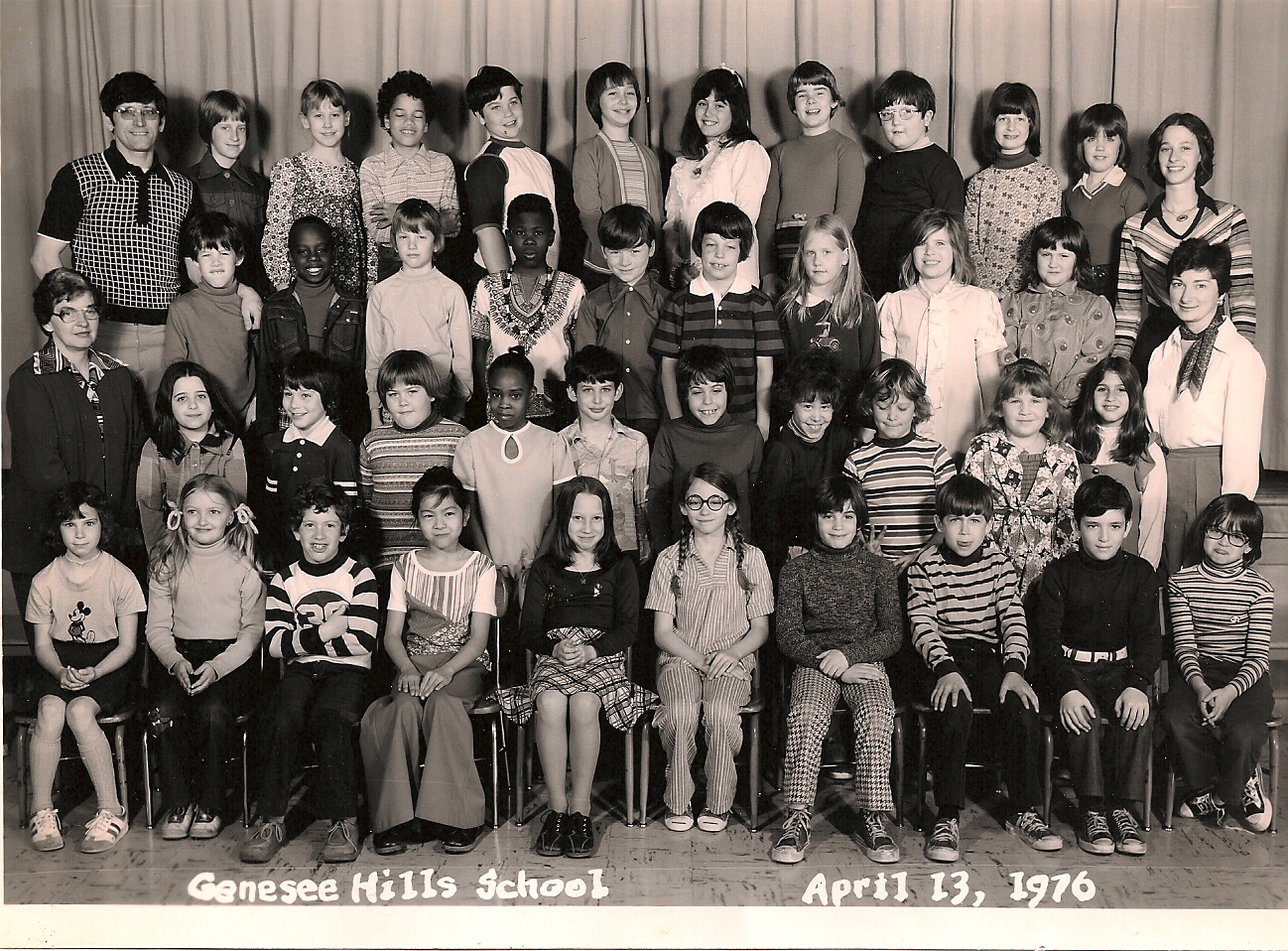
School Is Not the Time To Make Friends

When I was a student at Genesee Hills Elementary School in the 1970s, we had quite a bit of free time during which we actually interacted with our peers: during lunch, recess, specials, sure. But also during class. In 3rd grade with Mrs. Marmillo and Mr. Barnello, we enjoyed an amazing invention called “Boy, Girl and Group of the Week.” A concept that would never fly now, I feel fortunate to have been part of this fabulous, classroom environment, and I know dozens of people who likely feel the same way.

Before I tell you about Boy, Girl & Group of the Week, keep in mind, this classroom phenomenon happened in 1976 — more than 30 years ago — so I could be wrong on some of the basics (so for those who may remember, feel free to chime in).

I want to say that on Friday afternoons, students from our two 3rd grade classrooms gathered together to nominate students as Boy and Girl of the Week. Students who went out of their way to do something nice for their peers were considered, so we said things like:

I want to nominate Jeff F. as Boy of the Week because he lent me a pencil when I didn’t have one.

or

I want to nominate Siobhan E. because she got me a tissue when I had a bloody nose, and then she helped me to the nurse’s office.

Meanwhile, our teachers sat quietly and made hash marks (or something) on a clipboard. Unless, we gave too many nominations to the same kid — in which case they would encourage us to look around the room and notice people who had possibly never been nominated, they were pretty silent.

When we finished, our teachers determined and announced the Boy, Girl and Group of the Week. (Maybe it was predetermined. It probably was.) The prize? Winners got the privilege of walking from our elementary school to Burger King, a little less than a mile away, sometime the following week along with our teachers. To get to BK, we walked on roads – not sidewalks. Yes, there were a few cars, but we walked – single-file in sun and in slush – to get to a hamburger, small fries and a soft-drink. It was heaven.

Imagine teachers pulling off this weekly field trip in 2010. It’s practically impossible.

First off, I have a feeling 90% of today’s parents would say they don’t like the idea because Burger King is fattening, and (in case you hadn’t heard), we have an obesity epidemic in our country. Okay, this may be the case when you are eating BK every day. But we weren’t back then. And we used our lunch and recess periods (both of which were longer than they are now) to walk to and from Burger King. The trek was just under 1.5 miles, but we walked briskly, so it was a good healthy walk.

We used our best manners while waiting in line. I remember standing in the BK queue, preparing to place my order — using my own voice to speak to an adult, “One hamburger, please,” I would say, careful to add, “Thank you.” Eating with my teachers and friends was a most amazing reward! We learned so much about each other during our walks to and from school and while sitting in the big booths together. We learned about our teachers’ families, their children. We learned if our classmates had siblings, what color our classmates’ rooms were painted, and if we liked to play the same games. We learned whose parents were divorced. Hell, we learned what the word divorce meant! We learned to speak, and we learned to listen.

I imagine, these days, most parents wouldn’t like the idea of children walking on main roads with traffic. Because people worry about things like that these days. Because someone could get hit by a car! Or get abducted! Or fall into a ditch and twist an ankle! (The last scenario was probably the most likely.)

As far as I know, my parents signed one skinny permission slip to allow me to go on the aforementioned trip off campus to BK and provided me with the requisite dollar or so to purchase my meal. These days, I imagine there would be a 12-page document that would have to be signed by parents, promising to waive their rights to this, that and the other thing. Back then, nobody worried that we were going to get hit by cars or fall in gulches or get kidnapped. Everyone just kind of assumed giving children additional privileges came with giving us additional responsibilities. People sought to broaden our world experience rather than limit our boundaries.

We had so many opportunities to practice civility in elementary school. It was okay to have a little idle chatter time built into our day. The classroom was the place where we learned our academics, but we also practiced our social skills. Today, I would imagine that most administrators would tell parents that there is simply not time for idle chitter-chatter. A few years ago a school administrator told me that “school is not the place for children to make friends.” She argued that kids needed to get involved in extra-curricular activities if they were interested in making friendships. She explained teachers needed to make the most of classroom time to prepare students for standardized tests, that teachers have more to teach than ever.

In 2010, I would argue “the civility piece” has fallen out of the curriculum — along with the belief that there are benefits to idle time. In 1976, it seemed like there was an emphasis on these things, as well as the other things we learned as by-products: patience (eventually everyone got to be Boy or Girl of the Week), paying attention to the little things, actually making an effort to help out a fellow student in need, being a good citizen (not just because it could get you a trip to Burger King but because it felt good). And a million other things, too.

And in this age of technology, a little more emphasis on these seemingly insignificant niceties could go far to help kids plug into each other and their behaviors. I mean, a student might not bully the kid upon whose vote he depends to get some kind of special reward.

And I would argue that sometimes the greatest life-lessons occur when it doesn’t appear that one is learning at all.

But that’s probably a hard sell these days.

Teens Leavin’ On a Jet Plane

photo from Rob! @ flickr.com

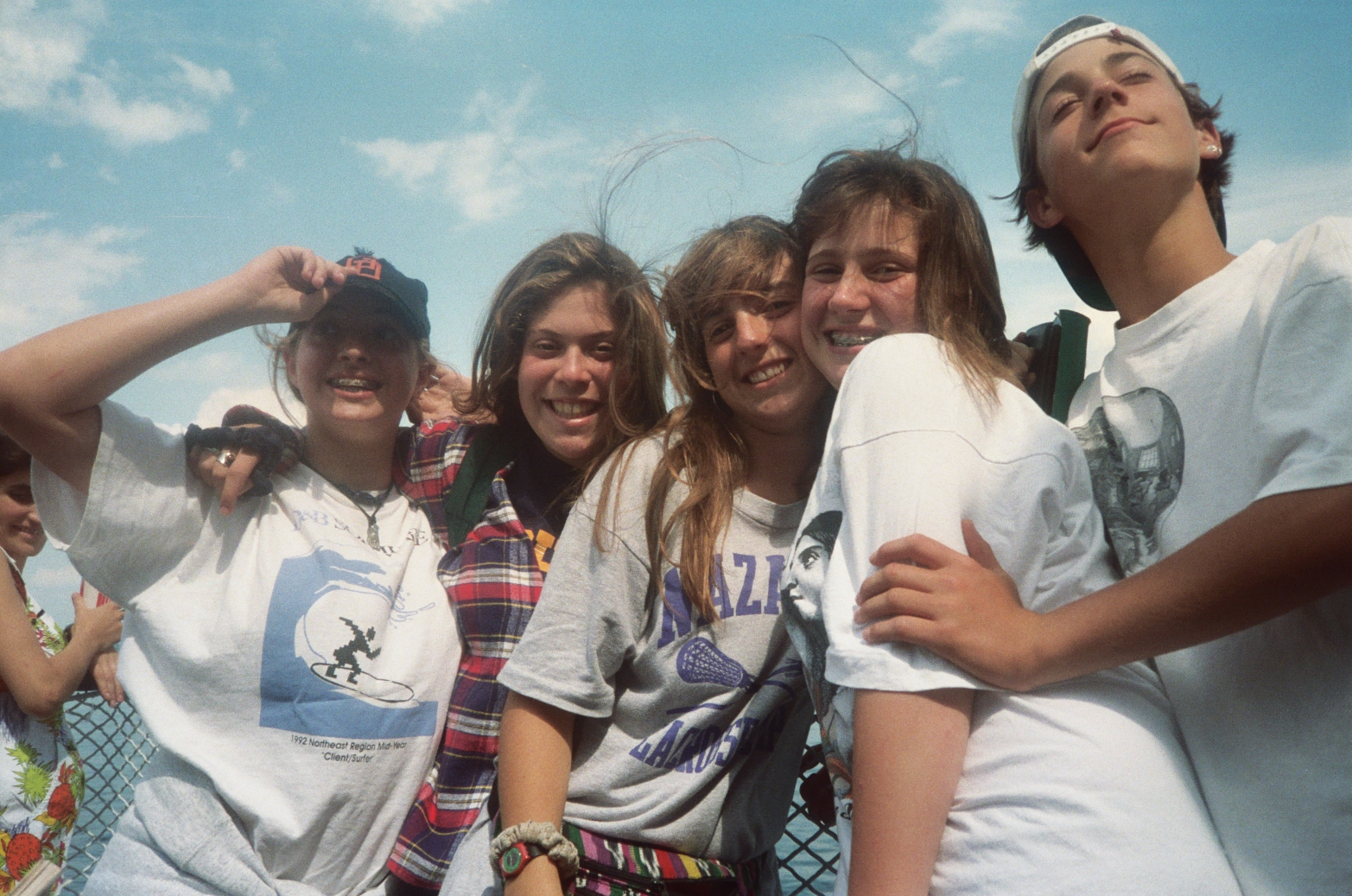
In 1985, when I was a senior in high school, my parents allowed me to go on Spring Break to Ft. Lauderdale with my four closest friends. We flew on (the now defunct) People’s Express for $39 each way. (I know this because I still have the ticket stubs in my old scrapbook.) We stayed in an almost completely unfurnished condo, some of us sleeping two to a bed; we shopped and prepared an amazing spaghetti dinner which we cooked for ourselves (careful to put placemats on the floor so as not to get sauce on the new carpet). Now, we were “good girls,” so we didn’t get into too much trouble — but we did do some things that I am kinda sure our parents would have deemed questionable. (I will not post the evidence here.) I will simply ask:

If your 18-year old child asked if he/she could go and spend a week somewhere with friends — without any adult supervision, what would your answer be?

Stuck Behind a Bus

photo by Thomas Hawk @ flickr.com

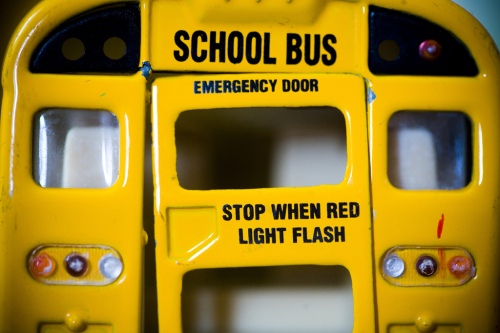
Ever been stuck at a red light behind a school bus? Of course you have. You know that moment when the kids suddenly realize, Hey! We’re not moving! And there’s a car back there with a person in it! And then they all start frantically waving?

It’s definitely a decision moment.

There are non-wavers who live among us.

I just don’t happen to be one of them.

Recently I found myself stuck behind a school bus, facing The Rowdy Boys, and I had one of those flashback moments a la Wayne’s World when I remembered my time spent at the back of the bus. These days, most school buses (in these parts anyway) have two parallel rows and an aisle with an emergency safety exit in the back; in the 1970s-80s, on the buses at my district’s alma mater, the back seat of the bus was one long row that extended from one side of the bus to the other. (If there were ever an emergency, I think we were supposed to kick out the rear window with our feet and jump out.) Or something.

A “walker” from kindergarten until fifth grade, I wasn’t introduced to school bus culture until middle school. In sixth grade, I made sure to sit in the front of the bus — close to the driver, but by eighth grade, I was definitely back seat material. I was soooo cool, wearing my cool jeans that pressed against the aged, red cushion where generations of cool kids sat before me. I sat with the smokers and the naughty girls and the angry boys. I read graffiti scribbled on the walls, watched people carve their initials into the metal bus walls, felt the bus move and sway beneath me. We tried to figure out the lyrics to The Sugar Hill Gang‘s “Rappers Delight.” We exchanged dirty jokes. We made plans to hang-out out after school.

But the bus I trailed the other day was peopled with elementary school aged innocents who smiled and laughed  and acted like goofballs, making faces and sticking out tongues. Separated by a little metal, glass, and asphalt, they probably felt like I did in eighth grade: Cool. Maybe a little bit naughty. Waving to a stranger in her car? What would their mommies say?

I made them work for it a little bit. They flapped their arms furiously, and I smiled. Eventually, just before the light turned green, I waved. Because I always wave back. And, of course, they loved it. I saw them whooping it up, high-fiving each other, as if they’d placed bets on whether or not I’d return their advances. (Maybe I am underestimating those elementary schoolers. Maybe they did place bets! Maybe that kid in the red Old Navy shirt won a lot of money because I actually waved.)

For kids, the bus is a buffer, a zone between the world of school and home, and the ride serves a dual purpose. It is a convenience (read: Mom doesn’t always have to be the chauffeur), but the bus-ride also provides time for kids to mentally shift gears from school — the land of increasing independence and increasing work and increasing expectations — and home, the land of dependence, where they are not the boss and there is homework to be done and sports to prepare for and instruments to practice and parents who still want to hear about every detail of the day, even if the kids themselves aren’t interested in sharing.

When you see kids on a bus, know they are between worlds. Time-traveling, if you will. And, if you are stuck behind a bus and the kids actually recognize your acknowledge in a positive manner, be glad. Just like adults, some of them have had fabulous days filled with glitter-glue and rainbows. But some of them have had lousy days. Dark days. Days where they have been mistreated and misunderstood. Maybe they have been bullied or made to feel small.

I say everyone should wave to kids on school buses; it’s such a little gesture, a little reaching out. It doesn’t cost anything, and it can bring so much joy.  Oh, but here’s a quick tip; only do the waving thing if the kids initiate it first. Otherwise, you’re just a creepy dork in the car behind the bus.

What do you remember from your school bus days?

The Empty Blue Desk

photo from Google images

Fall Semester 2009. Last year. He sat in the back row. In the only blue desk in a room filled with brown desks. He wore a button up shirt every day. He was quiet. Kept to himself. Initially, he was studious and handed in each assignment. His grammar was impeccable, his writing strong. He had a wry sense of humor and wrote about a time when he had worked in a Styrofoam factory. How the white stuff stuck to him, went up his nose, in his mouth, made him sneeze and sputter. He learned quickly he didn’t want to ever work in a Styrofoam factory. We all laughed when he read his piece aloud. Not at him: at his material. He was funny.

I expected great things. In fact, I was so sure he was going to produce great things, he kind of fell off my radar.

About six weeks into the semester, we hit the argumentative research paper unit, and he started to fall apart. He didn’t hand in his intentions for his topic, thus he never had a topic approved. I worried because he didn’t seem to be moving forward. While other students worked on paraphrasing and interview questions for their “experts,” he sat still in his blue chair, looking stiff and uncomfortable.

Finally, I asked him to stay after class. I went to his desk. I asked him if he had started the research paper. No. Did he have a topic? No. Did he need help selecting one, I implored. It was not too late. No. Could I help him? No. Would he let me know if I could help him? No. That was the one that stopped me. Chilled me, actually. No? I tried to look into his face, his eyes for something, but he was looking down, angry at being detained, at the questioning.

“You won’t contact me if you need help?” I asked.

“No,” he said.

I tried to explain to him that up until the research paper, he had an A — the only A grade in the class! He shrugged, underwhelmed. I told him he could still save his grade, the semester, but without the research paper, it would be impossible to pass, especially since he had not met any of the deadlines during the process. I told him I was worried about him.

“Thank you,” he said quietly. “I understand what I’m doing.”

The next day I received an email from Records and Registration that read:

We regret to inform you that we have been notified of the death of one of your current students (name here, and student number). We have noted this in the student information system so that all parties reviewing the student’s record will be informed.

Please make the appropriate notation in your records.

I was stunned. The appropriate notation? Was there a code I was supposed to put in my book? “D” for deceased? “S” for suicide? I knew I had to have been among the last to speak with my student. I replayed our conversation in my head endlessly. “I understand what I am doing” suddenly sounded much more ominous. I had missed it. I had missed a strong student’s decline from excellence into despair. Something was going on with him, and I had missed it. Maybe the better notation was “IF”: I. Failed. Or IF I had only known.

Later, I learned that my former student’s chosen method was to wrap his car around a telephone pole. He had been driving very fast. Very intentionally. He understood what he was doing.

Meanwhile, I was devastated. None of my students noticed the sudden absence of their classmate because students come and go all the time at community college. People drop out for many reasons: job or family obligations, financial issues, poor grades, poor attendance.  I spent the remaining weeks of the semester staring at that lone blue desk amidst the sea of brown desks and felt desperate.

I have had former students die – through illnesses, accidents, even at their own hand — just not during the semesters I taught them. Last year’s experience was a first for me. I have long known that I cannot transform them all into English teachers (nor would I want to), but I guess I always thought out of all their teachers, I would be the one they might come to if they needed help. I would be the one they would choose.

Last year, I learned that was a ridiculous idea, and that I cannot save them all.

What My Fingernails Know

photo by rocket ship @ flickr.com

When every fingernail on both of my hands has broken, I know it for sure: summer is over. It happens to me every year over a two or three-day period. It’s a physical thing; parts of me grow brittle and fall off. Long before the leaves ever change to yellow or orange, my body knows: autumn is in the house.

There may be a rogue “warm day” where the temperatures skyrocket into the 70s. Children put on their shorts and short-sleeved t-shirts. Folks celebrate, go for bike rides and walks in the park. And while I, of course, appreciate the warmth, the glow, the sun in my eyes, I know it is all an elaborate ruse.

The corn has been harvested. My clematis has withered and turned brown. And because I am perpetually cold, I am the first to pull out “the winter bin,” which holds all the hats and scarves and gloves. And once this curly-haired girl puts her hat on, it stays on. Until April. My closest friends know this about me – that I wear hats for about half of the year – but I have to explain myself to each new batch of fall students.

I tell them that I am a summer girl, and while I love the change of seasons – apple picking, pumpkin carving, Halloween and snow-skiing – deep in my bones, I will forever long for those years in New Orleans, Louisiana, where summer was eternal and stretched well into November, sometimes beyond. I tell them that every boy I ever really loved I met in the summer, and it is hard for me to let go of the sun and heat of my youth; that each year, like some weird woman disguised as a tree, I actually feel myself growing a little older, that instead of rings around my trunk to reflect my age, I collect wrinkles around my eyes. Each September, I lose a little of my fashizzle, my sparkle, my shine. It comes back. (It always comes back. It just goes underground and hibernates with the raccoons and the bears for a few months.)

Some of them claim to understand.

(Some of them tell me there is medication I can take.)

Some of them tell me summer isn’t over yet, and that there are sure to be plenty of pretty, warm days ahead.

I don’t care what the calendar says.

My fingernails don’t lie.

It’s fall.

How I Fell in Love with Words

photo by Matthijs Rouw @ flickr.com

For a period of years, I exchanged letters with a boy. He was smart, and I felt flattered by his long-distance attention. I loved the way his words looked on the page, and after devouring the content of his letters, I would stare at his penmanship. His handwriting was distinctive; long, thin strokes in the “T’s” and “L’s”; his vowels undersized, tiny and tight. Very controlled. My “P’s” and “L’s” wanted to loop. My vowels were large and open, like my heart.

During this period, I focused on composing the best letters I could. I explained – dissected – deconstructed and reconstructed the world for him in an attempt to get him to see things through my eyes. I showed him the beauty of the cigarette butt left on the filthy street corner, and wondered about the woman with the orange-red lipstick who had held it in her mouth. I addressed my envelopes, licked my stamps, sent my poetry and prose. And since there was neither instant messaging nor Skype nor Facebook nor email in the 1980s, I had to wait  . . . and wait. . . and wait for the postal carrier to (finally) bring me a long anticipated envelope. And always his responses were wonderful: filled with answers and more questions, more observations which led to more thinking, reflecting, writing.

Through our correspondence, I fell in love. With words. I learned how, in English, multi-syllabic words have a way of softening the impact of language, how they can show compassion, tenderness and tranquility. Conversely, I learned that single-syllable words could show rigidity, honesty, toughness, relentlessness. I saw how words could invoke anger, sadness, lust, and joy. As an adult, when speaking, I sometimes feel like I did not say quite the right thing. But when writing, I have time to be careful, to ponder, to find a new way to say something old. I can craft something magical.

I have always said that the best writing is born in obsession, rooted in a specific place.

My favorite word is “apricot” because it invokes a specific sense of smell, of taste and touch – but for me, it also reminds me of a particular morning in a particular place when the sun rose and made the world glow. It is a juicy word. A sweet word. A golden word scented with summer. I use the word “apricot” to show my students how one image can hold a lot of weight.

Some day I will thank that boy who made me want to revise, who made me want to give him only my best, most delicious words, my most ferocious images. Wherever he is, I hope he is still writing, too.

If you are so inclined, I would love to know if you have a favorite/least favorite word, what it is, and what it evokes for you.

Why Overnight Camp Is Nothing To Be Afraid Of

This is the 1st in a three part series about why I send my child to summer camp.

photo by Jill Butin Neuman

It happens each summer. People ask about our plans, and when certain folks learn that our child spends several weeks each summer at overnight camp, I am met with looks of incredulity and sometimes horror.

More often than not, people gasp and say things like: “I could never do that,” as if to imply that I somehow force my son to pack his trunk and duffel and get out of our house. Nothing could be further from the truth. In fact, if I didn’t let him go, he would consider that the biggest punishment – ever!

Sometimes I get a variation on the theme: “I would never do that.” This response is extra excellent as it is packed with a little judgment, which I really appreciate. This response implies that I am somehow harming my child, perhaps inviting trouble into his life because I won’t be there to oversee his every move 100% of the time. (Can you imagine?)

When people respond this way, I sometimes get a little snarky and say, “At least this summer he came home with nine fingers.” (Insert a dramatic pause.) “Last summer was a disaster.” I know they are imagining pedophiles lurking around the showers or picturing their own children drowning, their heads being held under water by rowdy unsupervised troublemakers.

These are their issues.

For me, overnight camp was the greatest gift my parents ever gave me, and I feel fortunate that my husband and I are able to pay this gift forward to our child. Here’s what overnight camp gave me and continues to give children who attend each year:

1. Continued Independence. Each August, sonny boy and his posse of buddies hop on the camp bus and return with a kind of “we-can-survive-without-our-parents” vibe. I once asked my son if anyone ever gets homesick. He shrugged, “Usually, our counselors keep us too busy to even think about being homesick. If it does happen, it is usually the new kids – but once they get into it and get comfortable with the routine, all that homesickness goes away,” then he added, “Plus, we take care of each other.”

2. Benefits of Communal Life. Living in a bunk with 8 or 9 “summer siblings” affords kids the opportunity to develop some amazing problem solving skills.

If there is an argument, instead of a parent swooping in to the rescue, the boys generally have to work it out by themselves.

That means using their mouths to directly communicate their feelings. Sometimes they aren’t so great at expressing the subtle nuances of their emotions, but – again – they have each other to lean on. If things ever escalate, they have counselors and Unit Heads to help them.

There are other benefits of living in a large group. The boys learn to respect each other’s property, tolerate each other’s quirks, and appreciate each other’s boundaries. Everyone sees each other at their best and their worst selves. Summer camp goes a long way towards undoing that horrible “entitled” attitude. The spoiled girl quickly learns when her peers have had enough of her whining. Kids are patient to a point, but when an entire bunk is angry at you, it is time to take a look in the mirror. Campers quickly learn that despite the fact that a person cannot always get what he wants, everything usually turns out okay in the end.

3. Time Away from Technology. Okay, so when I was young, there was less technology, but I still missed Wheel of Fortune, Jeopardy and General Hospital. These days, chances are that your children know how to do things on your computer and cell phone that you had no idea could be done. During the school year, older kids are addicted to their social networks (Facebook and MySpace), their email accounts, their Apps, the Internet, and IMing. They are used to the constant buzz-ping of each new text message as it arrives. Being unplugged from most technology allows kids to connect with each other, a valuable skill that seems to be getting lost a bit these days. My son reminds me, “We’re not totally cut off. We can have iPods (there is no Wi-Fi access), so if someone needs some alone time, he can just pop in the ear buds.” But staff members have told me that after a few days, many kids begin to prefer people to gadgets, and rather than tune out, they start to look for other campers to “hang out with.”

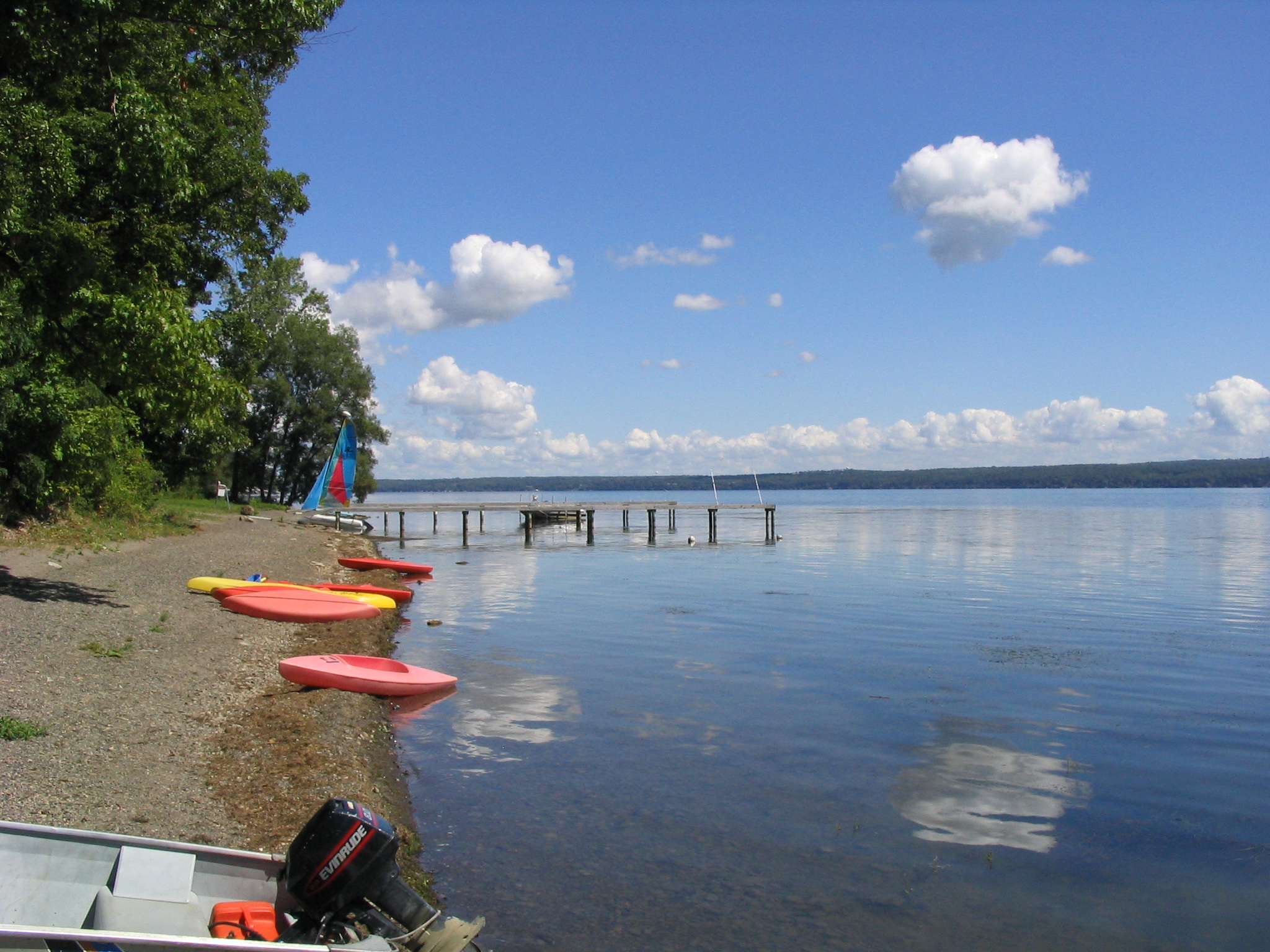
4. Connection to Nature. While our family is fortunate to live in an area with plenty of access to great parks, during the school year, many children just do not have a lot of spare time to go outside and play. My son says, “At camp, we are kind of forced to appreciate nature. It’s easy to forget, but once you start walking around, you can’t help but remember.” Camp Seneca Lake has over 200 acres to explore. Trails to blaze. There are squirrels, field mice, lots of ants and millipedes; there are raccoons and skunks and deer. There is a beautiful lake with a beach that consists of zillions of flat shale rocks, perfect for skipping. What more could a kid want?

5. Opportunity to Try New Things. I like to think of CSL as a “liberal arts” camp.

Unlike sports camps where kids learn the skills necessary to specialize in one venue, at CSL kids have the opportunity to try new things simply because they have access to so many opportunities they may not have at home.

The “non-jock” can try floor hockey or excel at Ga-ga, a weird game I’ve never seen played outside of summer camp. There are plays in which kids can perform; an art barn where children can make jewelry, throw on the potter’s wheel, batik, make candles, draw, paint, make just about anything. (A far cry from boondoggle – although they have plenty of that, too.) At Athletics, they can practice archery, basketball, tetherball, softball, tennis, ping-pong – and any other land sport you can think of. The waterfront offers canoeing, wakeboarding, waterskiing, sailing, banana boating — even opportunities to swim-the-lake! Picky eaters might even try something new because the kids work up a real appetite trying all these incredible activities.

There is more to say, and I will, but I would also love to hear from you.

Would you allow your child to attend overnight camp for an extended period of time? Why or why not?

Big Bucks, No Whammies: Lessons on Gambling

Photo from howieluvzus' photostream at flickr.com

When my boy was very young – maybe four or five years old – we had just completed our grocery shopping when he noticed a man in a green coat feeding dollar bills into a machine that then shot out shiny tickets. He asked me what the man was doing and what the machines were for and I thought, Aha! Now this is a teachable moment if I have ever seen one! I licked my lips, certain that this would be, without a doubt, the lesson on gambling that my son would never forget.

I explained to my littlun that the man in the green coat was buying scrach-off tickets. That each ticket had a different price, and that the man had a chance of winning a little money (as in the same amount as the cost of the ticket), a lot of money (in this case, up to $500 smackers) or he could lose everything.

For those of you who remember the ‘80s television sit-com, Family Ties, you may recall Alex P. Keaton, played by Michael J. Fox. “Alex,” was a high school student who had a passion for economics and wealth. A proponent of supply-side economics, Alex’s heroes were Republicans Richard Nixon and Ronald Reagan. His favorite television show was Wall $treet Week and he was an avid reader of the The Wall Street Journal. My son has always had a little Alex P. Keaton in him. Maybe more than a little. For his birthday this year, he wants Apple stock. But I digress.

Anyway, at age 5, my child was positively enthralled by the machine, the lights, the magical production of a shiny ticket which he now understood could win him big bucks. His eyes were wide.

“So he could win $500?” my child asked, pointing at the man in the green coat.

“He could,” I reiterated, “but the odds are against him. Most people lose.”

My child was in a zombie-like state, drifting over to the man and the machine.

I tugged on his arm. “Would you like to go over and ask the man some questions?”

I did not have to ask twice because my child was now running towards the man in the green coat.

After introducing my son and myself, I asked the man in the green coat if my child could ask him a few questions, and he was more than agreeable.

My son had a million questions.

Boy: How many tickets did you buy today?

Man: 10.

Boy: How much is each ticket?

Man: $2.

Boy: How many times a week do you play?

Man: Every day.

Boy: Every day?!

Man: Every day.

Boy (incredulous): You spend $20 every day on scratch-off tickets?

Man: Yup.

Boy: Do you ever win?

Man: Sometimes. Not usually.

Photo by Shoshanah at flickr.com

Boy: What’s the most you’ve ever won?

Man: Just a few dollars. Maybe $20. Usually I lose. But like they say, “You can’t win if you don’t play.”

Boy: Who says that?

Man: It used to be on a commercial for the New York State Lottery.

Boy: What’s ‘lottery’?

Man: It’s another gambling game where you place a bet on numbers.

Boy: Do you play that?

Man: Sure do. Once a week.

Boy: Wow! You must be rich! How much money do you spend in a week on all these numbers games?

Here, I apologized profusely to the man in the green coat as boy was probing relentlessly about his finances and what he did for a living so he could afford to spend $20 a day on “these numbers games.” The older man graciously dismissed my apology with a wave of his hand.

Man: I suppose one day when you are bigger, you’ll be able to figure out how much money I spend in a week, even a year, on these tickets.

Boy (nodding): You gonna scratch now?

Man: Yup. You wanna watch?

Boy didn’t need to answer. He stood on his tippy-toes at the service desk, watching the man in the green coat burn through his scratch-off tickets with his “lucky” quarter in hand.

I was thinking to myself, if you usually lose, wouldn’t that be an “unlucky” quarter? Maybe you should pick a new coin.

In a short time, the man in the green coat was down to his last ticket, which he kissed dramatically. I am pretty sure he did this for my son’s benefit.

But whatever. I didn’t care. I was so happy. I had my car lecture ready to go in my head. It went something like this: You see, son, the man in the green coat spends $20 a day on scratch-off games, which is $140 per week. That’s about $560 per month, not counting whatever he pays for lottery tickets. That’s a lot of money, I would say. I was prepared to point out that our grocery bill that very day had come to $146, so that man’s habit was just under a week’s worth of groceries for our family of three. I was prepared to discuss car payments and mortgage payments and savings accounts, the money market, the stock market, 401K plans, stocks and bonds.

And then it happened.

Photo from djainslie @ flickr.com

The man in the green coat shouted, “Hey-o! She’s a winner!”

He leaned over and showed my son the three matching numbers lined up in a row.

“Five hundred dollars!” he said, “Kid, you are my lucky charm!” he declared with a wink, “What time can you be here tomorrow?” Then he wandered off to stand in the line, I assumed, to collect his winnings.

My son looked at me and said, “I thought you said people almost never win!”

My beautiful lesson was destroyed. What was a mom to do? I shrugged my shoulders and swallowed my perfectly prepared lecture. “I guess you have to be willing to take a little risk if you want to do something where the odds are against you.”

My soon-to-be 11-year old has no recollection of this event whatsoever, but he did recently use his own $5 to purchase a raffle ticket that a friend was selling. I don’t mind him supporting his buddy’s youth hockey team, but I kind of hope he doesn’t win.

If he does, he might start asking for a trip to Vegas for his 11th birthday.

Have you ever had a teachable moment go horribly awry?

The Perils and Delights of Raw Meat

"Indulgence of the Flesh" by 4T9R @ flickr.com

“You’re not really going to eat that, are you?” a friend asked me just as I was about to bite into a fabulous piece of very, rare filet.

As a little girl, whenever my father would barbeque, he would always let me sneak a few little pieces of meat off the grill long before they were ready to be served. Charred on the outside and raw on the inside; that was the taste of summer.

In the years before microwaves, when mothers had to decide what they were making for dinner by breakfast each morning, my mother would sometimes put out hamburger meat and, if I was lucky, by the time I got home from school, she would have fashioned them into seasoned patties, ready to go into the oven. In super stealth mode, I would sneak into the kitchen to snatch little bits of uncooked burger from the porcelain plate where they waited to be broiled. I think once I actually ate an entire  burger – raw. This was frowned upon by my mother but not seen as dangerous or cause for grave concern.

My immediate family knows I am a carnivore. To this day, I have a taste for raw, red meat, and I totally gross out my husband. People are always telling me that I am going to get E.coli or trichinosis or salmonella or staphylococcus or some other creepy bacteria that I can’t see or smell.

"mince meat" by sinsiwinsi @ flickr.com

I can’t even disagree with the people who tell me this. I know that E. coli 0157:H7 are like super-bacteria and have managed to mutate so that they survive refrigeration and freezer temperatures and, once in food, they can multiply quickly. People delight in telling me I am being stupid and stubborn, and if I would only agree to cooking my meat just a little more, the bacteria would be killed.

I know the FDA recommendations. People tell me I am tempting the food gods. All I can tell you is in a report issued by the Centers for Disease Control and Prevention in 2009, there was a drop in the cases of E. coli 0157 and that it struck “fewer than one case per 100,000 people” and they are clear when they point out that “death is rare.”

Maybe someone should have told my mother 40 years ago that she shouldn’t have left the burgers out at room temperature for more than two hours because, honestly, it was really just delicious. I never got sick. Not even so much as a stomach ache.

People can speak to me about animal cruelty until the cows come home. (Ooh, that is probably a bad choice of words to use here.) And seriously, I am not unsympathetic. I have seen videos of the inhumane ways that cattle have been slaughtered, and it is awful to watch. Truly gruesome. I like to believe the kosher meat that I purchase is prepared a bit more carefully, but I’m not positive that this is the case. For a little while I tried not to eat red meat, but I fell off the wagon with my folk and knife poised over a gorgeous slab of prime rib.

All I know is that I survived my father’s raw steaks, my mother’s raw burgers, piles of steak tartar, 15 years of sushi (some served at restaurants of questionable repute) . . .  and on a tangential yet not completely unrelated note, as I’m sure you can imagine, I absolutely, positively always lick the bowl that held the raw cookie dough. And I’m still here.

I’m still here.