Tag Archives: Parenting

To Get Up or to Zzzzzzzz

alarm clock, bought from IKEA

Image via Wikipedia

Monkey started 7th grade this year. When I think back to 7th grade, I recall I awoke each morning at 6:30 AM with the help of my digital alarm clock which I had carefully set to 62 WHEN the night before.

Once showered, I made myself breakfast — either a bowl of Lucky Charms cereal or a bagel with cream cheese — and by 7:15 AM, I quietly walked into my parents’ bedroom, took four quarters from my father’s dresser (with his permission), so I could buy lunch. I then kissed my mother and my father who were sprawled in their king-sized bed beneath a giant comforter. I was generally met by sleepy sounds, sometimes a little muttering, and bad breath; it was a daily routine, and it worked. They got a good night’s rest, and I got to watch The New Zoo Revue on our 7” black and white television, uninterrupted, for about a half an hour.

Eventually, depending on the weather, I put on the most appropriate outdoor coat — if it was cold, I popped on mittens and a hat. Since UGGS had not yet been invented and boots were totally uncool in 1978, I always wore my clogs. From there, I made opened the front door carrying whatever I might have brought home for homework (read: nothing) and walked about 1/4 mile from my parents’ little house to the closest bus stop and waited with a cluster of other neighborhood kids.

Fast-forward 30 years. Monkey completes a similar ritual where he wakes, dresses, makes his breakfast, gathers his stuff — paper stars, drawings of dragons, pencils, books, two huge binders filled with worksheets and completed homework — and crams it all into his backpack.

I hear Monkey moving around starting at 6:20 AM, and I stick my pillow over my head. Unlike my parents who stayed in bed, confident in my organizational abilities — or never really even thought about if I had everything I needed or not — I feel totally guilty for staying in bed. I mean I suppose I could drag myself downstairs at that unseemly hour, but I am just so dang tired.

And warm.

I don’t know why I feel I should go downstairs and smooch Monkey before he leaves the house. Maybe I feel like I should make sure his clothes match – because he’s not very good at that. Or maybe I feel I should check to make sure that his hair is brushed – because, to be honest, he is pretty lax in that area, too. Maybe it’s his teeth I’m worried about. You know, I just like to make sure that he in minty-fresh before he heads out the door because, again, the whole hygiene thing is currently not his forte.

I don’t do this though.

So typically Monkey does just what I used to do. He comes upstairs to announce he is leaving.

Except some days, he doesn’t.

Some days, the kids he walks with show up at our sliding glass doors and I hear the glass doors roll across the floor followed by a slam. I lie there, imagining him walking down the back steps, towards the enormous school that looms in our backyard. (I know it was designed to look like a dairy farm; still, it looms.)

On those days, I miss him.

My husband wonders what is wrong with me.

He says I should be thrilled that we have raised an independent person who can make cereal and bagels and waffles and eggs and (sometimes) remembers to brush his teeth and hair.

And I am.

But it doesn’t mean I’m not working against some weird maternal energy that wants to “just check” on him.

My parents never sweated over this stuff.

At what age did your parents step out of the picture so you could start doing things independently? How are you about completely stepping out of the picture? And more importantly, what morning TV shows did you watch while your parents were sleeping?
© Renée Schuls-Jacobson 2011. All rights reserved.

What Not To Read When Your Child’s Fish Tank Has Ich

Here we go again.

To review for those of you who might be late to the party:

We failed Goldfish-101. (So we squished three googly-eyed goldfish into one tiny bowl without a bubbler or filter? What’s your point?)

We failed at Puppy-101. (After two weeks with the puppy formerly-known-as-Mojo, Rubie now resides with my husband’s brother and my sister-in-law.)

We failed at Kitty-101. (Right at the three-week point, just as we had all fallen sufficiently in love with him, our fabulous polydactyl cat’s dander caused my husband’s allergies to go haywire, so Hemingway had to go back to Habitat for Cats.)

That was a heart-breaker.

The other night, I was informed that every one of Monkey’s brand new tropical fish – in his brand new tank is either dead or contaminated with something called Ichthyophthirius or Ich.

I don’t know; it’s some kind of parasite or something.

Ick.

I’ve said this before, but no one seems to want to listen to me.

The Lord clearly does not want us to have pets.

We are great with houseplants and lawn maintenance.

My husband can grow a mean tomato.

But pets?

Not so much.

So while Husband was feverishly Googling “How to make Ich Disappear,” Monkey was a little mopey.

He had dared to name his fish, so he was more than a little bummed about Hoodie and Mad, Derpy and Silverstein and The Something Brothers.

I went to his bedroom to console him, and offered to read him a book,

He wanted something short.

Something light.

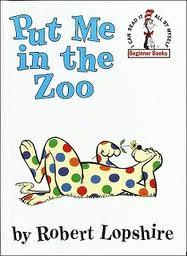
I picked this.

“Really mom?” Monkey said, “A book about animals with spots?”

In hindsight, perhaps not the most sensitive selection.

Returning the book to his shelf, I grabbed another.

I hardly looked at it.

Hubby came upstairs then and adjusted the temperature in the tank to 86 degrees.

He announced that Ich can be killed if you increase the temperature, but that the tank would need treatment too.

You know, because the parasite is all over everything. The rocks, the plants.

I hate parasites. How they get all over everything like that. They are so nervy.

Anyway, Hubby saw the book I was preparing to read.

Excellent choice,” he said, “One Fish, Two fish, Red fish, Dead Fish.”

We all laughed.

Because pathos can be funny.

Especially when it rhymes.

Hubby and I smooched our son and told him we’d work on things in the morning.

Meanwhile, I ran downstairs and hopped onto Facebook to discuss the issue.

My friend Melissa reminded me of those dog collars they used to have at fairs.

You know, the ones that have a little harness and make it look like you are walking a dog?

Only there isn’t a dog.

Because that is what we need.

An invisible pet.

And to the person who joked that we need to get a pet rock?

We had one.

His name was Rocky.

We lost him.

(Which reminds me, we failed at cyber pet ownership, too.)

Yeah, I am pretty sure we are at invisible.

Can you think of other things that would be insensitive (read: really funny) to sing/read/watch/do when your kid has a fish tank contaminated by a funky parasite?

Tweet this Twit @RASJacobson

Dirty Movies For Tweens

Dude, Where's My Car?

Image via Wikipedia

It’s summer. We’ve had a lot of 11 to 12-year-old boys hanging around the house. When it’s raining, they become basement dwellers playing ping-pong or Legos and K’Nex or Wii. I hear their mutterings.

Not long ago, one of Monkey’s friends was over. Let’s call him Steve-o. (Note, Monkey’s friend’s name is not Steve-o, but he was trying really hard to be cool, and I find that when you add an “o” to anyone’s name, it sometimes achieves that affect. Not always, but sometimes. Try it.)

So Steve-o’s talking about movies he’d recently seen. He announces that he’d just seen Dude, Where’s My Car?

Monkey had never heard of it.

Dude, Where’s My Car? is about two dudes who get totally wasted and forget where they parked their car.

That’s pretty much it. That’s the basic premise.

How do I know this? Because hubby and I once rented it.

(Let the judgment begin. I can take it.)

I feel compelled to tell you a little more about this flick, so if you had big plans to rent it, this is your chance to skip the rest of this post and just answer the question in blue at the bottom.

Monkey’s friend forgot to mention that during the course of the movie, things get a little sci-fi. Not my favorite genre. So, it’s kind of hard for me to recall all the details of the movie because I got up a few times to wash dishes and organize the condiments in the refrigerator, but the stoners meet these gorgeous, large-breasted, female aliens. And honestly, I have no problem with that. Especially when they are wearing really tight, black jumpsuits. Because seriously, that’s hot and what else would gorgeous aliens wear?

That said, I’d imagine this part of the film is probably a lot steamier if one has experienced puberty.

Anyway, the stoners also run into these weirdos who have some kind of Continuum Transfiguration machine cleverly disguised as a Rubik’s cube that accidentally gets activated and, of course, can potentially destroy the universe.

Ninety-six percent of women reading this are rolling their eyes.

This is when I started folding laundry.

Hubby was digging the flick.

At the end the movie, the stoners (of course) save the universe, and they even find their car. Oh, and the aliens erase everyone’s memories (of course) but leave gifts for the stoners’  girlfriends which are actually for our young slackers’ enjoyment: breast enhancement necklaces.

Okay, fine. Whatever.

As we ate our respective salads, I asked Monkey’s pal, “So Steve-o, do you think that movie is appropriate for people your age?”

Steve-o hesitated. “I’m not really sure. I mean my parents didn’t know my little brother and I were watching it. We just downloaded it from Netflix to the Wii.”

I didn’t even know that was possible.

(Note to self: Figure out how to not make that happen.)

Steve-o continued, “It did have a transsexual stripper in it so maybe it’s not for really little kids. But it sure was funny.” He smiled to himself. Then he looked up at me in all earnestness and said, “At least it was funny until my dad caught us. I’ll probably never know how that movie ends.”

Realizing he’d never know the planet was saved, I felt kinda bad for Steve-o.

I wondered should I tell him about the Breast Enhancement Necklaces.

Instead, I stuck a big forkful of salad in my mouth. You know, to silence myself.

What is the most inappropriate movie you have ever caught your children watching? Or you watched (or tried to watch) as a kid?

I’m in Manitoba Visiting Ironic Mom, Eh!

I’m guest-posting at Ironic Mom today!

Back in June, Ironic Mom (aka: Leanne Shirtliffe) held a big, exciting contest called “What’s in a Name?” in honor of her 200th post where she discussed how people have butchered, screwed around with, and twisted her name which has kept her entertained for decades.

I could totally relate.

I told her my story here.

And then she told me I won here!

I felt so special!

Then I learned she had used a Random Number Generator to determine the winner.

But privately, she told me she was really psyched I had won.

So that was cool.

As the recipient of the Grand Prize, I got to post on Leanne’s blog.

(Um, Leanne has like 10,237 followers, so I’m hoping some of her people fall in love with me.)

So, my shizz is in Canada today.

Ironic Mom's Place: Home of Thing 1 & Thing 2

Seriously, I’m at Ironic Mom’s today, where she is vacationing in Manitoba.

Click on the picture, and you’ll be there in like one second.

I hope you’ll read my piece and comment over there.

Or here.

Or both.

Either way.

It’s all good.

For those of you who do not reside in Canada, you do not even have to have a valid Passport or go through Customs or anything.

So hooray for hockey and Queen Elizabeth, beavers and Biebers, maple leaves and Mounties.

And all things Canadian.

Especially Ironic Mom.

On Selective Remembering

Hand Hearts

Last month, a friend was talking about how she feels like she is losing control of so many things in her children’s lives. Her eldest son will be heading for high school in September, and she had just learned he had watched The Hangover and Wedding Crashers while at a friend’s house: two movies she didn’t think were appropriate for someone his age.

“But what can I do?” she asked, shrugging her shoulders. “He was at someone else’s house? I can’t control everything all the time, can I?”

Then she began to fret over how her younger son’s bus driver allowed his middle school-aged riders to listen to all kinds of music, much of which she considered to have inappropriate lyrics.

“Did your son’s bus driver let the kids listen to music?” she asked.

“I don’t know,” I said, honestly. I mean, the topic had never come up. “Let’s ask him.”

We called Monkey over from where he was doing something Monkey-ish to ask him our mommy-questions.

“Were you allowed to listen to music on the bus this year?” I asked.

Monkey thought for about .3 seconds and then answered with absolute certainty.

“No.”

And then something happened inside my brain: a little click: that proverbial light-bulb warming to slow glow.

“Dude,” I smiled, “You don’t know what happens on the bus…” I paused for effect.

Monkey looked confused.

“You’re a walker!” I laughed.

Monkey smacked his forehead with his hand and wandered away laughing.

Our house is located about 200 feet from the back of my son’s school. Each morning at 7:13 AM, Monkey put his dishes in the sink, opened the sliding glass doors, and slid out back where he disappeared behind a bunch of pine trees and evergreens. We both know this. It was his routine for 180 days.

Google Images

Our simultaneous forgetting was a peculiar mother-and-son moment.

We used to do so much together. Everything. For years, he was like an extra appendage, wrapped around my leg or lying across my lap. Many times, I have answered a question that he had not yet even asked.

“Yes,” I would say.

“I didn’t even ask you anything yet?” Monkey would say.

“Yes, you can have dessert. Go ahead.” And then we would cozy up on separate ends of the couch with only our toes touching, eating small bowls filled with vanilla ice cream and rainbow sprinkles.

Back then, he thought I was magic.

For a period there, I was sure I would remember everything, each detail. The curve of his pinky as it curled around his blue blanket while he napped.

But you don’t; you forget things.

And it’s okay, I guess.

I love that he is growing older, growing into the person he will one day become more fully.

But there are some things I miss: like those Vulcan mind-meld moments.

So I guess I’m mourning something, too.

Who knew?

What things have you forgotten lately that you know you should absolutely know?

Monkey is Blogging

Last June, Monkey and I worked out an agreement. If I bought him the world’s most awesome double barrel water-gun, he promised that he would continue to practice playing piano, reading Hebrew and honing his writing skills over the summer. The first two were easy. The third was harder, but really important to me. I have seen how long summer vacations — while wonderful — can cause kids’ brains to mushify. I didn’t want him to forget his skills.

In an effort to capitalize on Monkey’s innate love for all things technological, I suggested that he start a blog. After all, last May my own blog was in its infancy, and I figured we could sit side-by-side and write together. It was a romantic notion.

“How long would these posts need to be?” the pragmatic Monkey asked.

“Just write as much as you need to say whatever it is you need to say,” I said cheerfully in an intentionally vague way.

Monkey is a Math/Science guy: not a fan of the “intentionally vague.”

He attempted to clarify. “So 150 words?”

“Sure,” I said, figuring any writing he did was better than none at all.

Then Monkey attempted to up the ante. “But I don’t have to write you when I’m at overnight camp.”

“What?” I challenged, a little miffed. “You definitely still have to write me when you are at camp. For goodness sakes, I would like to know what you are doing when you’re away for three weeks!”

“Okay,” Monkey relented, “but only one letter a week,” he said. “That’s three letters in 21 days. You get that, right?”

Thank you, Math/Science Monkey.

“Fine,” I countered, “But in the meantime, you have to make sure that every blog includes correct spelling, proper punctuation and some kind of image or video — for the reader’s interest.

“Fine,” Monkey agreed.

We shook hands like lawyers.

So this year Monkey is blogging again. And while last year, he wanted his blog to be “our secret,” this year, he wants readers. I told him I would pitch his blog — if he agreed to up his word count to 200 words per post.

So here I am, doing my part.

Only he seems to have forgotten his end of the bargain, seeing as his first post had only 157 words.

What’s a momma to do? 😉

Anyway, if you’d like to check out the inner-workings of the mind of an 11-year-old boy, click here.

If you’d like to subscribe to his blog, I can guarantee you there will only be six entries as he heads off to overnight camp at the end of July.

How do you keep your kids writing over the summer? Or do you just let them shut down?

Tweet this Twit @RASJacobson

Lessons From Fictional Mothers: A Guest Post From Julie Gardner

Julie C. Gardner. Looking fancy. No kids. No dogs.

Back on May 13th, I celebrated my one year blogoversary. I had it in my head to surprise the person who posted a comment closest to my original launch time with a gift card for $20 to his or her favorite bookstore. I also decided that this “gift” would come with strings attached, as I planned to ask the recipient of the reward to write a little somethin’-somethin’ about the book he or she purchased. (Seriously, how manipulative is that?) As you can imagine, depending on your perspective, this “gift” could have been considered a heinous curse. Thankfully, the fabulous Julie C. Gardner responded to my May 13, 2011 blog at 5:21 PM, and became the winner of my extra-secret super-stealth-mode-blogoversary-contest. (*Cue the paper streamers and the cheesy horn.*)

But Julie was so gracious! She was not only excited to receive my offer, she took control of it. She told me not to fuss with purchasing a book or even a gift card; she would buy the books herself. She simply asked me for a few recommendations of titles – and I shot her a check in the mail. FYI: Julie Gardner is the easiest person in the world to shop for. Ever. She is also an amazing writer. When you visit her blog, By Any Other Name, you will see what I mean. Julie gets people to confess things. She knows stuff about me that some of my friends don’t know. How does she do that?

So, thank you, Julie, for giving me the best blogoversary gift: a piece of writing, inspired by a few books that I really loved, a reminder of the love we mothers have for our sons, and a mutual appreciation for truth-telling in writing. And now, here’s Julie. Call her “Awesome.”

• • •

So I’ve been reading. A lot. And not simply because I’m an English teacher-slash-writer; or because Renée bought me a few books* to celebrate her blogoversary. (Hooray!) No, to me reading is legal procrastination. It implies I’m serious about my work; researchy, even. (I know “researchy” isn’t a word, but neither is “complainy,” and I use that one frequently. I’m an English teacher. I take liberties. With frequentiousness. Or whatever.)

Anyway, where was I? Ah, yes. Reading. A lot. More specifically, three books with a common theme:

Mother + Son = Complicated Relationship.

(That’s the only math in this post. You’re welcome.)

And now, cue the gist, with no Spoiler Alerts necessary:

First, in Emma Donoghue’s Room, five-year-old Jack and Ma are prisoners in the storage shed of their captor, a kidnapper who “fathered” the little boy. Young Jack has spent the entirety of his life inside Room believing nothing real exists Outside; until his fifth birthday when Ma decides he must attempt an escape, thereby risking a separation that’s unimaginably terrifying.

Next, Lionel Shriver’s We Need to Talk About Kevin explores the aftermath of a Columbine-esque massacre. The story unfolds entirely in letters written by Eva (the mother of the teenaged killer) to her estranged husband, Franklin. Having nothing left to lose, Eva admits to feeling ambivalent about motherhood, horrified by Kevin’s darkness, and ultimately resigned to surviving the downfall of the family she feels unsuited to embrace.

Finally, Lisa Grunwald’s The Irresistible Henry House follows the life of an orphaned baby named Henry who is “mothered” by a series of college coeds in the (historically accurate) Practice House of a well-intentioned university’s home economics department. Abandoned by his biological mother, Henry is adopted by Martha, the childless head of the program who treats Henry as her sole reason for being. This string of disproportionate attachments hinders Henry’s ability to connect and trust as he becomes a man.

Got it? Good.

Because I spent three weeks engrossed by these mothers and sons; three weeks witnessing their disasters; three weeks during which I’d pause and think, “Crap, I’m glad this isn’t my life!”

(Except in fancier words because I am, after all, an English teacher and therefore fancy.)

Like this: Woe to these women confronting fear and loneliness and death! I can’t imagine such depths of despair!

And also this: Hope leaks from them until they lose the will to fight the loss. What have they to do with me?

(Or whatever.)

Indeed, it’s easy to compartmentalize these mothers as Fiction-Only. Such tragedy wouldn’t happen in real life. Except it did. And it does.

The unlikelihood is irrelevant; because the best novels carry us to the unexpected, the unfathomable , the extreme; while holding up a mirror and daring us to look.

Despite my comfortable “separateness” from Martha and Ma and Eva, I couldn’t help noticing similarities between these wrecked women and me. (And not merely of the “I have a son, too” variety; although I do have a son who will be fourteen next week.)

…These mothers have good intentions. Hey. I have good intentions!
…They’re redefined by the very existence of their sons. Most definitely.
…They commit themselves to their tasks; make sacrifices they question but endure; struggle with their own incidents of selfishness. All right. This is true for me, as well.
…They are, at times, disappointed by their sons. Yes. Sadly, yes.
…They have needs and desires; battle insecurity and pride; display strengths and weaknesses exacerbated by their sons. And, oh yeah, I do too.
…They learn that death is not, in fact, the worst dénouement imaginable. Because it isn’t. If you think hard, it’s not.

These three books chafed me with their honesty. Martha, Ma and Eva say what most mothers never dare to in words that made me nod and blush and fold the pages for revisiting.

Mothers do not often admit to having resentment or favorites or paralyzing regret. We foolishly expect to control our human frailties once we become parents. But then we don’t. Abandon our frailties, I mean.

In fact, our flaws announce themselves in stark relief against the backdrop of perfection we imagine.

These authors, however, tear down the backdrop and expose what parenthood – in its most distilled moments – can teach us:

That hope and love can be more difficult than loss.

But oh. We cannot ever give it up.

The hope, I mean.

And then, of course, the love.

What did you think you knew about parenting but have found yourself questioning? How has the truth of parenting been different from what you expected?

• • •

*NOTE: There is no way that Julie could have purchased all three of these books from my paltry $20. So thank you to Julie for subsidizing some of my blogoversary present. Seriously.

In Praise of the Pencil

Google Images

In 5th grade, Mr. Zych lectured all of his students about how to properly sharpen a pencil. He wasn’t messing around. His speech was not short, and he covered everything from how to properly grip the pencil to the cranking motion – how it should be smooth and continuous, not jerky. He even discussed the perils of over-sharpening, which could lead to premature tip-breakage. Mr. Zych turned pencil sharpening into a science.

Personally, I have had a love-hate relationship with pencils. I first learned how to print my alphabet in pencil and then I learned how to write in cursive in pencil. That was Paradise. Finally, a way to write all the stories stored in my head. Later, I preferred to write with pens – preferably ones filled with purple or green ink. But ever since my son started school, he has been forever in need of pencils; they seem to always be around, and so I returned to the yellow pencils of my youth. I had learned to appreciate the feel of a pencil in my hand again. I even started to like the scratchy-scratchy sound of the graphite as it dragged across the page. After I recently stepped on a pencil, I became suspicious of them again and switched back to pens.

Meanwhile, my son is still on a steady diet of pencils. In middle school, the kids seem to devour them: literally and figuratively. I know my son nibbles on his; I’ve seen the teeth marks. I’ve watched him crunch while he contemplates before committing to writing an answer on paper. But sometimes I wonder if he actually eats them, too. I mean, where do they go? How many pencils does one kid need in a school year?

A few weeks back, Monkey came home in a tizzy.

“I’m out of pencils again,” he announced.

Nonplussed, I told him there were under three weeks of school left and that I was pretty sure he could make-do with his nubs until June 20.

He started at me with contempt.

“Are you serious?” he questioned. “I have exams! I need pencils! Ticonderogas. Now!”

He was not messing around.

The next day while in the grocery store – to my horror – I found plenty of office supplies, but they were only generic pencils. And even I know that those erasers don’t do the job. You need another eraser to get rid of the smears those lame pencils leave behind.

So I made an extra trek, this time to Staples – home of the Ticonderoga pencil – and invested in the Bulk pack. (Because that was all they had.) Let’s be clear. Ticonderoga pencils are like platinum. They cost a fortune. The only way a pencil could be more fabulous would be if you printed your name on pencils. A Ticonderoga is the Hum-V in the wonderful world of pencils. Teachers definitely prefer them. Definitely.

I rationalized that I could spend $15.77 + nearly 9% tax on pencils because they are non-perishable, so it is not like they will ever rot or mold. And I figured whatever is left at the end of the school year, Monkey can use in 7th grade, thus saving me some back-to-school shopping hassle.

A few days later, a good friend of mine called me and reported that her son – also a 6th grader – had run out of pencils. While requesting to buy more, she said my name was invoked. Apparently her son said:

“Can you just be like Mrs. J. and get the Giant Pack of 72 Ticonderoga pencils?”

Apparently Monkey had been bragging about his new stash.

I laughed at the sheer ridiculousness of it. Bragging about pencils?

And then I thought about how I had come full circle. Just one week before, I was cursing pencils as my husband dug around my heel with a needle in an attempt to get the lead out. (I know, I know. Pencils are made of graphite. I was going for the funny.) But now I found myself saying a silent prayer on behalf of all pencil-loving children everywhere. Uncharacteristically, I clasped my hands together and thought to myself:

Lord, may this be the worst thing my child ever desires. May this be his worst addiction. May he never see cocaine. May he never use LSD or heroin. May he avoid cigarettes and alcohol. May he avoid the ‘shrooms, the X, the meth. May he never huff. May he find the strength to avoid the Oxycontin and Adderall.

May he always be addicted to Ticonderoga pencils.

Because, honestly, I’ll happily help Monkey score his Ticonderoga pencils forever. I’ll even help him sharpen them. Mr. Zych schooled me on that a long time ago, and I feel confident I can help my son with his #2 pencil fix without any need for an Intervention.

Tweet this Twit @RASJacobson

Posts That Shimmy & Shake: Paul Johnson & Leanne Shirtliffe

I have two favorite posts that you simply must read this weekend if you missed them the first time around. Or I won’t be your friend anymore. People like to relax. And there is nothing wrong with that, right?

Paul Johnson caught United States’ President Obama trying to relax in the UK this week. Paul Johnson’s outrageous Scenes from the Special Relationship features photographs of Obama and Prime Minister David Cameron chillaxing together while playing ping-pong. What? Two major world leaders playing indoor sports doesn’t sound interesting? Trust me, my friends. The Good Greatsby‘s dashing wit and uber-hilarious social and political commentary is worth a click. The comments are faboo, too!

Another piece of deliciousness comes from Leanne Shirtliffe aka: Ironic Mom. For those of you who do not know Leanne, let me introduce her to you briefly. Leanne is a teacher, a proud Canadian, and the mother of the devil’s spawn delightful twins who keep her notebooks filled with ideas for new blog posts. Well, this week, you get a double dose of our girl from Calgary. I challenge you not to laugh out loud when you read When Irony Ruins Your Day. And if your kids are outside relaxing this weekend, playing with their water guns, sipping their aqua-tinis . . . well, later on, just make sure the taps are turned off. Leanne would want you to.

That’s all for now. After you do your required reading, have a great weekend.

And try to relax.

What are you doing to relax this weekend?

The Giver: Is It A Happy Ending?

The magic in Lois Lowry’s The Giver occurs in Chapter 19 as the main character, the soon-to-be twelve-year-old, Jonas, realizes that everything is not as it seems in his seemingly idyllic community.

Up until Chapter 19, my l’il dude had been feeling really good about the community in which the characters lived their daily lives. He believed everyone lived in total equity. He loved how everything was shared communally, how everything was controlled by “the Elders,” right down to the vocations people were given, the people they were matched up to marry, and the children they received to raise. I think he was ready to up and move there.

Monkey didn’t seem to catch that individual identity had gone the way of 8-track cassette tapes, that no one had any emotions at all, and everyone was essentially just like everyone else.

In Chapter 19, Jonas makes a major discovery. The process of “release,” which is mentioned throughout the book, is nothing more than lethal injection. Needless to say, Jonas is horrified as he watches a video of his own father, a caregiver, performing the procedure on an otherwise healthy infant.

Monkey’s teacher asked the students to please keep the pace with fellow classmates for this book and asked them not to read ahead – something that was exceedingly difficult for my voracious reader.

I promised him there was a reason.

And then one day from the couch, I heard Monkey’s voice “Holy. Guacamole.”

I knew he had reached Chapter 19.

Sitting up, Monkey looked at me. “So…so…so… so… so if they kill people there must be other things that they do that don’t discuss, like who removes the bodies and what do they do with them? There must be tons of secret stuff that goes on.” He paused for a moment, “There are always helicopters flying overhead. I never thought about it. But maybe they are more about surveillance than transportation.”

He was putting things together, making connections. The synapses were firing.

“This book is creeping me out!” he exclaimed and then disappeared behind the couch again to continue reading.

A few nights after Monkey had finished reading The Giver, my son announced, at dinner, there had been a very lively discussion about the end of the book. Apparently, Mrs. English Teacher had asked her students the penultimate question: Do you think The Giver has a happy ending?

Best. Question. Ever.

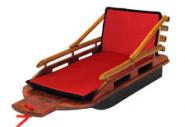
Monkey reported that some of his peers thought the book had a very happy ending, that Jonas had successfully escaped from his community on his bicycle with Gabriel, a sick infant that his family had been caring for.  They justified their answers by saying they knew it was a happy ending because at the very end, Jonas was on a sled with Gabriel, and they were preparing to slide down into a cozy looking village where there were lights. Monkey said those students felt confident that Jonas and the baby were going to be able to survive in this new community called Elsewhere.

I held my breath.

Because that interpretation is soooooo not it.

Nervously, I asked my son if he agreed that The Giver had ended happily.

Monkey chewed his chicken about fifty times, then swallowed. Finally, he shook his head. “Not at all,” he said, adding that he thought that it was pretty much impossible for it to be a happy ending given that the vision Jonas had of his idyllic community was way too similar to a vision that the Giver had shown Jonas earlier in the book.

Monkey said, “Jonas was probably hallucinating and kinda holding onto one last bit of hope before he and the baby froze to death.”

Wow, if my Monkey was gruesome in his analysis, I didn’t really care.

He was spot on.

I asked my son if he had spoken up and stated his alternate interpretation of the ending and he said that he had. He said other students agreed with him, but a lot of people argued that Jonas had made it out and that he and the baby were going to be fine.

“Some people can’t face the truth,” said Monkey, sounding way too mature making me want him to go upstairs and re-read every book in the Diary of a Wimpy Kid series.

Whether or not all the kids agreed about the ending was not the issue for me. I was just happy that my son had turned the corner and gotten from the novel what I believe readers are supposed to get, the concept of dystopia. From the way he explained it, Monkey’s teacher facilitated an amazing discussion about culture and government, people and lies and truth, when people need to know things and when it might be in their best interest not to know things. I was so grateful that this discussion took place in a classroom with a responsible teacher there to facilitate things.

And while every teacher wants her students to have that epiphany about the literature, the reality is that folks will always have different interpretations of the ending of certain books and, frankly, that’s what makes those books delicious. In The Giver, one’s understanding is truly based on his intellectual and emotional willingness to accept that things are not always what they seem.

What makes The Giver a classic is that it is often the first piece of real literature that students read which allows them to look critically at our own government – which can be scary for kids. It forces them to ask uncomfortable questions: Has there ever been a time when our government has knowingly lied to us? Are there justifiable reasons for our leaders to withhold the whole truth?

As I washed the post-dinner dishes that night, I was happy that Monkey’s class had a great discussion and, from the way it was reported to me, none of the students were told how to think or what the “right answer” was. They were, instead, instructed to look to the literature to find the answers and then left to squirm in their own uncertainty, which can be a very good thing.

What’s got you squirming?

Tweet this Twit @RASJacobson